Request your free in-home water test
A few quick details — a real local person reaches out, usually same day.
Soft Water and Filtered Water, From One Tank
Suncoast water arrives hard and chloramine-treated. A whole-home conditioner handles both in one tank — ion-exchange resin for the hardness, catalytic carbon for the chloramine taste and smell. A softener fixes it at the source. We size the right one to your water and put the warranty in writing.
4.7 ★ from 202 local homeowners · WQA Gold Seal certified
Book my FREE in-home water test →Call or text (941) 266-8991
- ✓ WQA Gold Seal certified Puronics equipment (NSF-tested)
- ✓ Built on name-brand Clack valves — you can even service it yourself
- ✓ The tech who tests your water is the one who installs it
- ✓ Firefighter-founded, family-owned — our own crews, no subcontractors
- ✓ Lifetime warranty on manufacturer defects · 0% financing
- ✓ A free in-home water test
- ✓ An honest recommendation — what you need, and what you don’t
- ✓ Our own techs install it — no subcontractors
- ✓ Name-brand, certified equipment, serviced locally
- ✓ Systems from $2,995 · 0% financing
- We test your water — free, in your home.
- You get a straight recommendation and quote.
- Our own tech installs it clean and shows you how it runs.
Recent installs across the Suncoast
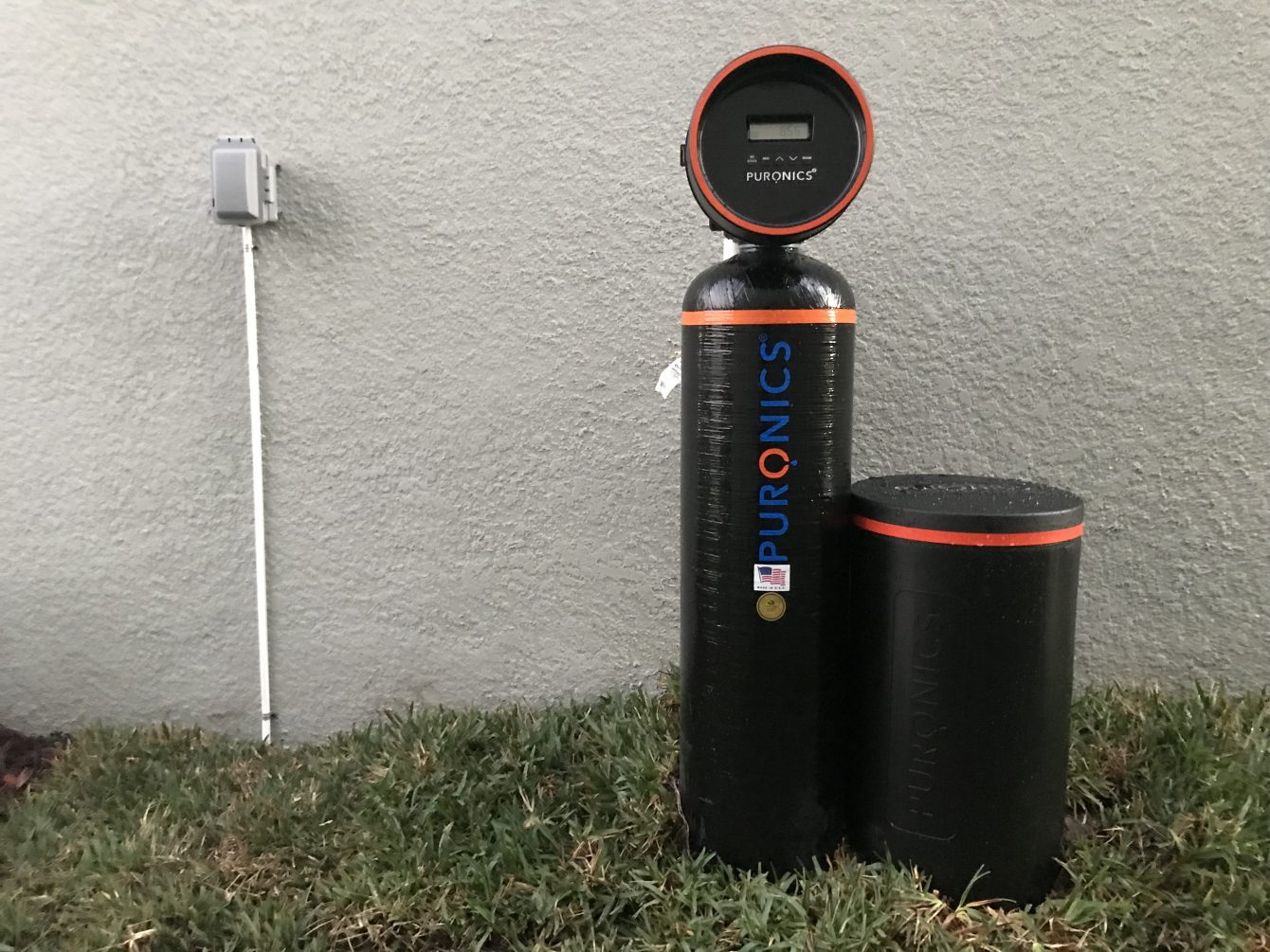
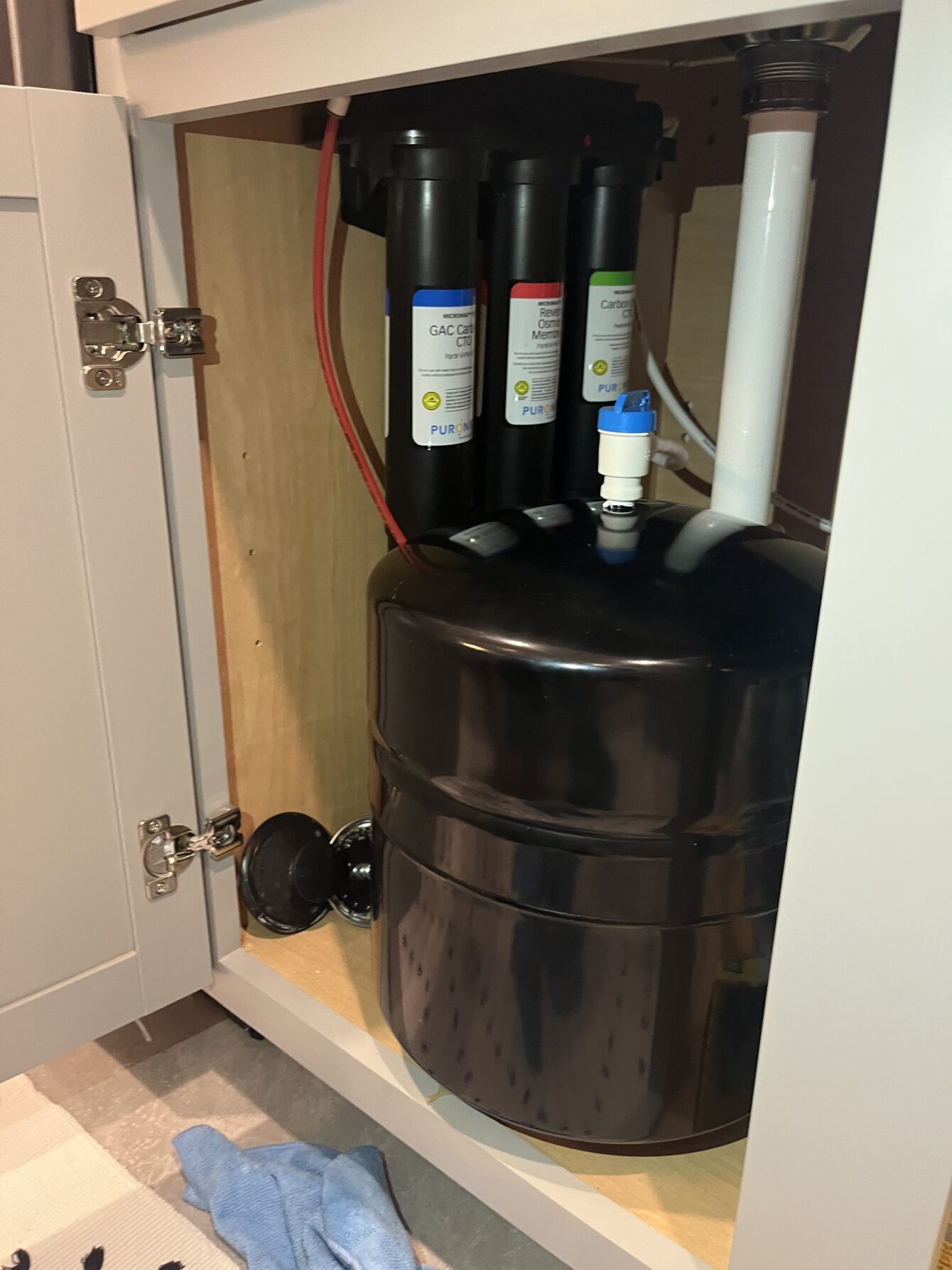
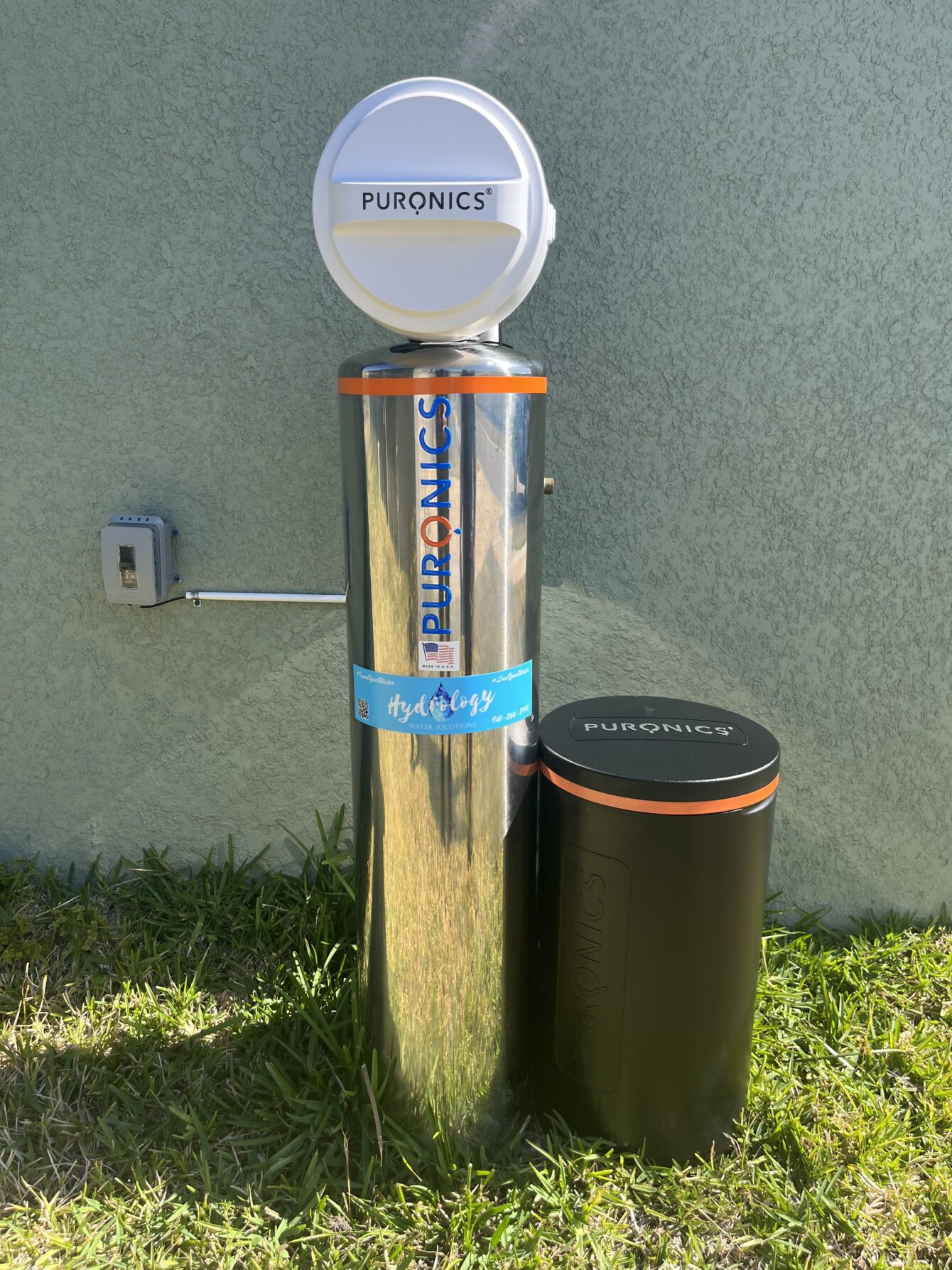
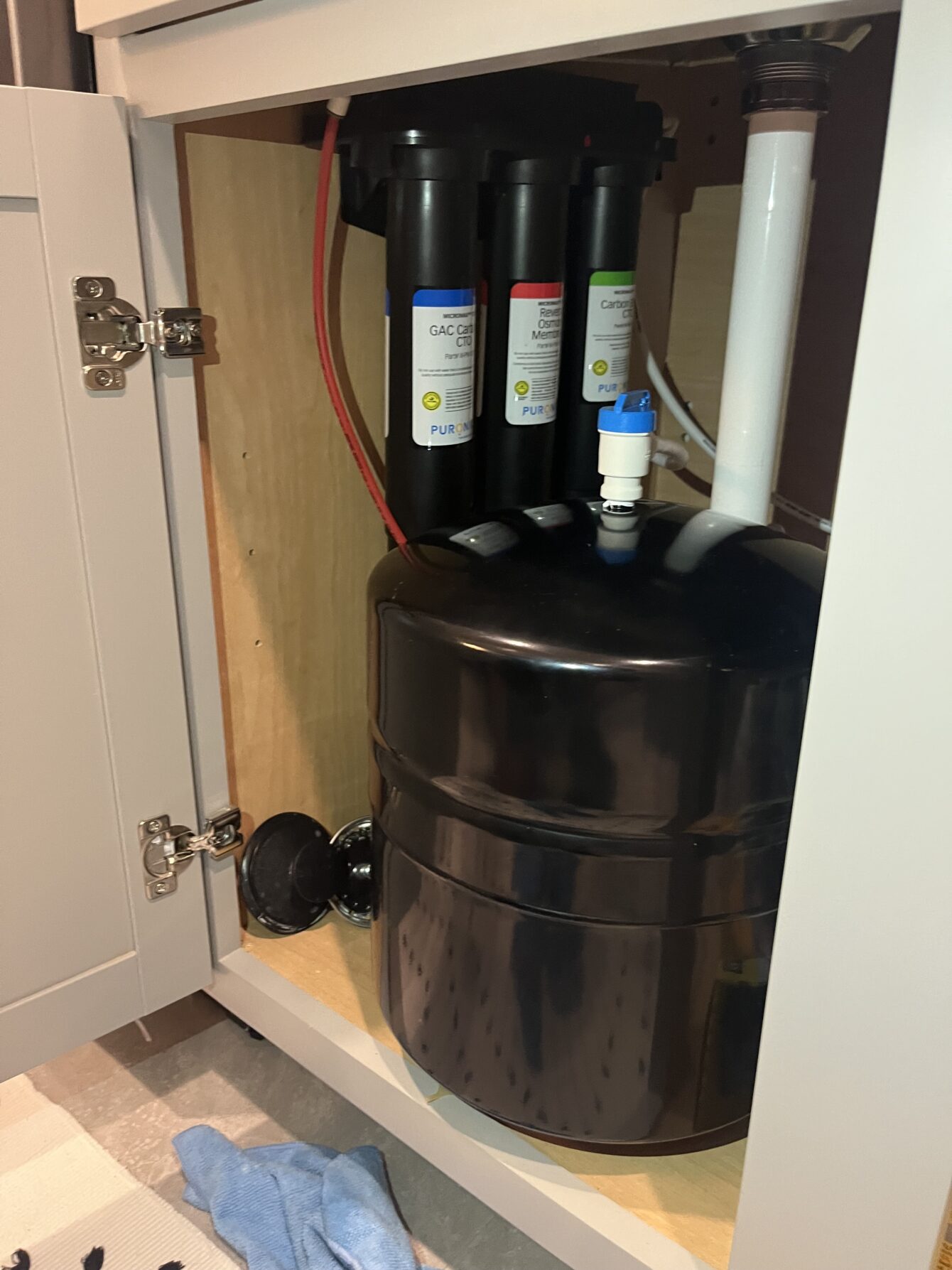
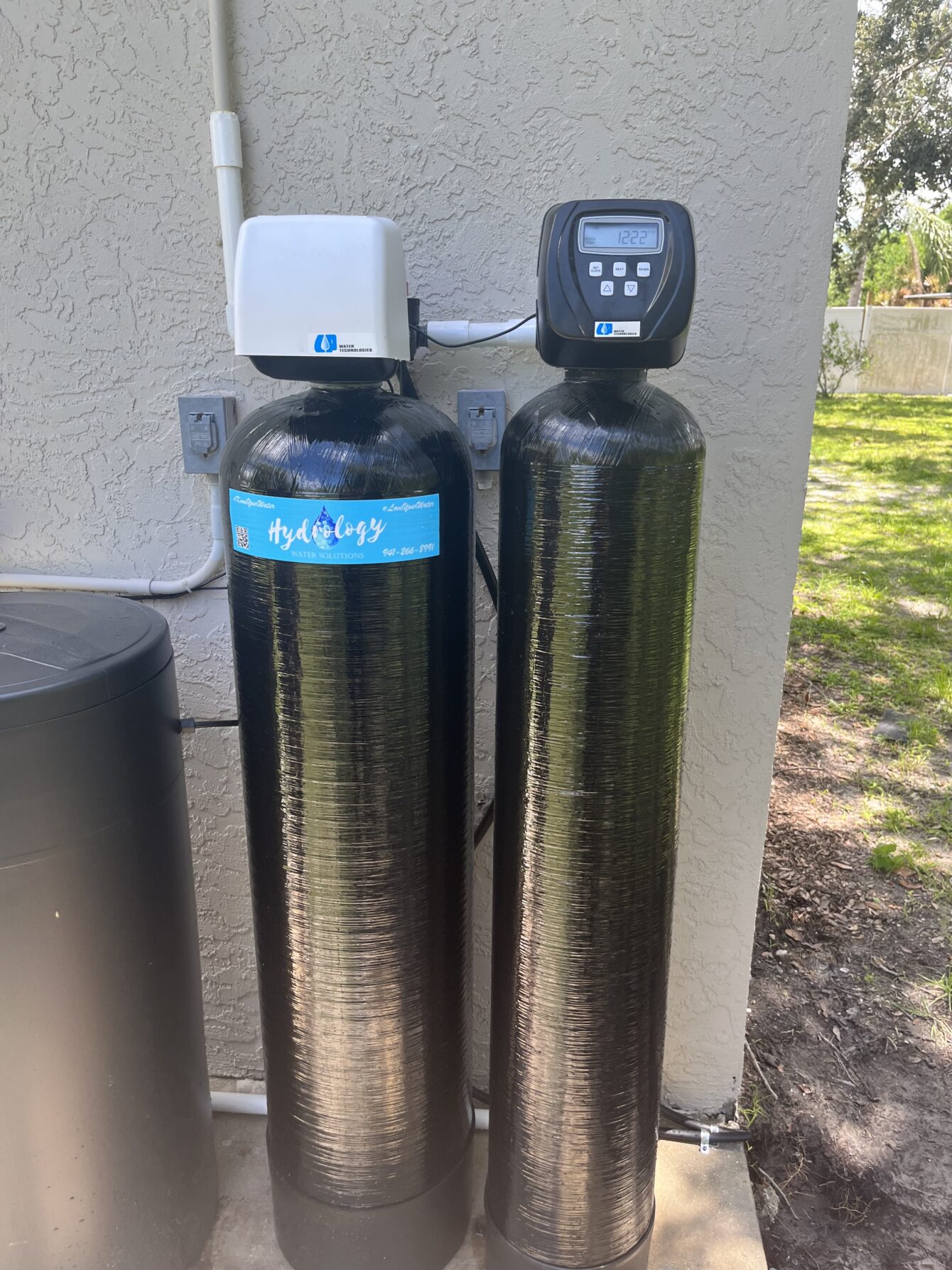
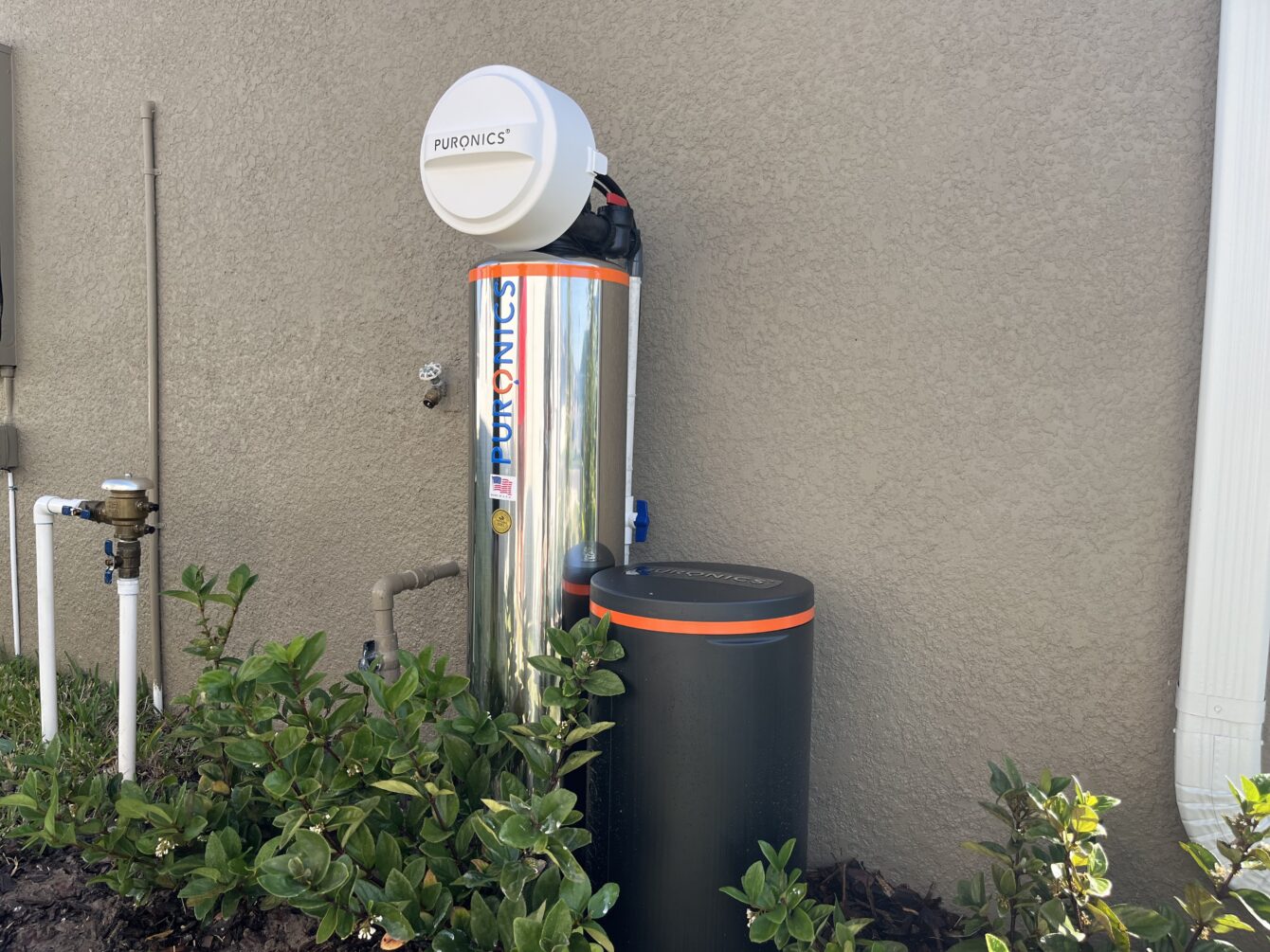
Real systems our crews put in. No stock photos.
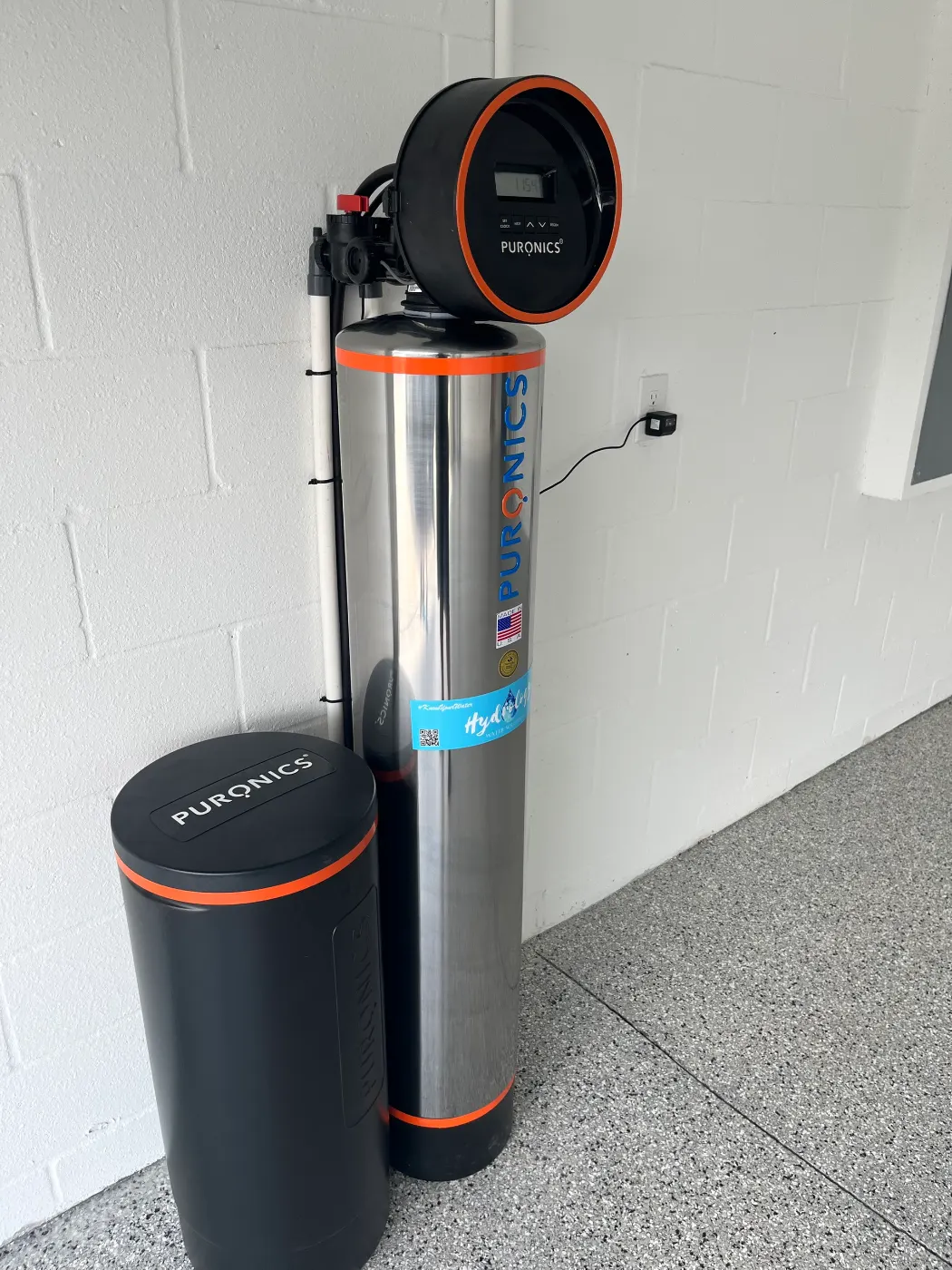
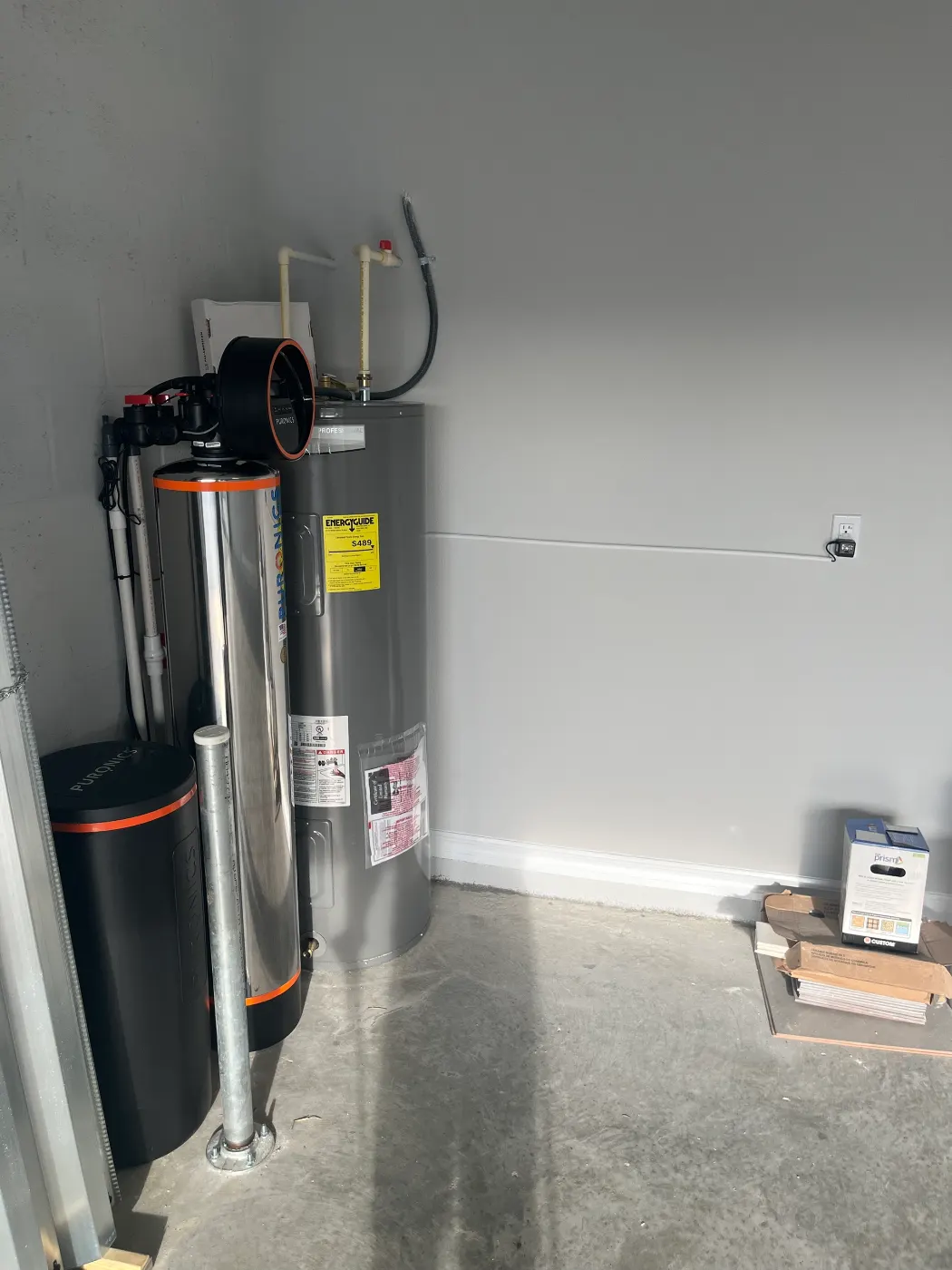
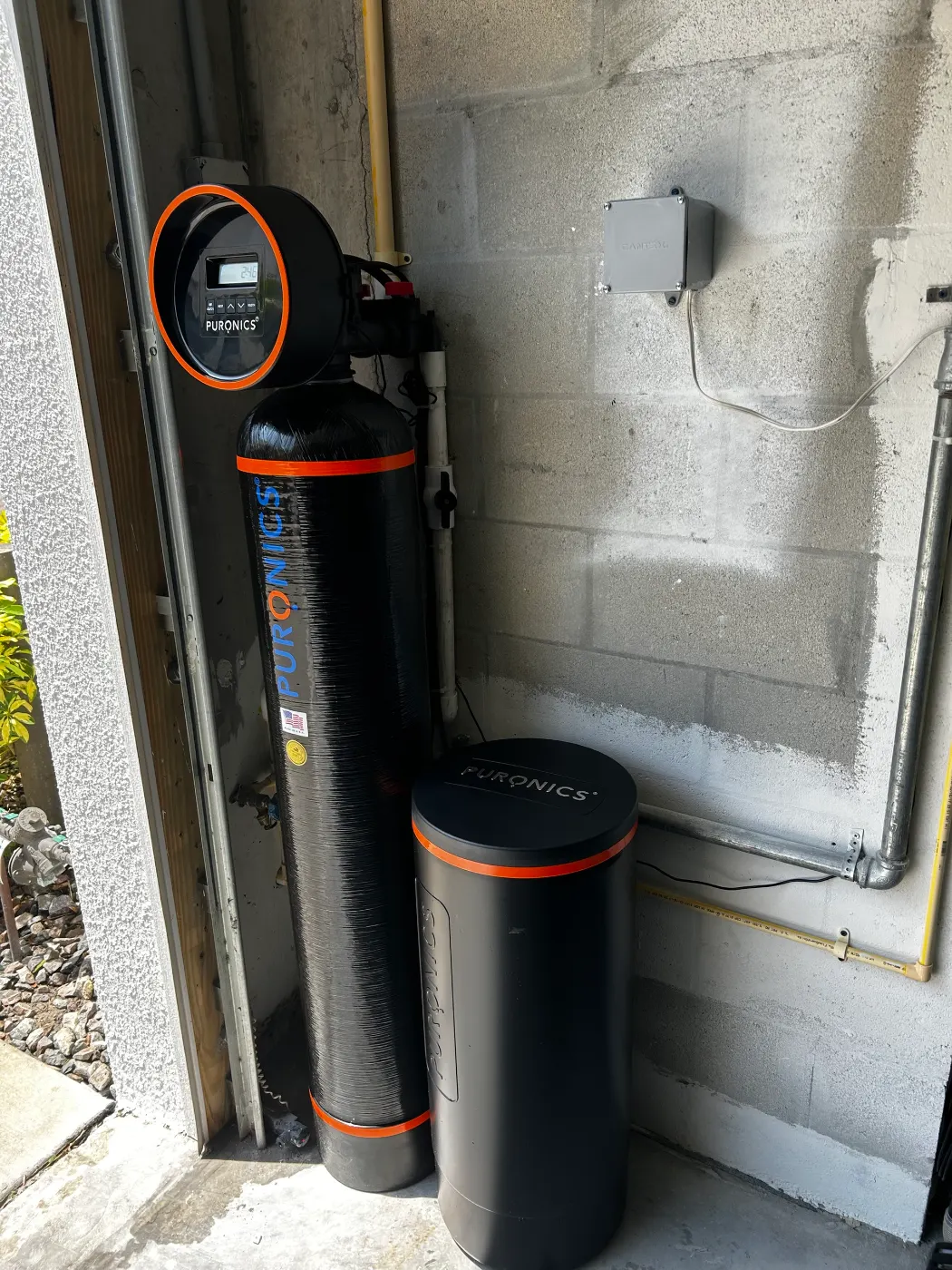
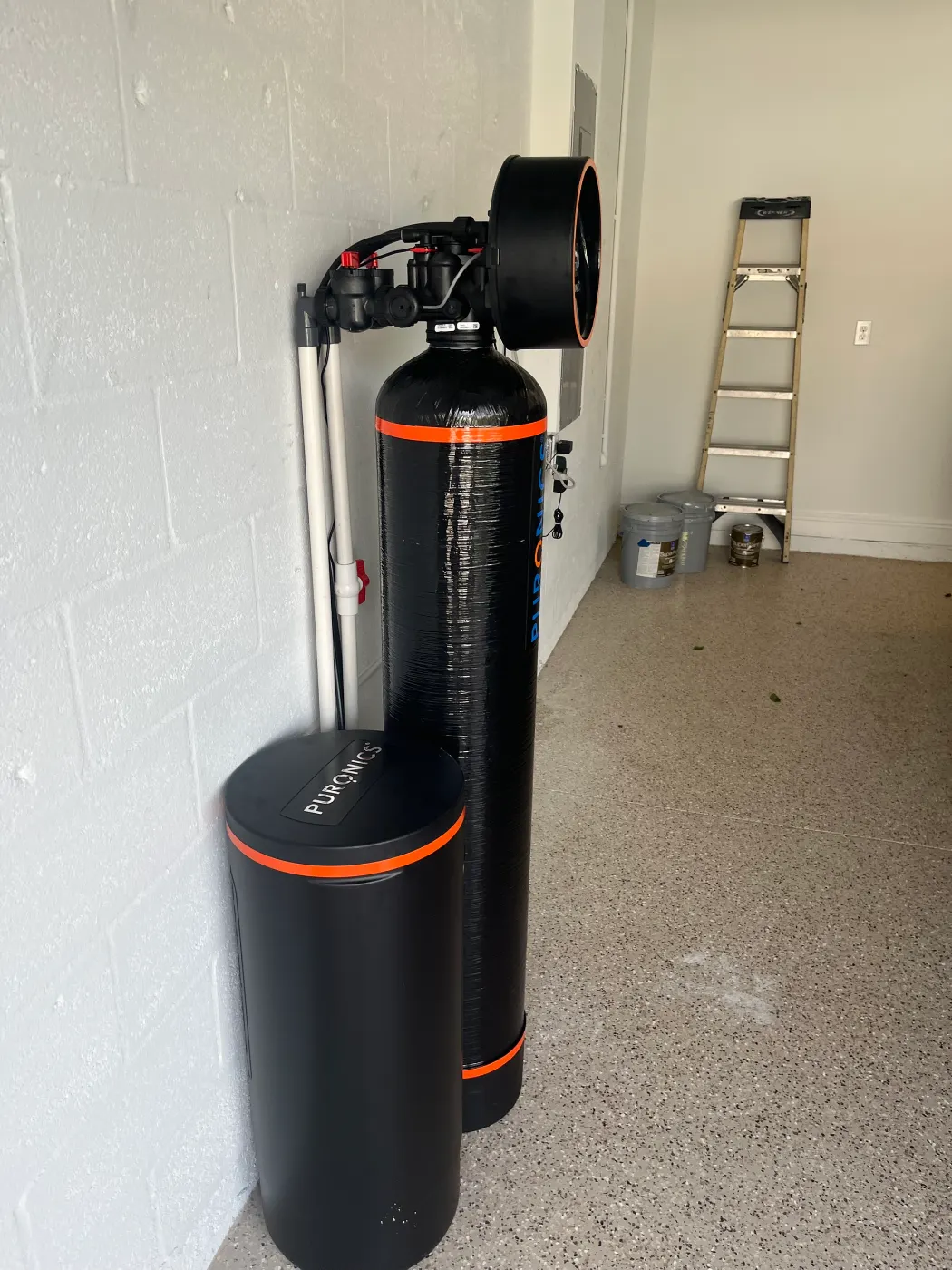
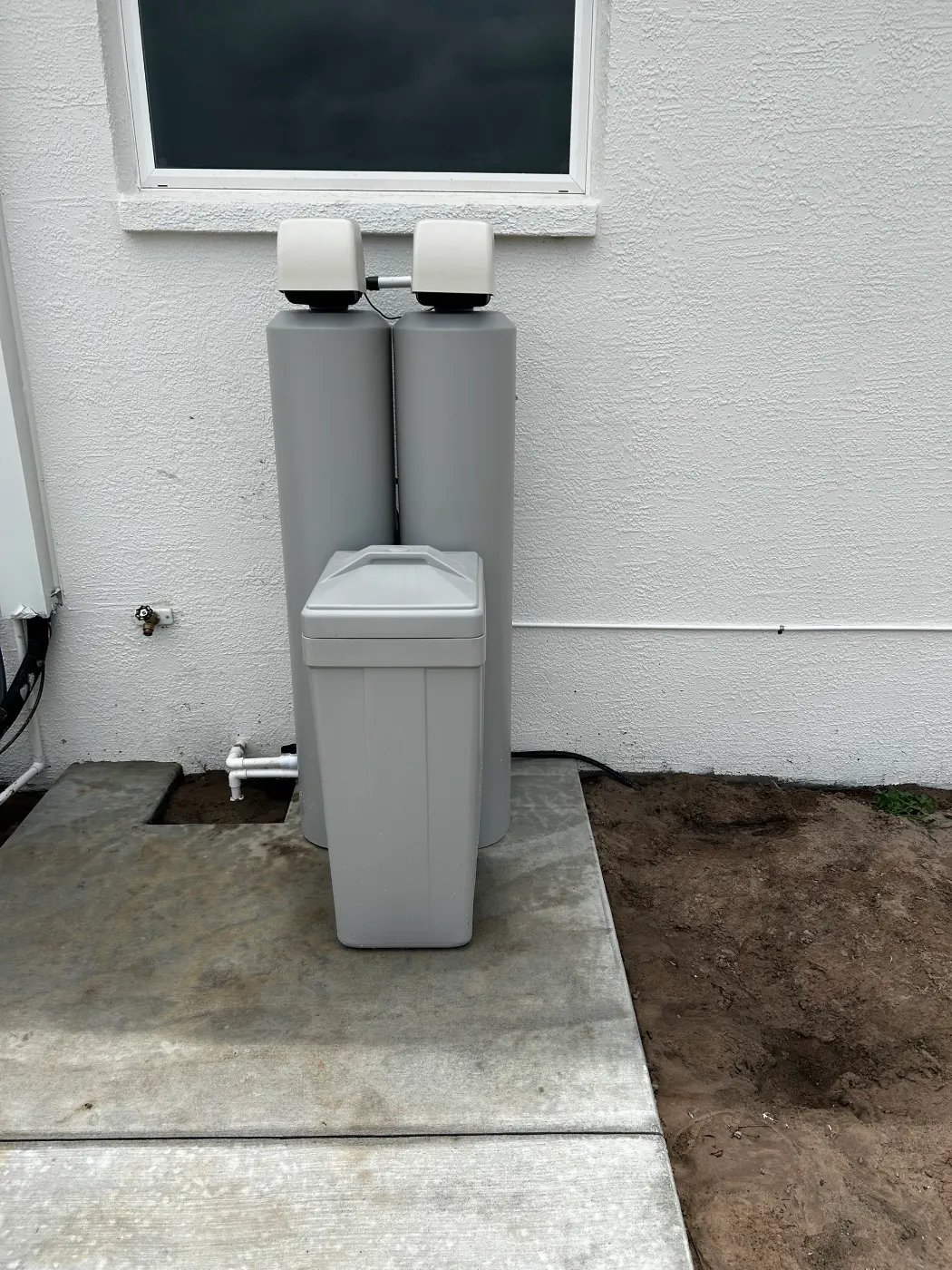
What a whole-home conditioner actually is
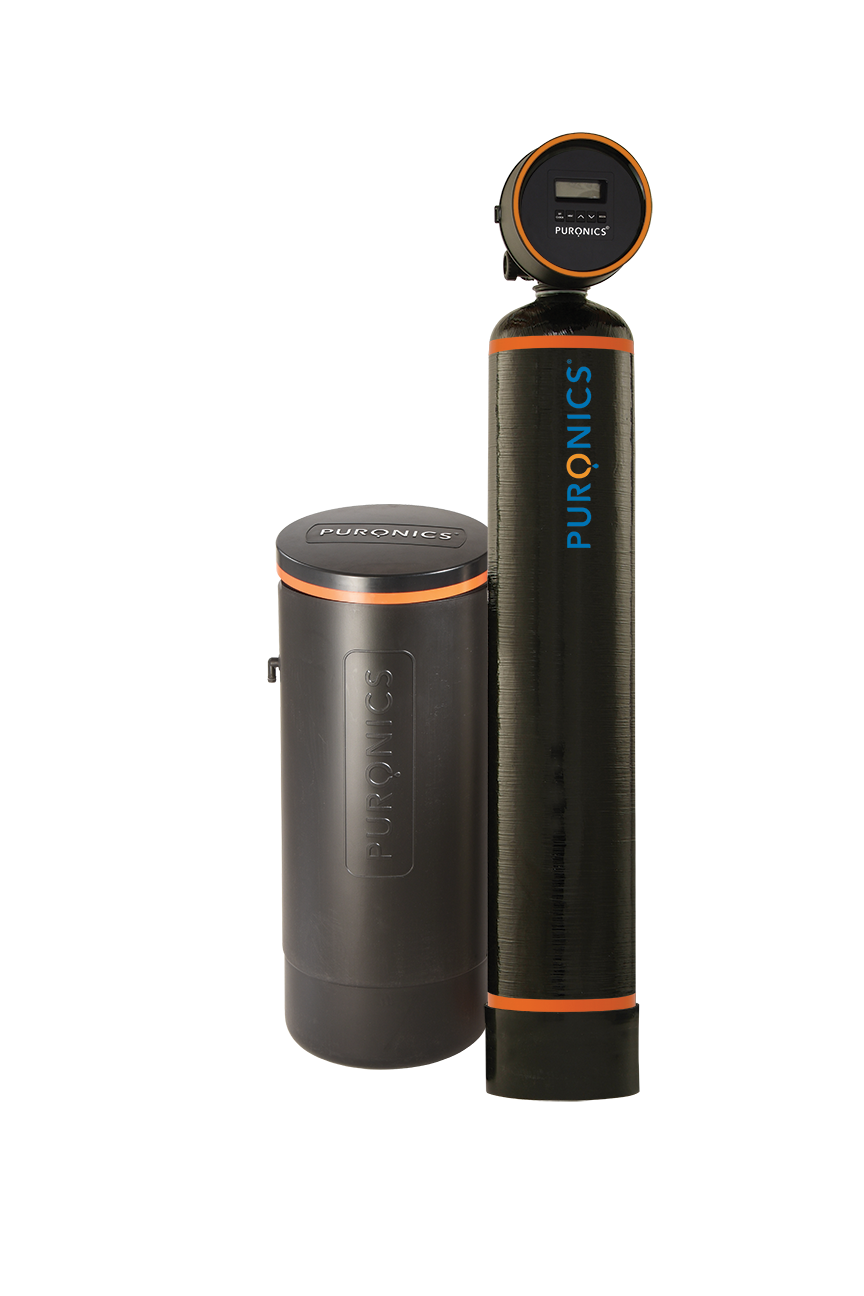
Two jobs, one tank. Ion-exchange resin pulls the calcium and magnesium out so scale stops forming and soap lathers again. Catalytic carbon, layered in ahead of the resin, takes the chloramine taste and smell out of every tap in the house — shower, kitchen, laundry, hose bib. That is the difference between a conditioner and a plain softener: a softener handles hardness and nothing else.
If your water is hard but your utility does not chloraminate, you do not need the carbon and we will tell you so. Here is the softener-only page — what a softener does, what the “salt-free” catch is, and how to shop for one without getting fooled.
Hard and chloraminated — the local problem
Southwest Florida sits on limestone, so the water picks up calcium and magnesium on the way to you. Manatee County reports 106–279 mg/L depending on the blend that day — roughly 6 to 16 grains per gallon. Pinellas prints 189–244 mg/L. Anything over 121 mg/L is “hard” on the USGS scale, so the whole region clears that bar easily.
On top of that, most utilities here disinfect with chloramine rather than plain chlorine, because it holds its residual longer through the distribution system. It also does not gas off in an open pitcher, and it is what people are describing when they say the shower smells like a pool.
Catalytic carbon vs. standard activated carbon
This is the spec that separates systems that work here from systems that do not, and almost nobody explains it. Most equipment uses standard activated carbon. It handles free chlorine well and barely touches chloramine. Catalytic carbon is surface-treated to break the chloramine bond, which is the whole reason it belongs on Suncoast city water.
So if you are comparing quotes, ask one question: is the carbon catalytic, and how much of it is in there? A token handful is not the same as a proper bed. Anyone who cannot answer that is quoting from a price sheet.
The three we install
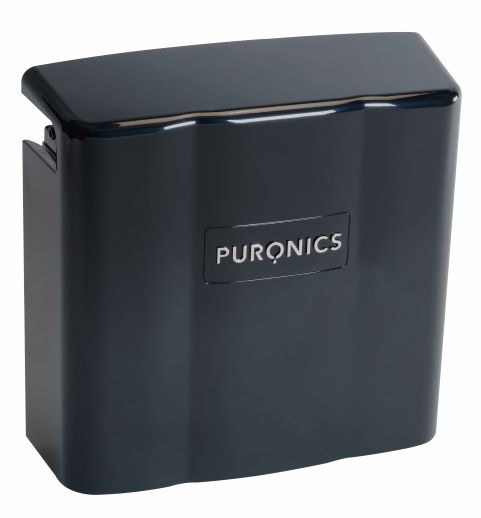
A note on telling them apart: several of these look identical from the outside. The model is on the valve label, not the tank — so we do not label a photo with a model unless we read it off the valve.
Ideal for
- ✓ City water that is both hard and chloraminated — which is most of Manatee, Sarasota, Hillsborough and Pinellas.
- ✓ A pool smell in the shower, or water that tastes like the tap at a public pool.
- ✓ Spots and film on glassware, scale on fixtures, soap that will not lather.
- ✓ Homes where there is room for one tank, not three.
- ✓ Anyone protecting a new water heater, dishwasher or washing machine.
Maintenance
Salt in the brine tank, and that is most of it. The metered valve only regenerates once you have actually used the capacity, so salt use tracks your water use rather than a calendar. The carbon bed is rated in gallons, not months — on the Puronics units that is a 2,000,000-gallon media warranty. We check the valve, the hardness and the carbon on service visits, and we tell you when something is genuinely due instead of selling you a media change every year.
Never want to haul a bag again? Ask about salt delivery.
Common questions
What is the difference between a water softener and a conditioner?
A softener removes hardness — the calcium and magnesium — and nothing else. A conditioner in our sense is that same softener with a carbon bed built in, so it also takes out chloramine taste and smell. Be careful with the word, though: some companies sell a salt-free “conditioner” that removes no hardness at all. It changes how scale forms, and your water still tests hard afterward. We sell a salt-free unit too, so we will tell you honestly which one your water needs.
Do I really need catalytic carbon?
On chloraminated city water, yes, if the taste and smell matter to you. Standard activated carbon handles free chlorine but barely touches chloramine. On a well with no disinfectant you do not need it, and we will not put it in.
How hard is the water in Manatee and Sarasota County?
Manatee County reports 106–279 mg/L, roughly 6 to 16 grains per gallon, depending on the blend that day. Pinellas prints 189–244 mg/L. Anything over 121 mg/L counts as hard on the USGS scale. It varies by address, which is why we size off your test and not a county average.
Is softened water fine to drink, and does it feel slippery?
Yes to both. Ion exchange adds a small amount of sodium in place of the hardness — far less than most people assume, and proportional to how hard your water was. The slippery feeling is soap rinsing off properly instead of binding with hardness minerals and leaving a film on you. If you want the drinking water taken further, that is what reverse osmosis at the kitchen tap is for.
Someone quoted me a lot less. What am I missing?
Maybe nothing — get a second number, always. But compare the whole thing, not the sticker. Who installs it, who services it, who holds the warranty, and who picks up the phone in year four when a valve fails. A big part of our week is spent maintaining equipment other companies sold and moved on from; some of those companies are not around anymore. We price our work so we will still be here to service yours. That is the part that does not show up on a quote.
Can I tell which system I have from a photo?
Often not, and neither can we. Several of these units look identical from the outside — the model is on the valve label, not the tank. If you are working out what you already own, send us a photo of the valve head and we will tell you what it is and what it takes.
Whole-house filtration in your city
We install whole-home softening and filtration across the Suncoast, sized to your local water. See the details for Bradenton, Lakewood Ranch, and Parrish.
Choosing a system? Some run on a Fleck valve, others on a Clack — here is Fleck vs. Clack water softener valves and why the valve matters.
Related: Water softeners · Reverse osmosis & drinking water · Well water treatment · Free in-home water test