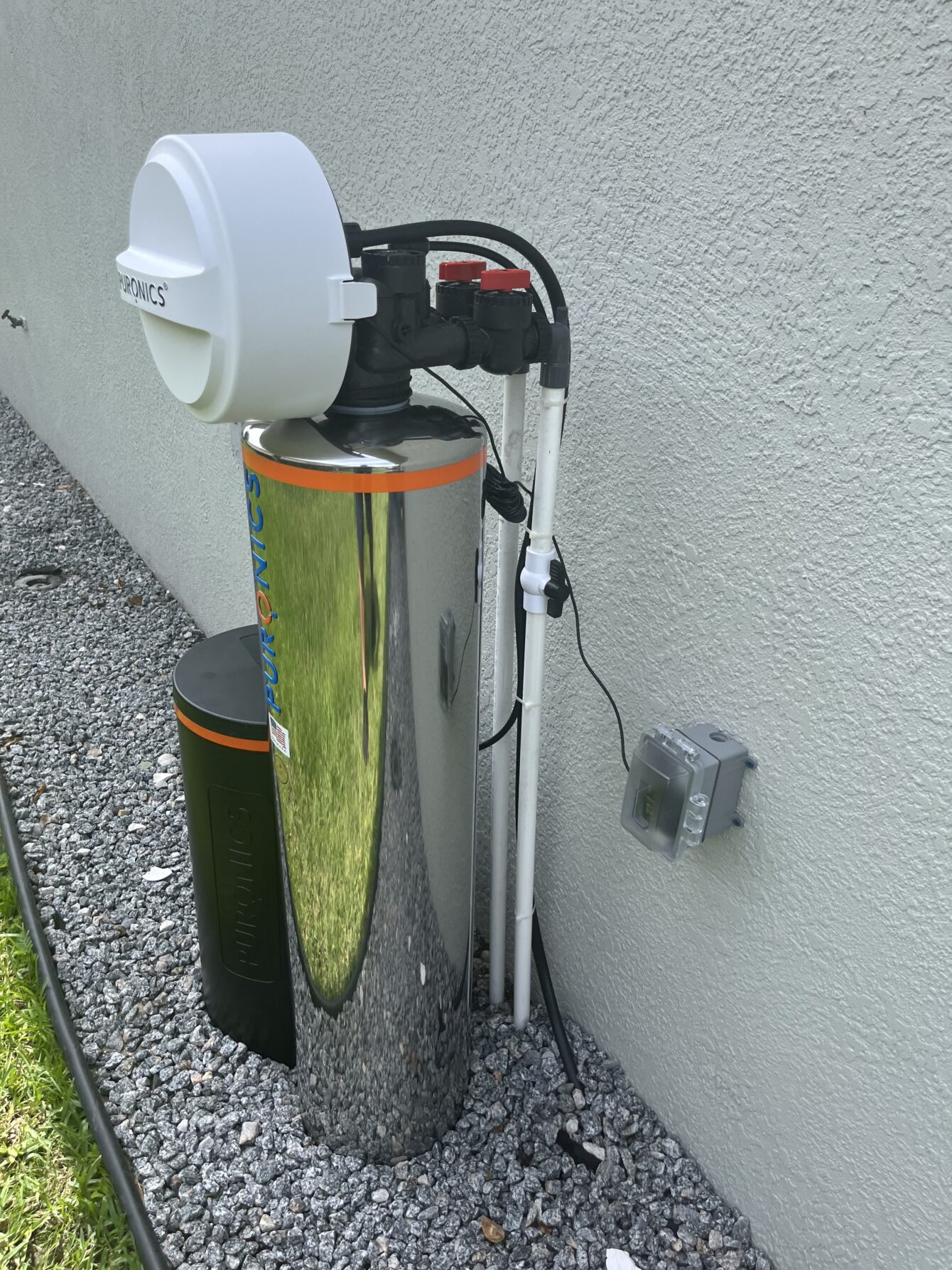
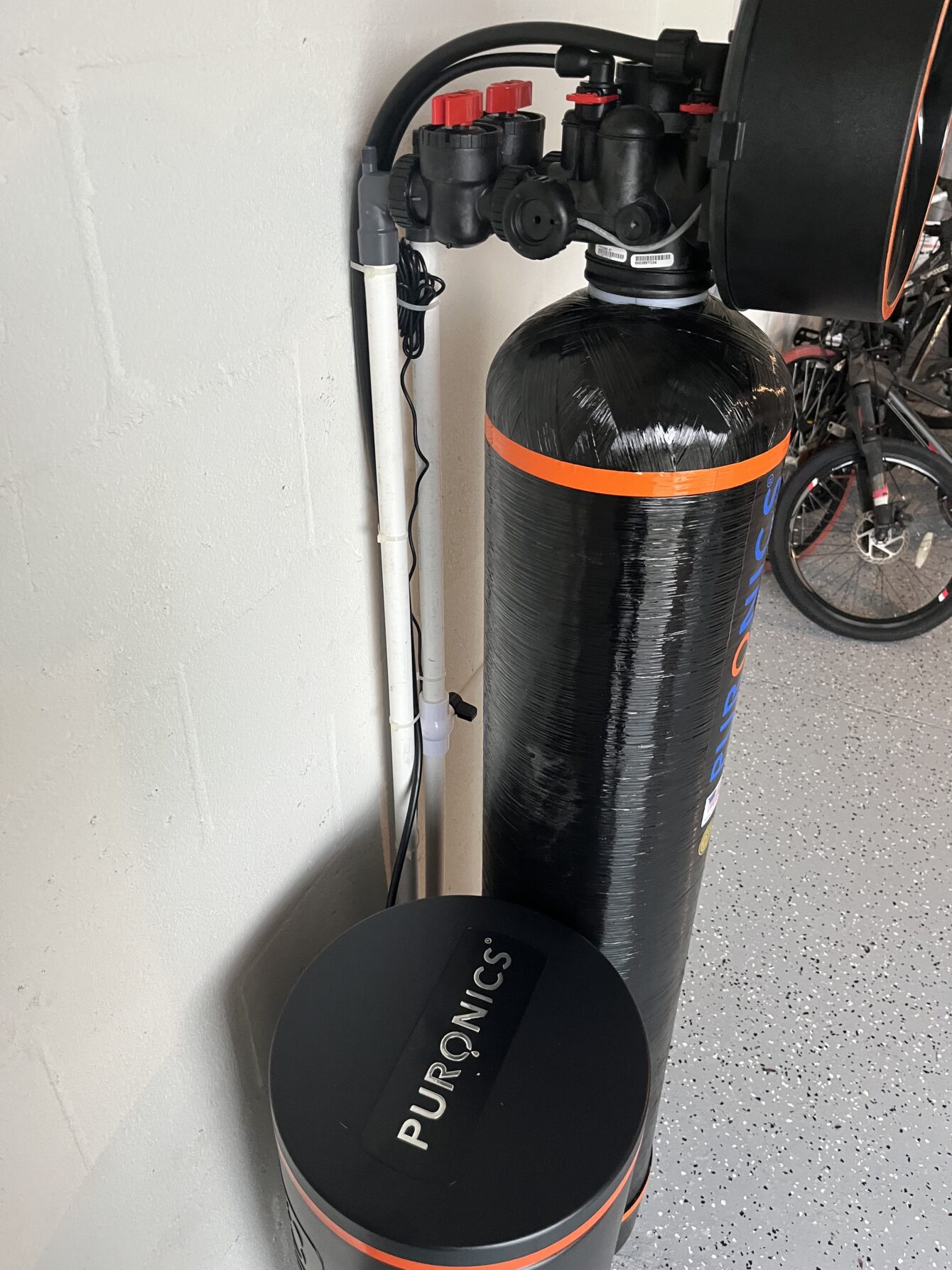
Is the water in Lakewood Ranch and Manatee County hard?
Yes — SW-Florida water is moderately hard. Sarasota County publishes about 7 grains per gallon; most other local utilities don’t publish a number, so we measure it in your home with a free test. Hardness is what causes spots, scale and soap scum, and it’s handled with a properly sized softener.
→ See whole-home water softeners
Does Manatee County use chlorine or chloramine?
Chloramine. Most local city systems (Manatee County, Sarasota County, Hillsborough) disinfect with chloramine; the City of Sarasota is the exception on free chlorine. Chloramine is longer-lasting and needs catalytic carbon with real contact time to fully address the taste and smell — a standard carbon filter can under-perform on it.
→ Reduce chlorine/chloramine with catalytic carbon
Is there fluoride in my water?
Not added anymore. Florida law (SB 700) ended community water fluoridation on July 1, 2025, and Manatee County had already stopped in April 2025. Any fluoride now present is naturally occurring (Florida groundwater averages about 0.14 ppm).
→ RO certified to reduce fluoride
Why does my Bradenton or Sarasota tap water sometimes smell like chlorine?
That’s the disinfectant the utility adds on the water’s way to your tap. It’s normal and it varies seasonally. If the taste or smell bothers you, catalytic carbon removes it for the whole house; an RO handles it at the drinking tap.
→ Whole-home carbon filtration
Is Manatee County tap water safe to drink?
Local utilities meet federal drinking-water standards, and their annual reports show results within limits. “Safe by the standard” and “how it tastes / how it treats your home” are different things, though — hardness, chlorine taste and scale are why many homeowners still treat their water. We test first and let you decide.
→ Get a free water test
What is a water softener, and what is hard water?
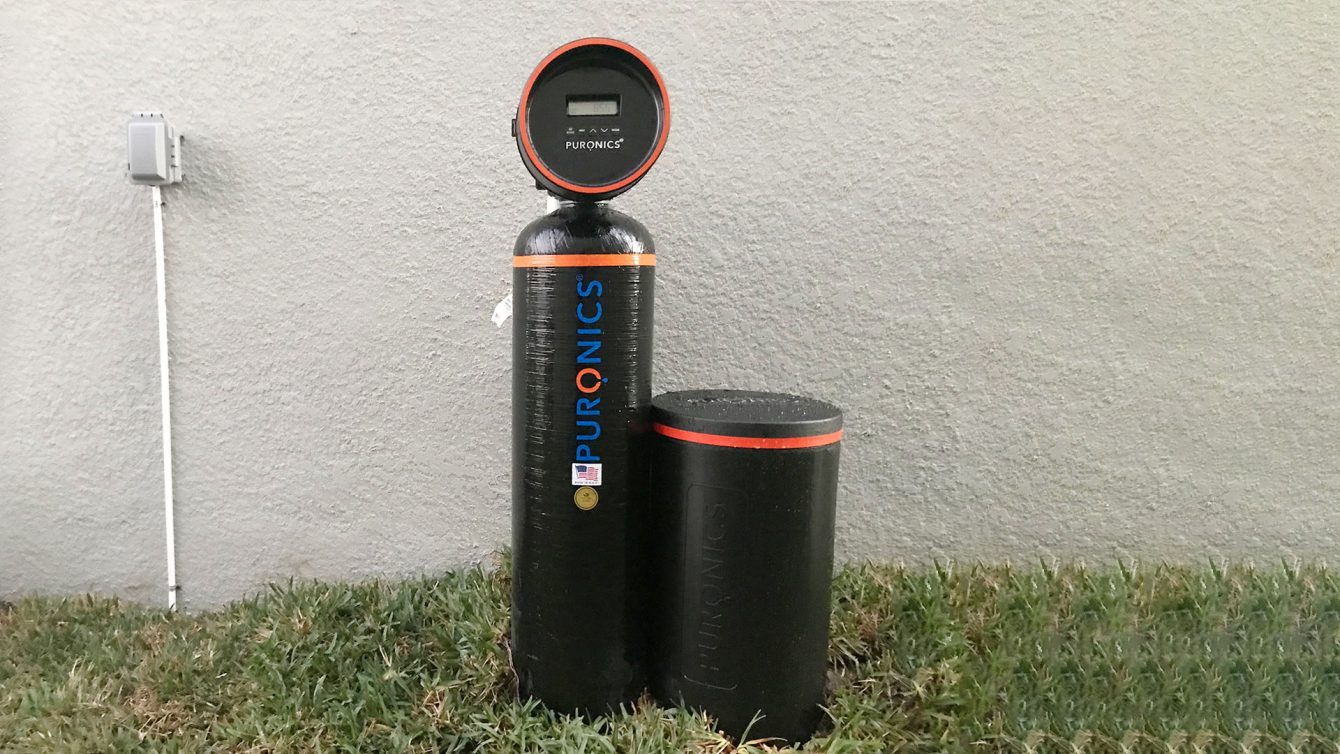
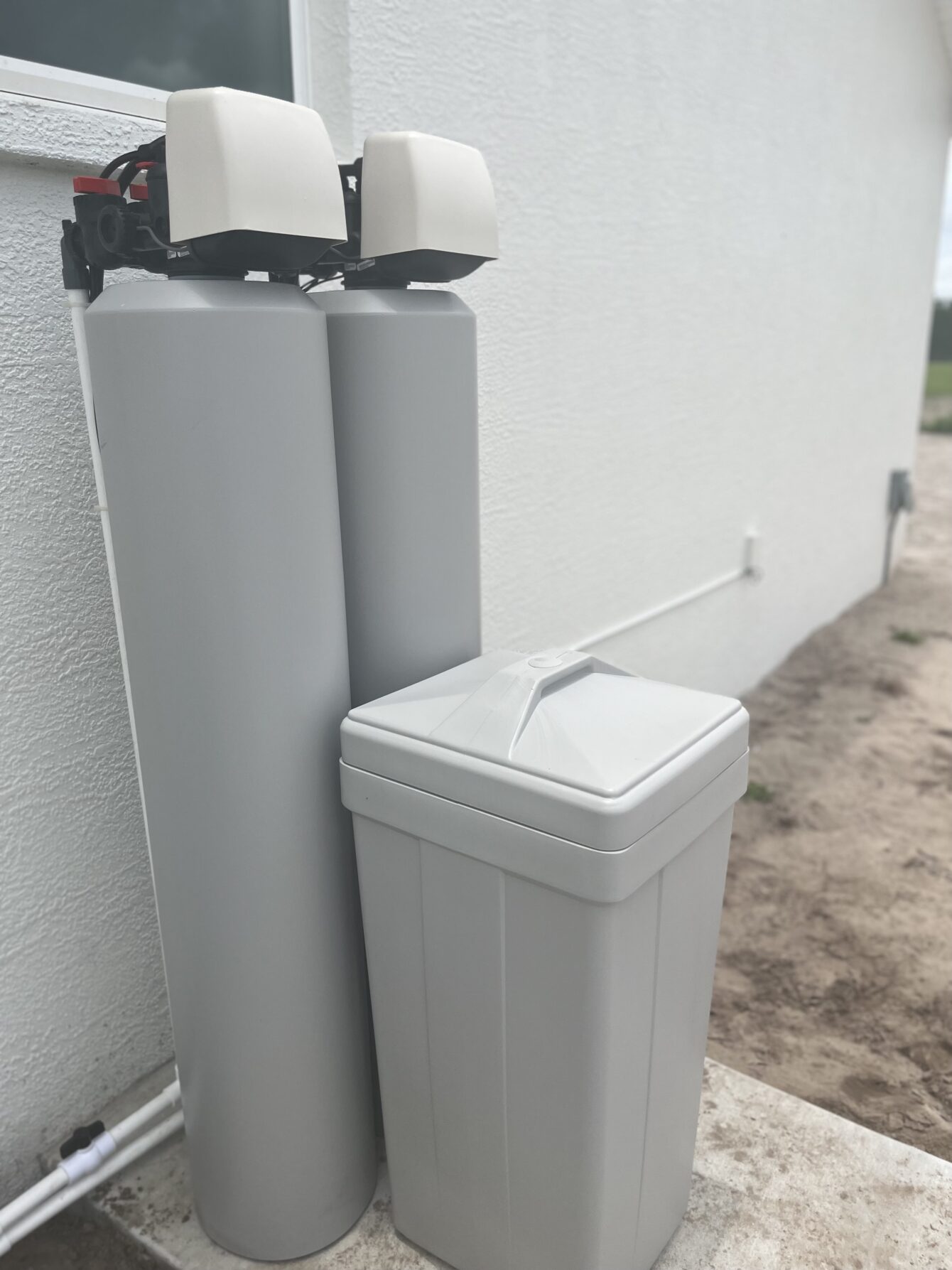
Hard water is water carrying dissolved calcium and magnesium — the minerals behind spotty dishes, soap scum, scale, and dull laundry. A water softener reduces that hardness (typically to around 1 grain per gallon or less) using ion-exchange resin, so those problems go away throughout the house.
→ Our whole-home softeners
How does a water softener save money?
By protecting what your water touches. Softened water means less scale in your pipes and water heater, longer life for appliances and fixtures, and less soap, detergent and cleaning product used — small savings that add up over the years, on top of nicer water day to day.
→ See whole-home softeners
What does a water softener actually do?
It removes the dissolved calcium and magnesium (“hardness”) that cause spotting, scale in your pipes and water heater, soap scum, and dry skin and hair. It uses ion-exchange resin and regenerates itself on a schedule. It does not remove chlorine or improve taste — that’s a job for carbon.
→ See whole-home softeners
Salt-free vs. salt-based — which is better?
It depends on your goal. A traditional salt-based softener truly
removes hardness and is the most effective for scale and spotting. Salt-free “conditioners” don’t remove hardness — they change how it behaves to reduce scale, with no salt and no wastewater. We’ll walk you through the trade-offs for your water and home.
→ Compare our softeners
Does a water softener remove chlorine?
No. Softening resin handles hardness, not chlorine or chloramine. To remove the “pool water” taste and smell you want catalytic carbon — often paired with the softener, or built into our house-brand combo tank.
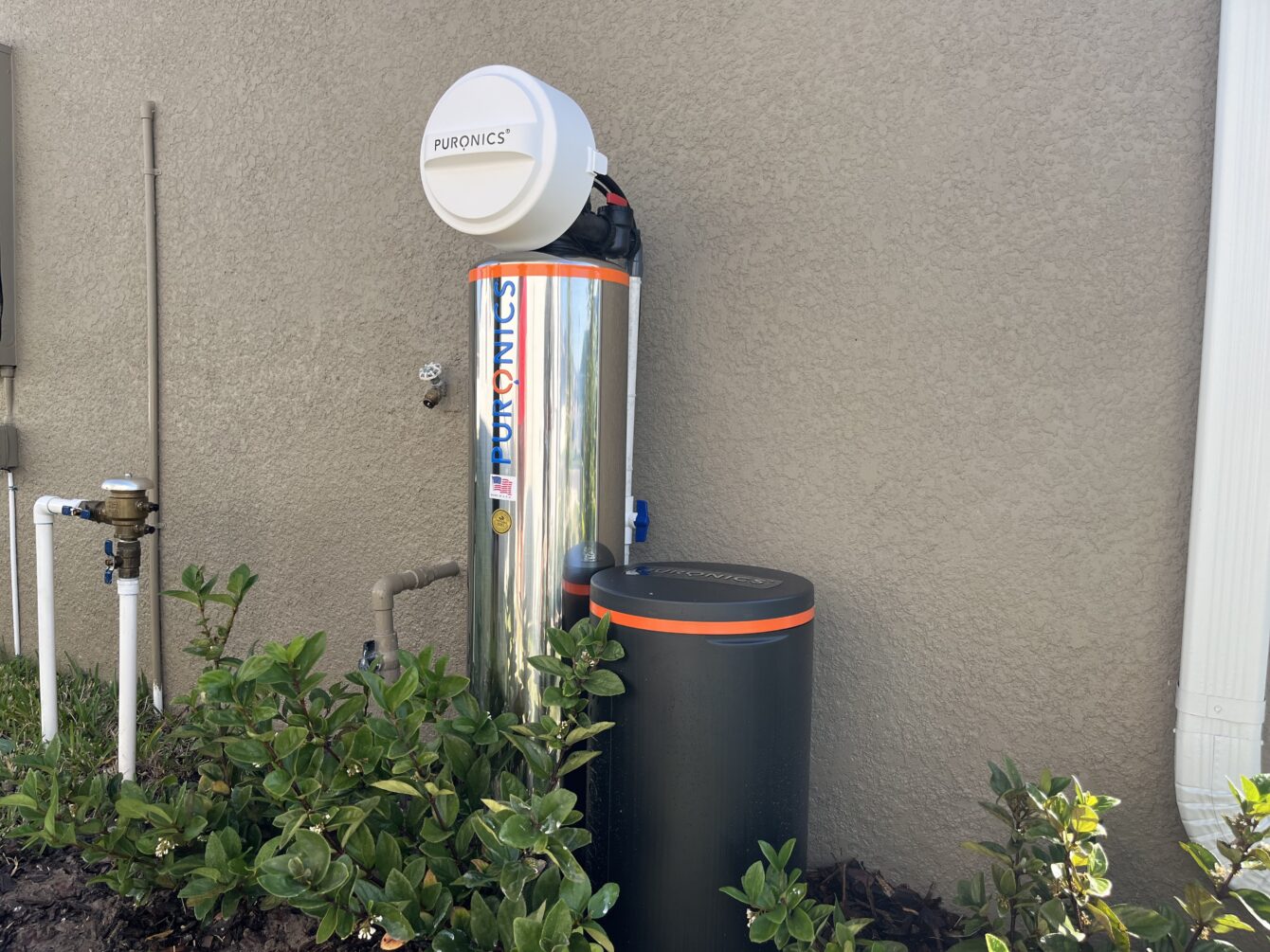
→ Defender 30C with catalytic carbon
Why is my water still hard after installing a softener?
Common causes: it’s out of salt or bridged, it’s undersized for your hardness and household, the bypass is open, or the settings aren’t dialed in for your actual grains-per-gallon. It’s almost always fixable — we can check it on a service visit.
→ Softener service & repair
How often should I add salt, and what kind?
Check the brine tank every couple of months and keep it at least a third full. We generally recommend quality solar or crystal salt over pellets, which can leave binder residue and bridge in the tank. Modern systems mostly maintain themselves.
→ Maintenance & service
How long does a water softener last?
A quality, properly maintained softener commonly lasts 10–15+ years. Water chemistry, sizing and upkeep all matter — and the resin and valve are serviceable, so the whole unit doesn’t have to be replaced at the first issue.
→ Our whole-home softeners
Why did I suddenly lose water pressure?
A sudden drop usually comes down to one of a few things, and there’s a quick way to narrow it: bypass the system. If your pressure comes right back, the restriction is inside the unit; if it’s still low, the problem is upstream — your well pump or pressure tank, a failing pressure-reducing valve, or a leak. Inside the system, the usual suspects are a loaded sediment pre-filter (the cheapest, most common one), a control valve or distributor screen clogged with fines, or the media itself — a fouled or channeled bed, iron-bound resin, or resin that’s broken down over time. On city water here, chloramine is hard on softener resin when there’s no carbon filter ahead of it, so a system that’s a few years old may simply be due for new media. We can pinpoint it fast — usually same day — and tell you whether it’s a quick fix or time to rebed.
Book a free water test →
What is reverse osmosis, and do I need it?
RO pushes water through a very fine membrane to reduce dissolved solids and a wide range of contaminants right at your drinking tap. If you want bottled-water taste for drinking, coffee and ice — or peace of mind on things like lead at the tap — RO is the answer. A whole-home softener doesn’t lower TDS, so RO complements it.
→ See drinking water systems
Does reverse osmosis remove PFAS?
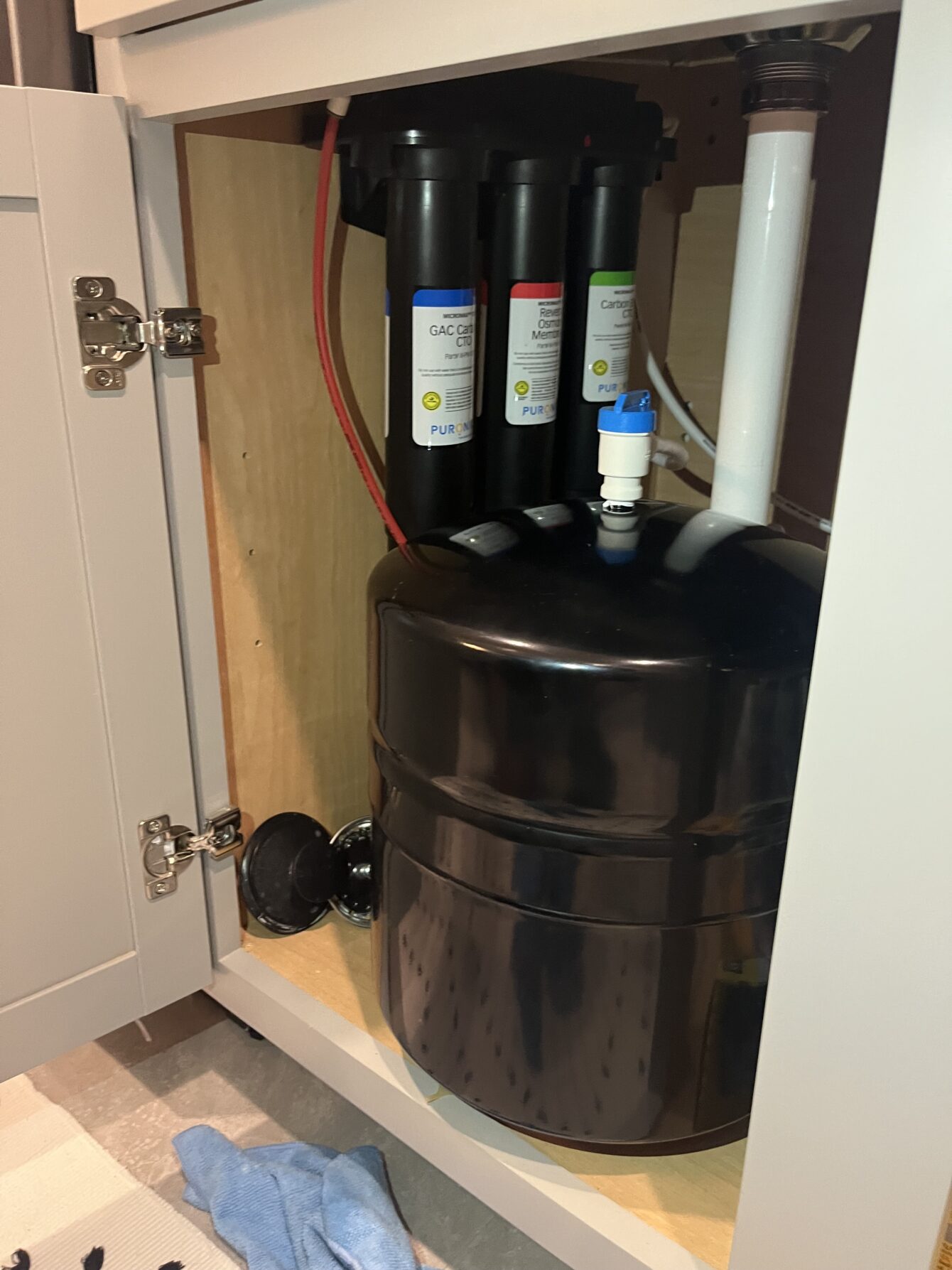
Certain certified RO systems reduce PFAS (PFOA/PFOS) — our Puronics Micromax 8500 is certified to NSF/ANSI 53 for VOCs and PFOA/PFOS, plus NSF 58 for a long contaminant list. We match the system to what your test and water report show.
→ Micromax 8500 (PFAS-certified)
Under-sink vs. whole-home RO — which do I need?
For most homes, an under-sink RO at the kitchen tap is the right, cost-effective choice for drinking water. Whole-home RO is a bigger, specialized system for specific situations. We’ll tell you which one your situation calls for.
→ See drinking water systems
How often should I change my RO filters?
As a rule of thumb, the pre/post carbon and sediment filters annually and the membrane every few years, depending on your water and usage. We offer filter-change service so you don’t have to track it.
→ RO filter service
Why does my well water smell like rotten eggs?
That’s hydrogen sulfide, common in SW-Florida wells, and it’s often worse on the hot side. Air injection (AIO) oxidizes and filters it out with no chemicals; heavier cases may use chlorine or peroxide injection. We test the well and size it to what’s actually there.
→ Air injection for iron & sulfur
Why do I have orange or rust stains on fixtures and laundry?
That’s iron, typical of well water. Air injection (AIO) oxidizes and filters iron out before it stains. We confirm the type and level with a test, then match the media so it actually stays clear.
→ Iron & sulfur removal
Why is my well water yellow or tea-colored?
Usually tannins — organic color from vegetation in the ground. A tannin-selective softener clears it. Because tannins behave differently from hardness, sizing and resin choice matter, so we test first.
→ Tannin removal
Is my well water safe, and how do I get it tested?
Private wells are unregulated and untreated until you treat them, so UF/IFAS recommends testing at least once a year for bacteria and nitrate. We offer a free in-home test and can arrange lab-certified testing (including for FHA loans) when you need documentation.
→ Free well-water test
Are all water treatment systems the same?
No — quality and certification vary a lot. We install top-rated systems that carry the credentials that matter: WQA Gold Seal, and NSF/ANSI certifications for the specific claims (for example NSF/ANSI 44 for softeners, and NSF 53/58 for drinking-water systems). We’d rather put in the right, certified equipment than the cheapest box.
→ What makes our systems different
Do I need a sediment pre-filter with my system?
Usually not. Our whole-home systems
backwash and clean themselves on a regular cycle — automatically flushing out sediment and refreshing the media — so a separate sediment pre-filter is typically redundant. A pre-filter is one more thing to buy and change on a schedule, it adds maintenance, and if it clogs it can restrict your water flow. True to our WQA code of ethics, we add pre-filtration only when your specific water actually calls for it (for example, unusually heavy sediment or a particular well condition) — never as a default add-on. Comparing two otherwise-identical systems where one includes a pre-filter? It’s worth asking why it’s needed.
→ See our whole-home softeners
What water-quality certifications should I look for?
Look for the
WQA Gold Seal and
NSF/ANSI certifications tied to what the system claims to do — NSF/ANSI 44 for water softeners, NSF/ANSI 53 and 58 for reverse osmosis and contaminant reduction, and NSF 42 for taste/odor. Certification means an independent lab verified the performance, not just the marketing.
→ See our NSF-certified systems
Do I need a water softener in a brand-new home?
New construction doesn’t change the water — if the area’s water is hard (it is, across Manatee/Sarasota), a new home gets the same spots and scale. Many builders rough-in a softener “loop” but don’t install a system; we can tie into that loop cleanly and size it right.
→ Whole-home softeners
What’s the builder “loop” I keep hearing about?
It’s a pre-plumbed connection point (usually in the garage) that builders leave so a softener can be added later. Having the loop makes installation cleaner and faster — but the loop itself does nothing until a system is connected.
→ Ask us about builder loops
What does a water system cost, and do you finance?
It depends on your water and the right-sized solution — which is exactly what the free test tells us. We quote for what you actually need, our house-brand softener is priced to your home after the free test, and we offer financing with convenient monthly payments. Puronics systems are quoted individually.
→ See financing options
Do you really offer free water testing?
Yes. We come to you, test your water, explain the results in plain English, and let you decide — no pressure and no scare tactics. That test is how we recommend only what your water actually calls for.
→ Book your free water test
My softener is full of salt but my water feels hard again — what’s wrong?
You likely have a salt bridge. A hard crust of salt forms across the top of the brine tank with an air gap underneath, so the water never reaches the salt and the softener stops regenerating — the tank looks full, but no soft water is being made. It’s common in humid Florida garages, especially with the wrong salt or an overfilled tank. Breaking the bridge up (carefully, or on a service call) usually drops the salt level 12–18 inches. If your water has gone spotty or your soap won’t lather even though the tank is full, that’s the most likely cause.
Do you deliver water softener salt?
Yes. We deliver and load softener salt across Bradenton and the Suncoast, so you don’t have to haul heavy bags. It’s available on its own or bundled into our Platinum Care plan with quarterly deliveries — and while we’re there we’ll check your brine tank for salt bridges and confirm you’re using the right salt for your system.
Do local watering restrictions mean there’s something wrong with the water?
No — watering restrictions are about conserving water during dry conditions, not water quality. Southwest Florida, including Manatee and Sarasota counties, has been under the Southwest Florida Water Management District’s restrictions (a Modified Phase III “Extreme” Water Shortage), which limit most homes to watering the lawn one day a week. That’s an outdoor-irrigation rule — it has nothing to do with the quality of the water at your taps, and it doesn’t affect your water softener or reverse osmosis system, which run indoors as normal. Check your county’s current watering-day schedule, since the assigned day depends on your address and the rules change with the seasons.
Does red tide affect my drinking water?
No. Red tide (Karenia brevis) is a marine algae bloom in the Gulf that affects coastal water, beaches and the air near the shore — not the treated drinking water piped to your home. Your municipal water is drawn and treated separately, and a home softener or reverse osmosis system handles hardness, chlorine and other contaminants, which are different issues entirely. So even during an active bloom, your tap water isn’t the concern. If you’re unsure what a home system does and doesn’t treat, a free in-home water test is the way to find out.
Why does my new reverse osmosis or drinking water taste a little funny at first?
A brand-new system can taste slightly off for the first few days, and it’s completely normal. Fresh carbon filters and new fittings need to be flushed out — running water through the lines for the first couple of days clears that initial taste before you rely on it for drinking. It doesn’t mean anything is wrong with the water or the system. It tends to show up more in homes that don’t use much water, since the lines flush more slowly — so if you’re a light water user, just run a little extra through for the first few days. If a funny taste sticks around after that, give us a call and we’ll retest and check it.
Why is my water dark or black right after a new whole-home system is installed?
That’s normal and temporary — and it startles a lot of people, so it’s worth knowing ahead of time. A new whole-home system is packed with fresh filter media like catalytic carbon, and the very first water through it can carry fine carbon dust, so it can look dark or black for a moment. It’s harmless. The fix is simple: let the tank fill, then drain it once or twice to flush the fine particles out, and the water runs clear. It’s also smart to check the connections for leaks over the first couple of days after any install — and any time the system is serviced or touched. If the discoloration doesn’t clear after a flush or two, give us a call.