Manatee · Sarasota · Hillsborough · Pinellas · Charlotte
Catalytic Carbon vs. Activated Carbon: The Right Filter for Suncoast Water
4.7★ from 212 Google reviews · WQA Gold Seal Puronics dealer · Our own techs, no subcontractors
Request your free water test
★★★★★ 4.7 — a few details and we reach out, usually same day.
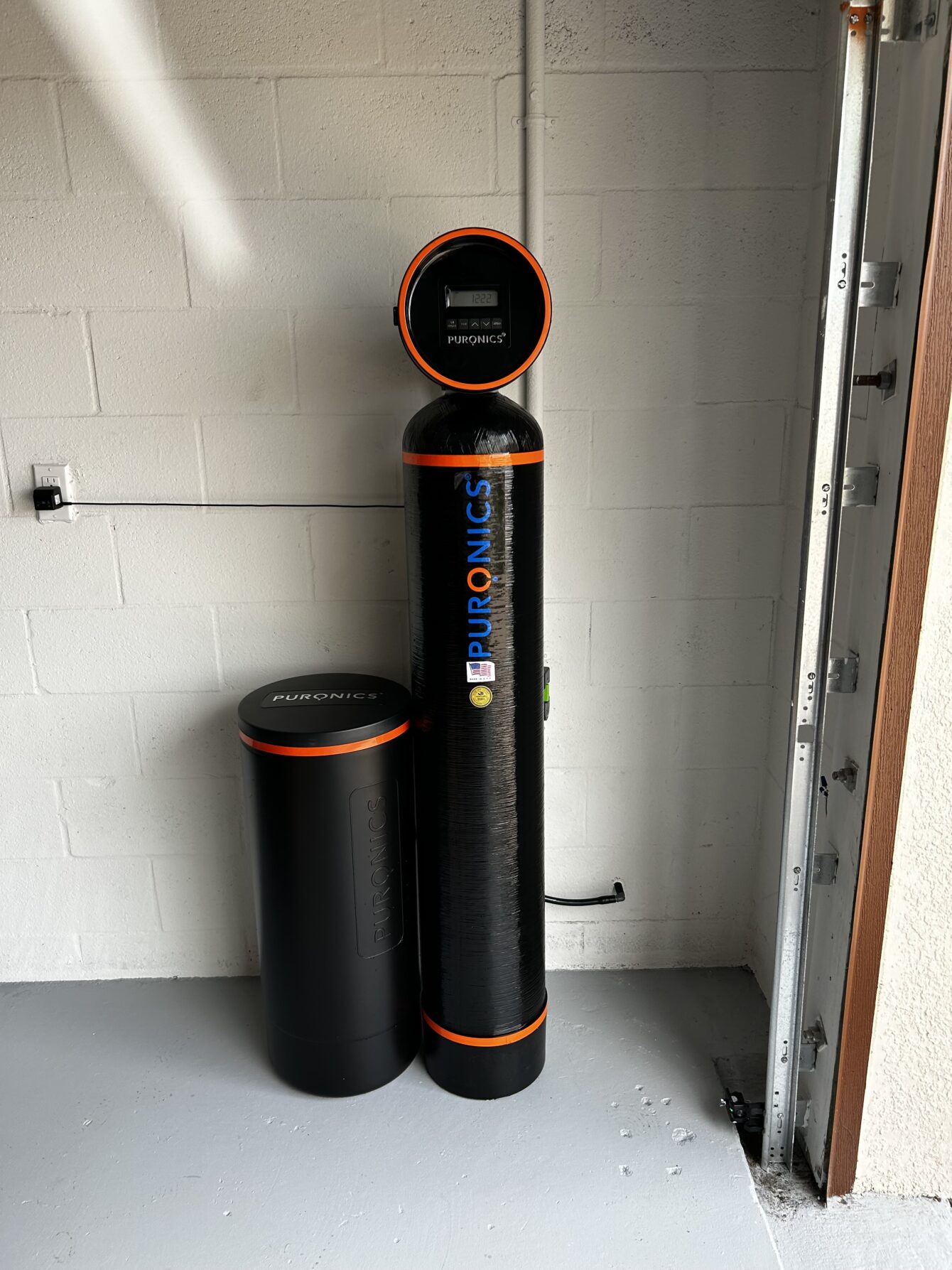
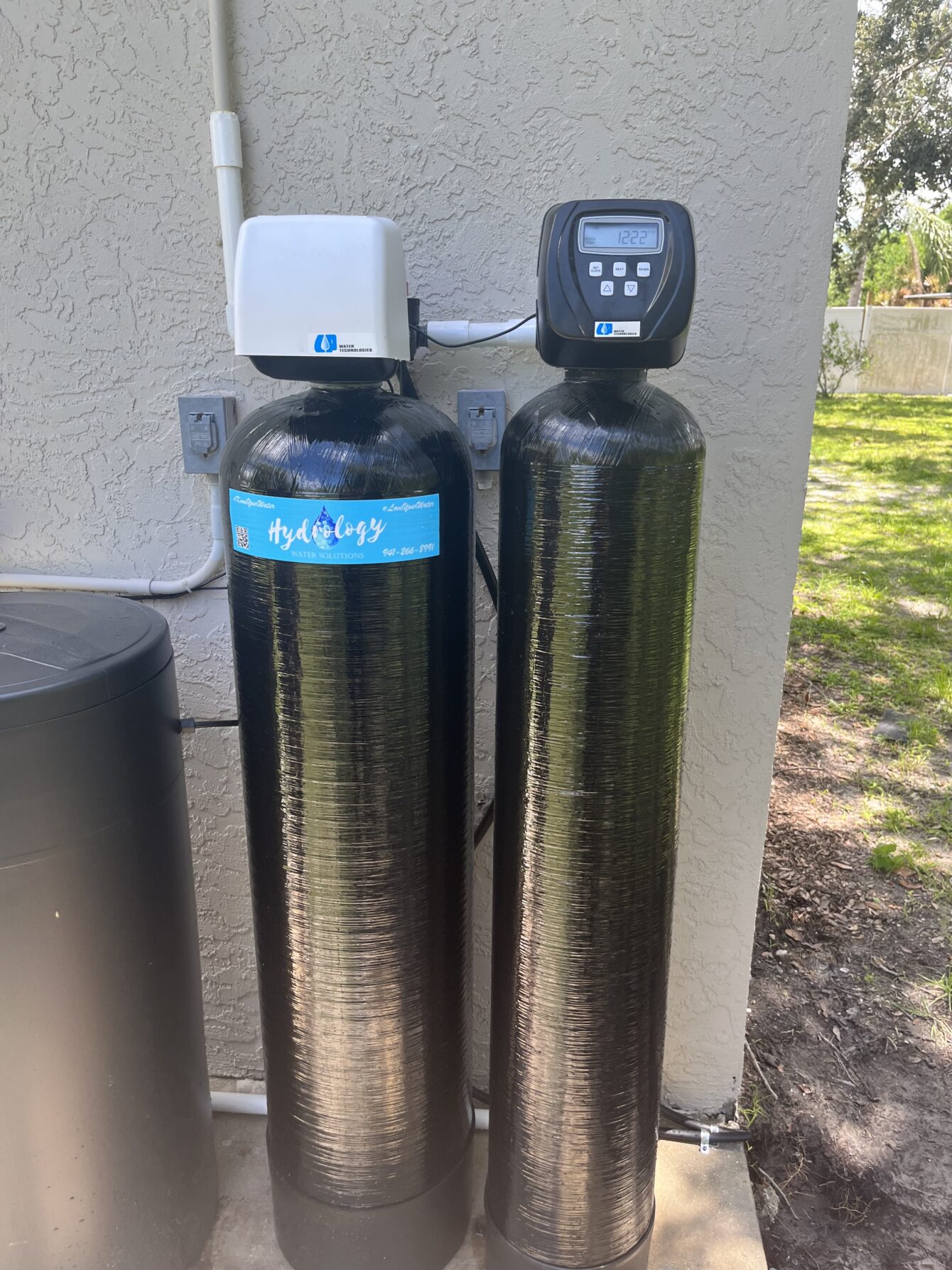
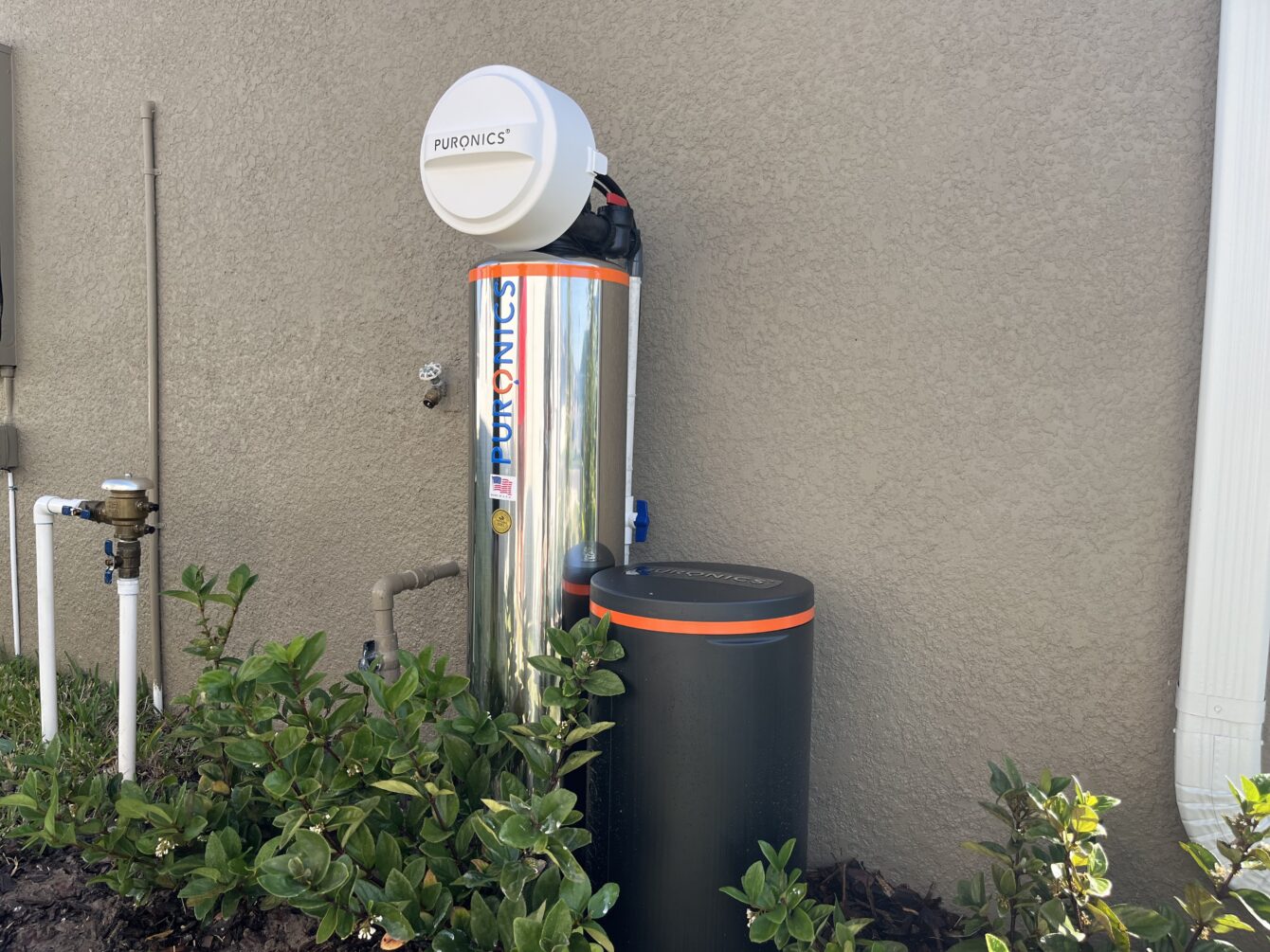
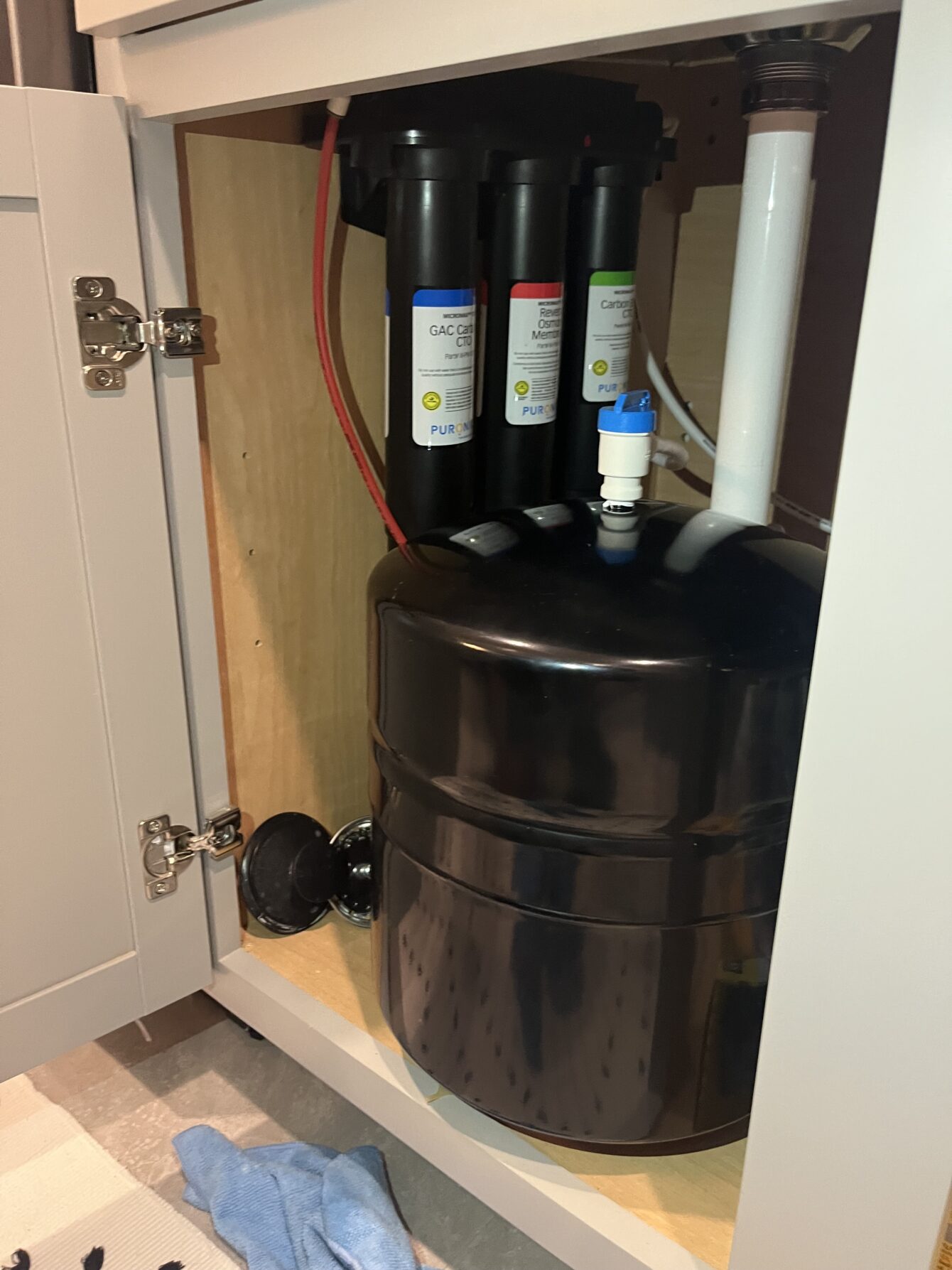
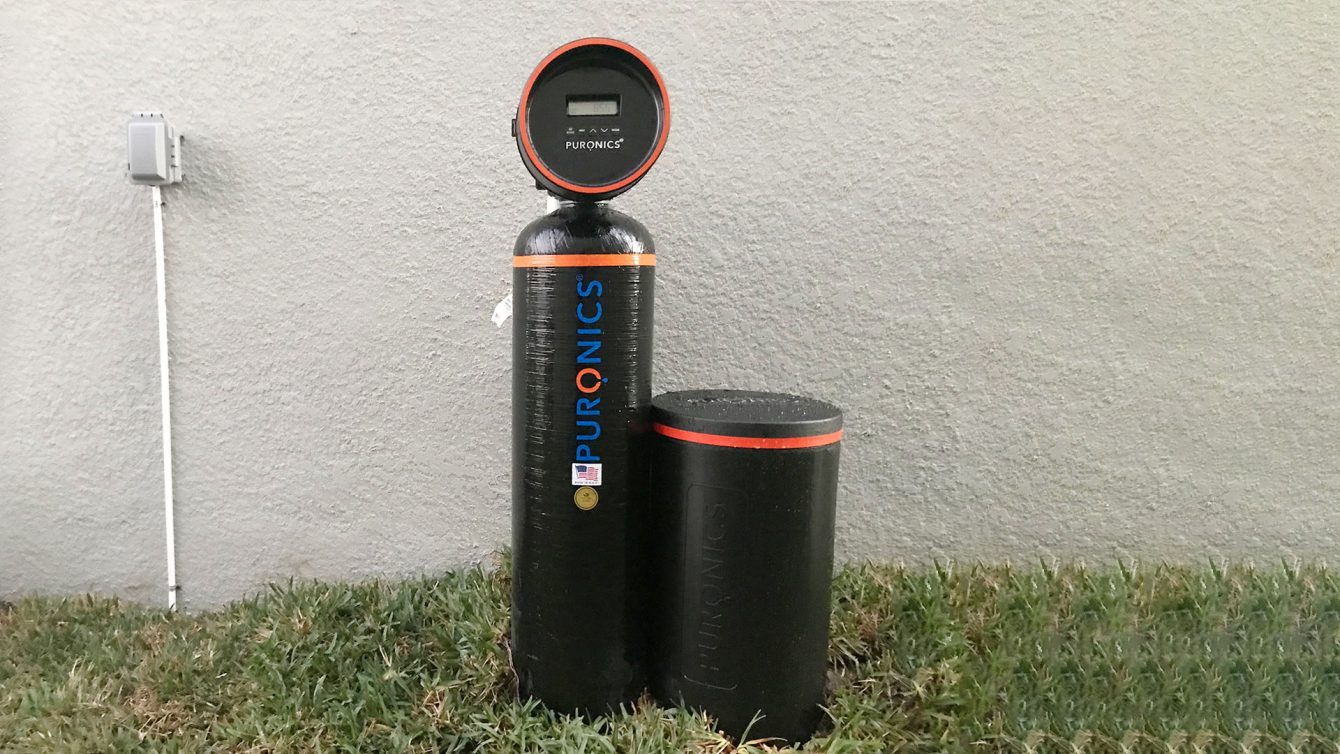
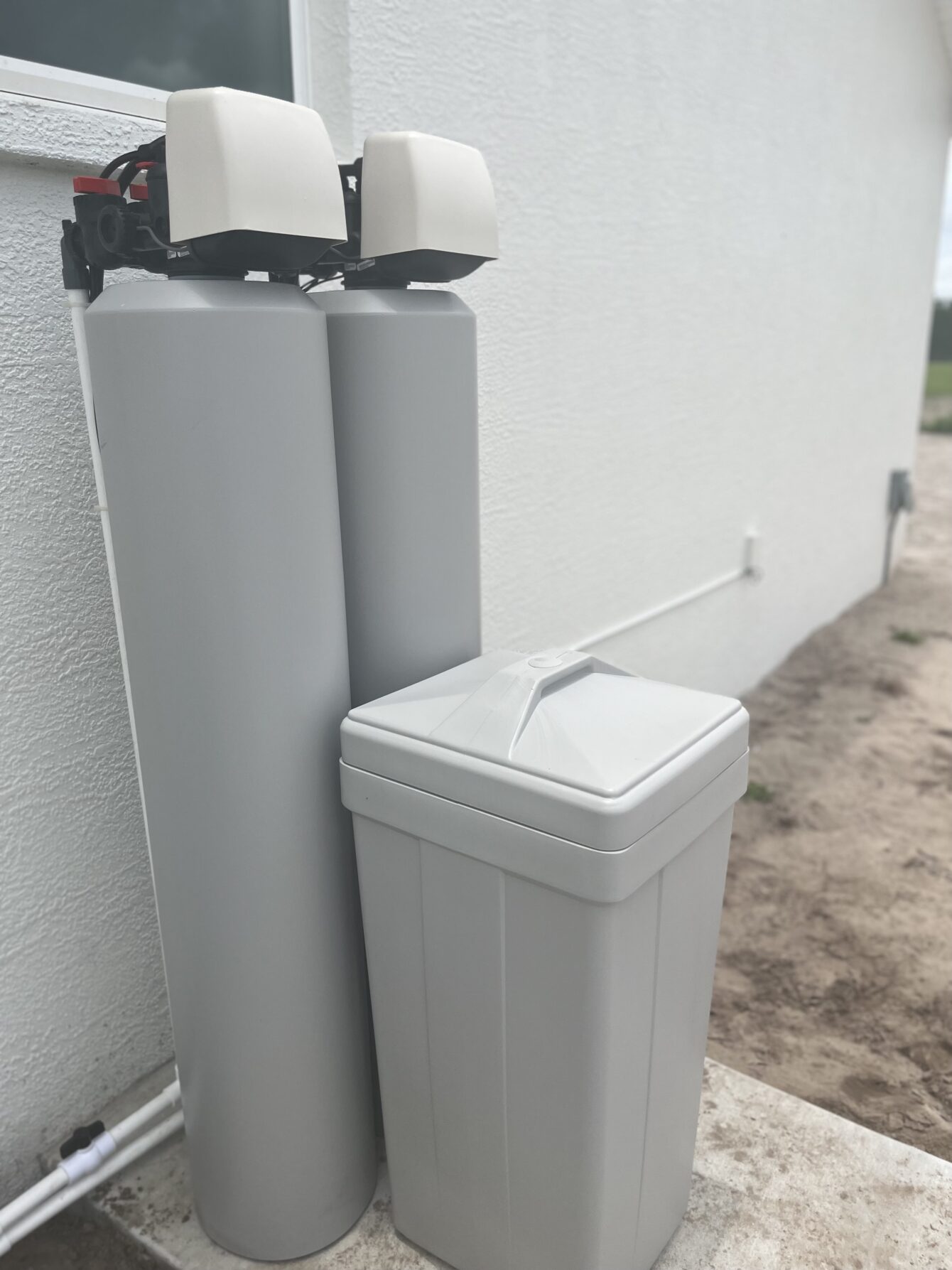
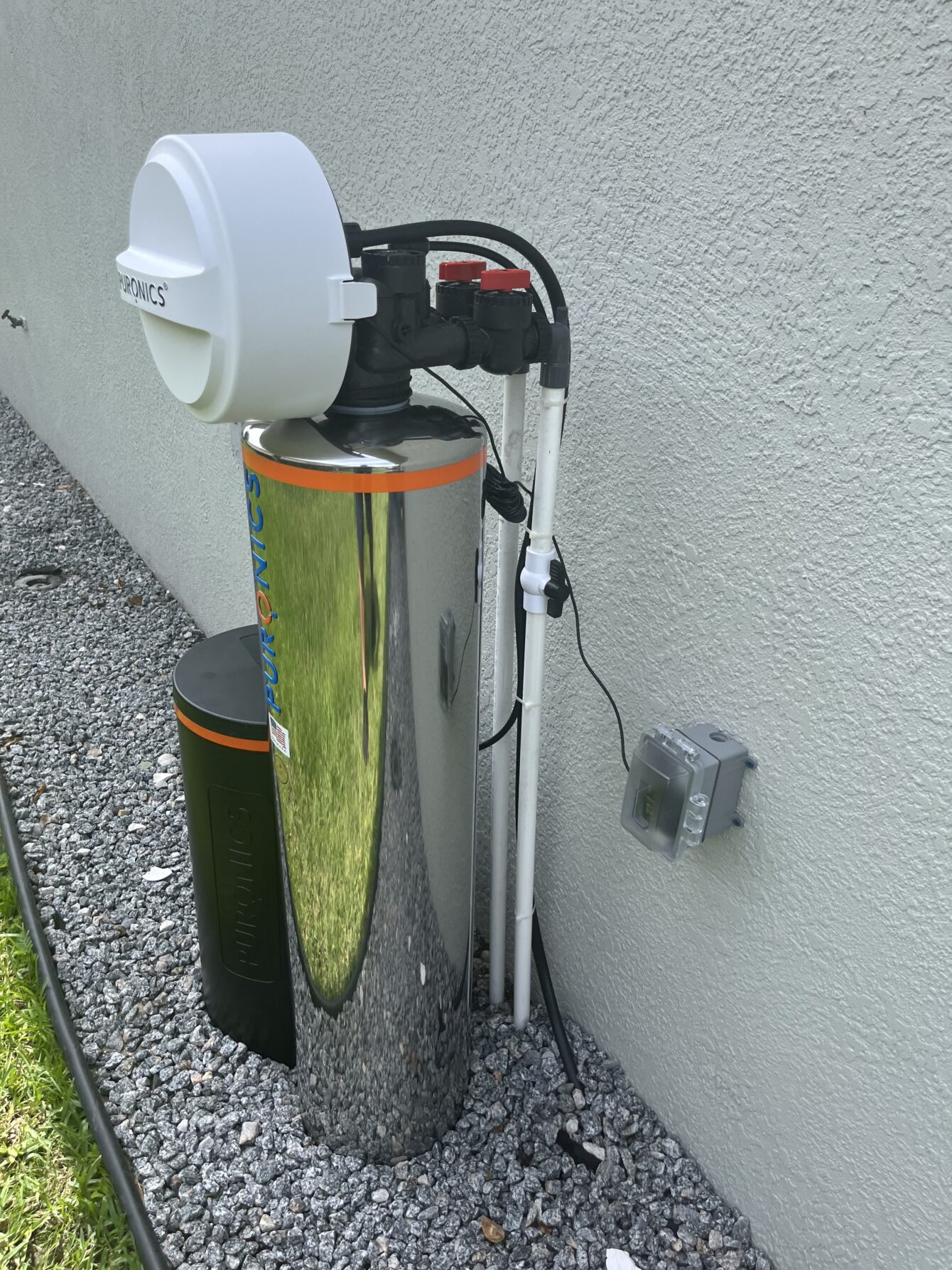
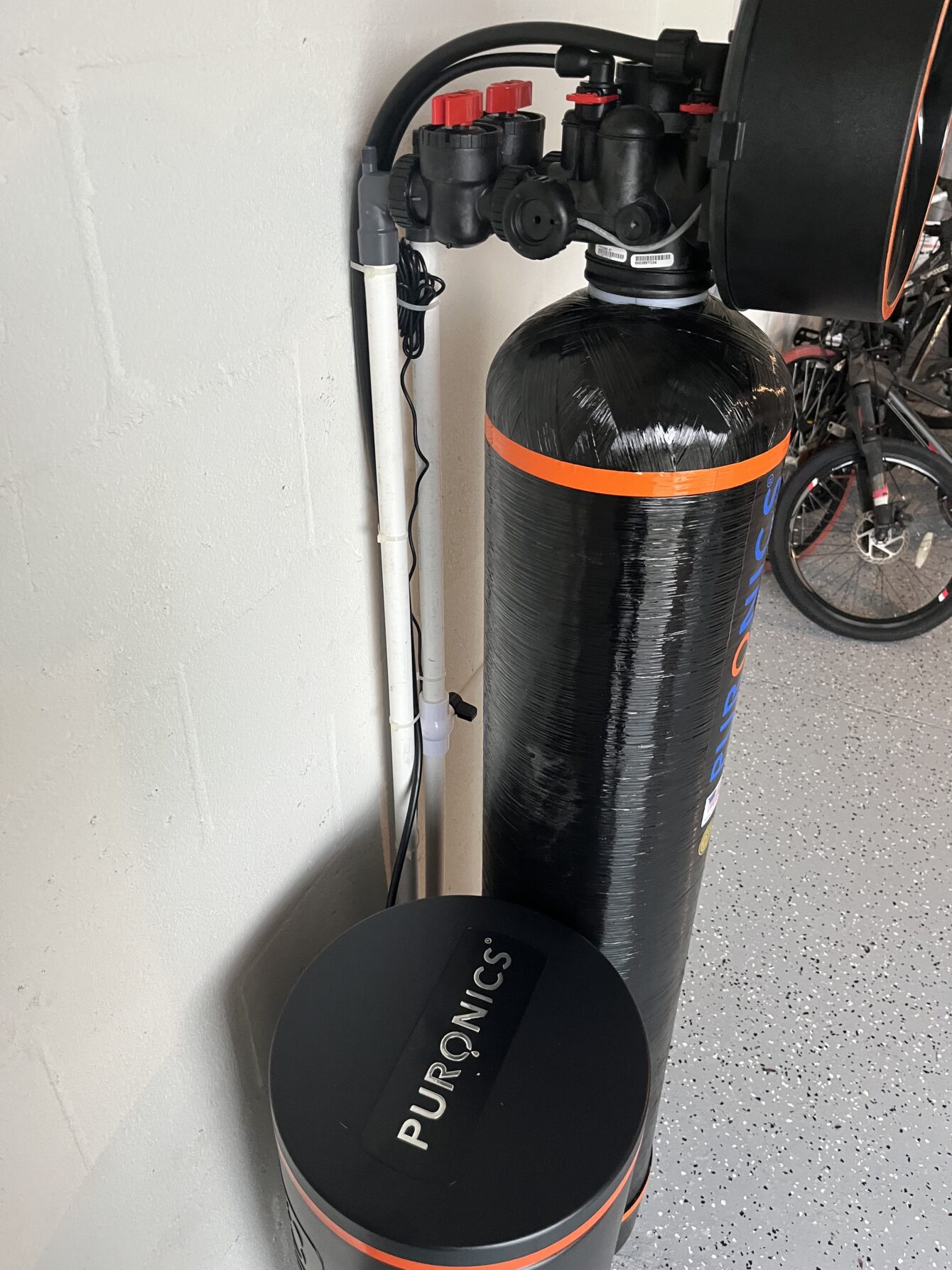
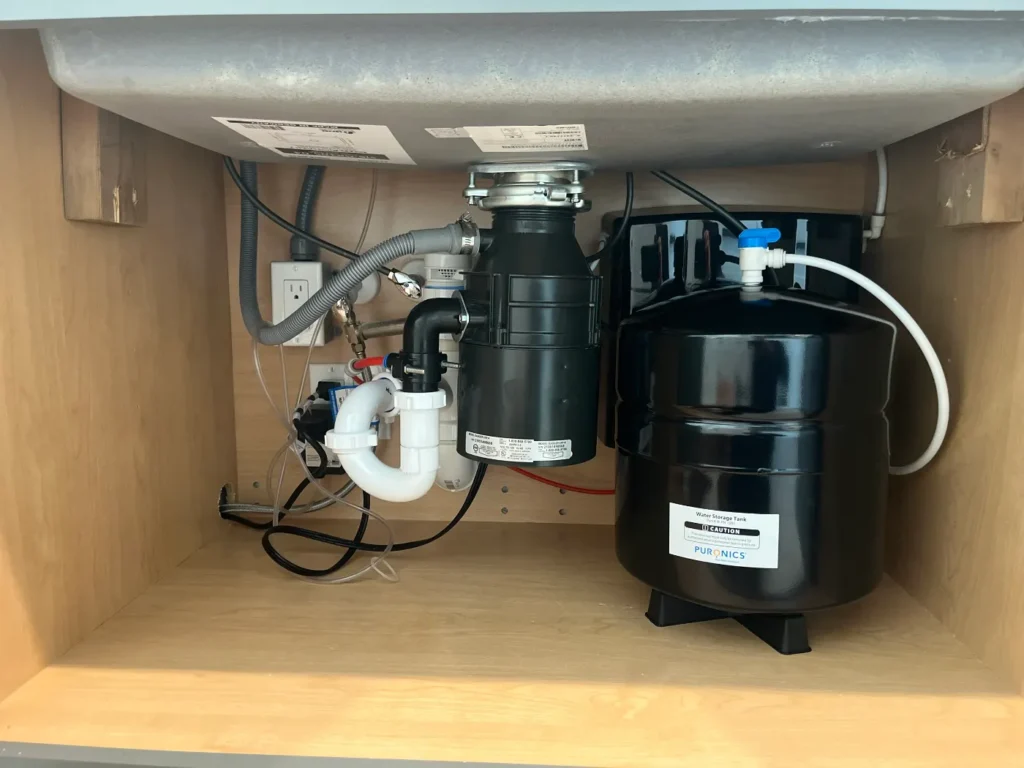
Our install · a real job, not stock
Most whole-house filters use standard activated carbon. Ours use catalytic carbon — WQA-certified and rated for up to 2,000,000 gallons. On chloramine water (most of the Suncoast), that one difference is everything. Here’s the plain-English why.
Rated to reduce chlorine and chloramine taste and odor for up to roughly 2,000,000 gallons of municipal water at normal flow — for most households that’s many years before the media is replaced. Capacity varies with your water and usage.
First, what carbon filtration does
Carbon is the workhorse of whole-house water treatment. As water passes through a bed of carbon, the carbon’s enormous internal surface area grabs and holds contaminants — a process called adsorption. It’s what makes filtered water taste and smell clean, and it’s the stage that removes the disinfectant your utility adds. The catch is that not all carbon removes every disinfectant equally, and that’s where activated and catalytic carbon part ways.
Activated vs. catalytic: the real difference
Activated carbon
Carbon that’s been “activated” (processed to open up a huge network of pores) so it can adsorb — physically trap — chlorine, tastes, odors and many organic compounds. It’s effective, inexpensive and the default in most systems.
Great at: chlorine, taste and odor.
Weak at: chloramine — it can only remove it slowly and incompletely.
Catalytic carbon
Activated carbon whose surface is further treated to give it catalytic activity — meaning it doesn’t just trap contaminants, it speeds up a chemical reaction that breaks chloramine apart into components that are then removed. It does everything activated carbon does, plus the chloramine job.
Great at: chloramine, chlorine, taste, odor, and disinfection-byproduct precursors.
Put simply: activated carbon holds contaminants; catalytic carbon holds and helps destroy the tough one — chloramine. Both are carbon, but the surface chemistry is different, and that changes what they can do.
Why chloramine is the whole point here
Utilities disinfect water two common ways: with free chlorine, or with chloramine (chlorine combined with ammonia). Chloramine is more stable, lasts longer in the pipes, and produces fewer regulated byproducts — which is why so many systems across Manatee, Sarasota, Pinellas and Hillsborough use it. The trade-off is that chloramine is harder to filter out. Standard activated carbon reduces it only partially and burns through its capacity fast trying. Catalytic carbon is designed for exactly this — it catalyzes the reaction that breaks the chlorine-ammonia bond, so the chloramine is actually reduced rather than slowly nibbled at.
Side by side
| What it handles | Standard activated carbon | Catalytic carbon |
|---|---|---|
| Chlorine | Yes | Yes |
| Taste & odor | Yes | Yes |
| Chloramine | Poor / slow | Yes — its specialty |
| Hydrogen sulfide (“rotten egg”) | Limited | Better |
| Disinfection-byproduct precursors | Partial | Better |
| Best use in our area | Chlorine-only systems | Chloramine systems (most of the Suncoast) |
Certified media that lasts — up to 2,000,000 gallons
Good catalytic carbon isn’t just about what it removes — it’s about how long it keeps doing it. The catalytic carbon media in our whole-house systems is rated to reduce chlorine and chloramine taste and odor for up to roughly 2,000,000 gallons of municipal water at normal service flow. For a typical Suncoast household that translates to many years of treated water at every tap before the media is replaced — not an annual cartridge swap. And it’s not a marketing number: our systems are WQA-certified to NSF/ANSI 42 for chlorine taste and odor reduction, so the performance is third-party verified. You can confirm any product’s certification yourself at wqa.org/find-products.
Why bed size and contact time matter
Catalytic carbon needs enough contact time — the seconds water spends touching the carbon — to do its job. Undersize the carbon bed and even the best media can’t keep up at a family’s peak flow, so chloramine slips through. That’s why we size our catalytic-carbon beds larger than a bargain system would, and match the tank to your household’s real water use. Media quality and media quantity both matter; a small tank of great carbon still under-performs.
How we build it
Our Hydrology Essentials whole-house system is built around exactly this — a Clack control valve with a media bed layered for both softening and chloramine removal (softening resin, granular activated carbon, catalytic carbon and a gravel support bed) so you get soft, chloramine-free water at every tap in one tank. Want softening plus an even larger catalytic-carbon stage? Our flagship Puronics Defender 30C pairs a softener with a generous catalytic-carbon bed and carries WQA Gold Seal certification. Ask any competitor whether their whole-house filter uses catalytic carbon, how big the bed is, and how many gallons it’s rated for — the answer tells you whether it can actually handle our water. For the full picture of every filtration stage, see our complete whole-house water filtration guide.
Frequently asked questions


What your neighbors say
4.7★ from 212 Google reviews.
“I cannot say enough amazing things about this company and system! We had three companies come out and Hydrology stood out on every level.”
“We’ve had our system now a month and absolutely love it. My wife is a hair beautician with over 30 years of experience and definitely can tell the difference with the water.”
“Wow, I can definitely feel a difference in my hair, skin, and when I wash my hands. I knew getting a water softener was a priority and I’m so glad I decided to go with Hydrology.”
Every review is on our Google profile — read all of them there. We don’t cherry-pick; we just answer the phone.
Keep reading: Softener vs whole-house filter
Straight answers
Common questions.
What people ask before they book.
More water answers →
What hard water does to a home: the Battelle study →
Does my water have chloramine or chlorine?
Most of the Suncoast uses chloramine — Manatee County (Lakewood Ranch, Bradenton, Parrish) and much of the Tampa Bay Water supply serving Pinellas and Hillsborough. The surest way to know is your utility’s annual water-quality report, or we’ll confirm it during a free in-home test.
Will a standard carbon filter remove chloramine at all?
It removes a little, slowly, but it’s not designed for it and its capacity is used up quickly. For meaningful chloramine reduction you want catalytic carbon.
How long does the catalytic carbon last?
The media is rated to reduce chlorine and chloramine taste and odor for up to roughly 2,000,000 gallons of municipal water at normal flow — many years for a typical household. Actual life depends on your water chemistry and how much water you use, and we tell you the expected interval for your specific system.
Is catalytic carbon worth the difference in cost?
If your water is chloramine-treated — most of our area — yes, because it’s the media that actually does the job. Paying less for standard carbon that can’t reduce chloramine isn’t a saving; it’s a system that doesn’t do what you bought it for.
Does catalytic carbon also soften water?
No — carbon and softening are different jobs. Carbon handles chlorine/chloramine, taste and odor; a softener handles hardness. That’s why our whole-house systems pair a softener with catalytic carbon so you get both in one system.