Water answers · Pinellas County water
What’s in
Pinellas County water?
Most of Pinellas County drinks Tampa Bay Water, and the county publishes more than most: hardness, chloramine and the twice-a-year switch to free chlorine. Here’s what it means at your tap.
By Brad Germain, owner of Hydrology Water Solutions · Updated September 2026
4.7★ from 212 Google reviews · WQA Gold Seal Puronics dealer · Our own techs, no subcontractors
Request your free water test
★★★★★ 4.7 — a few details and we reach out, usually same day.
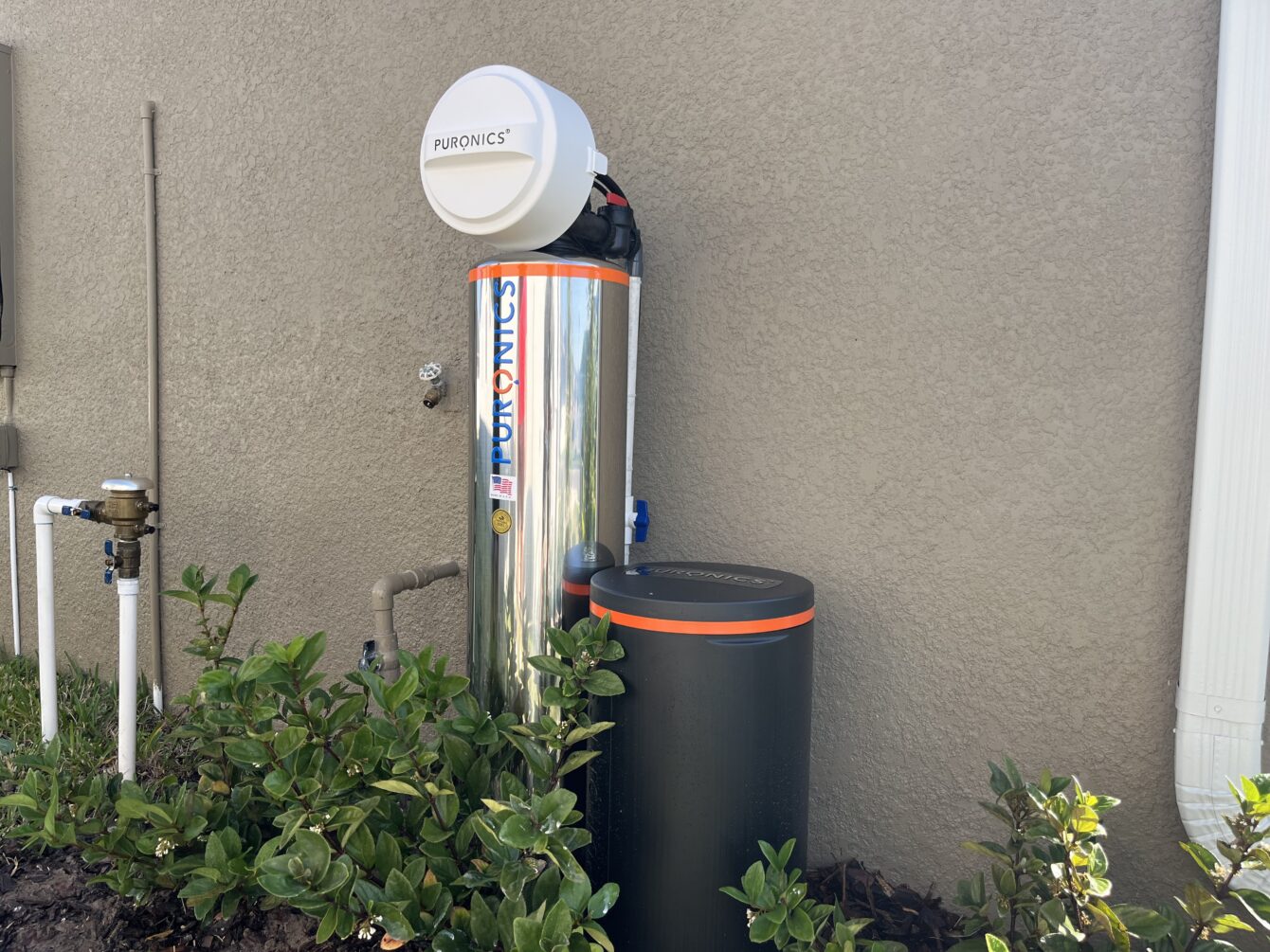
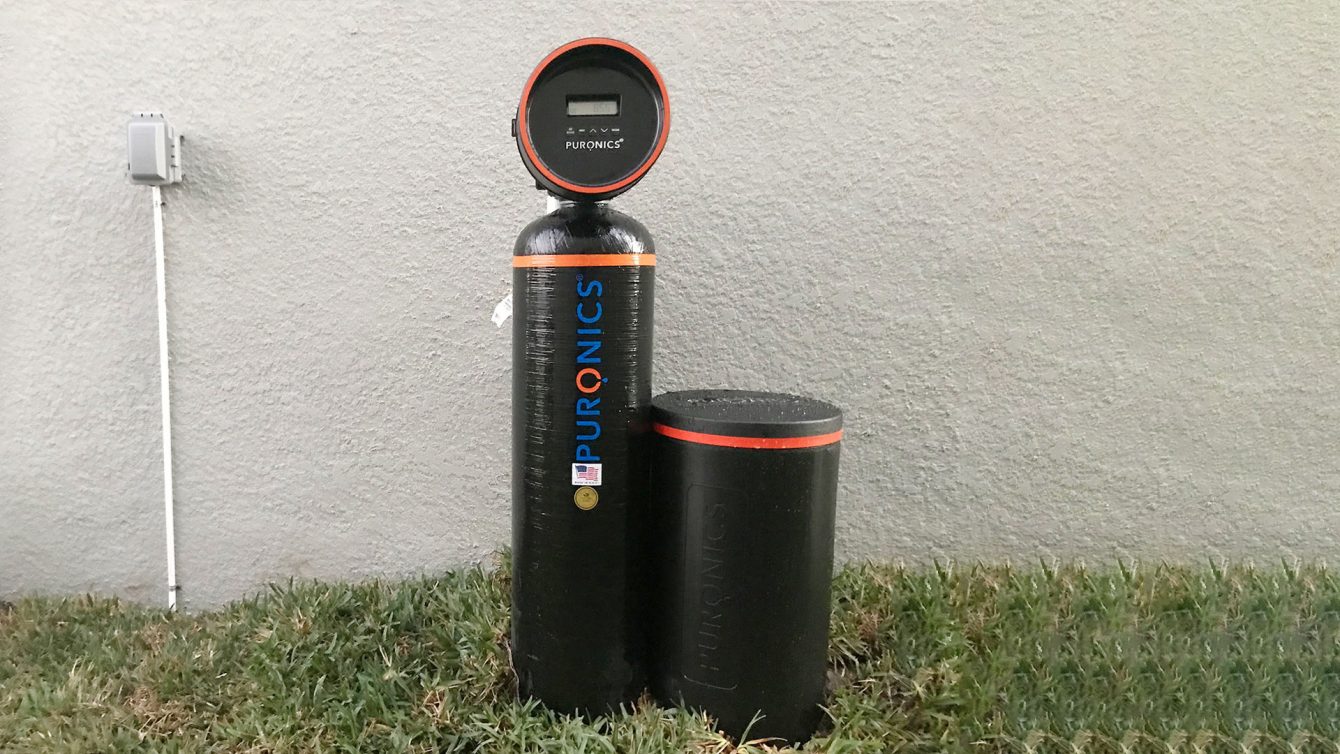
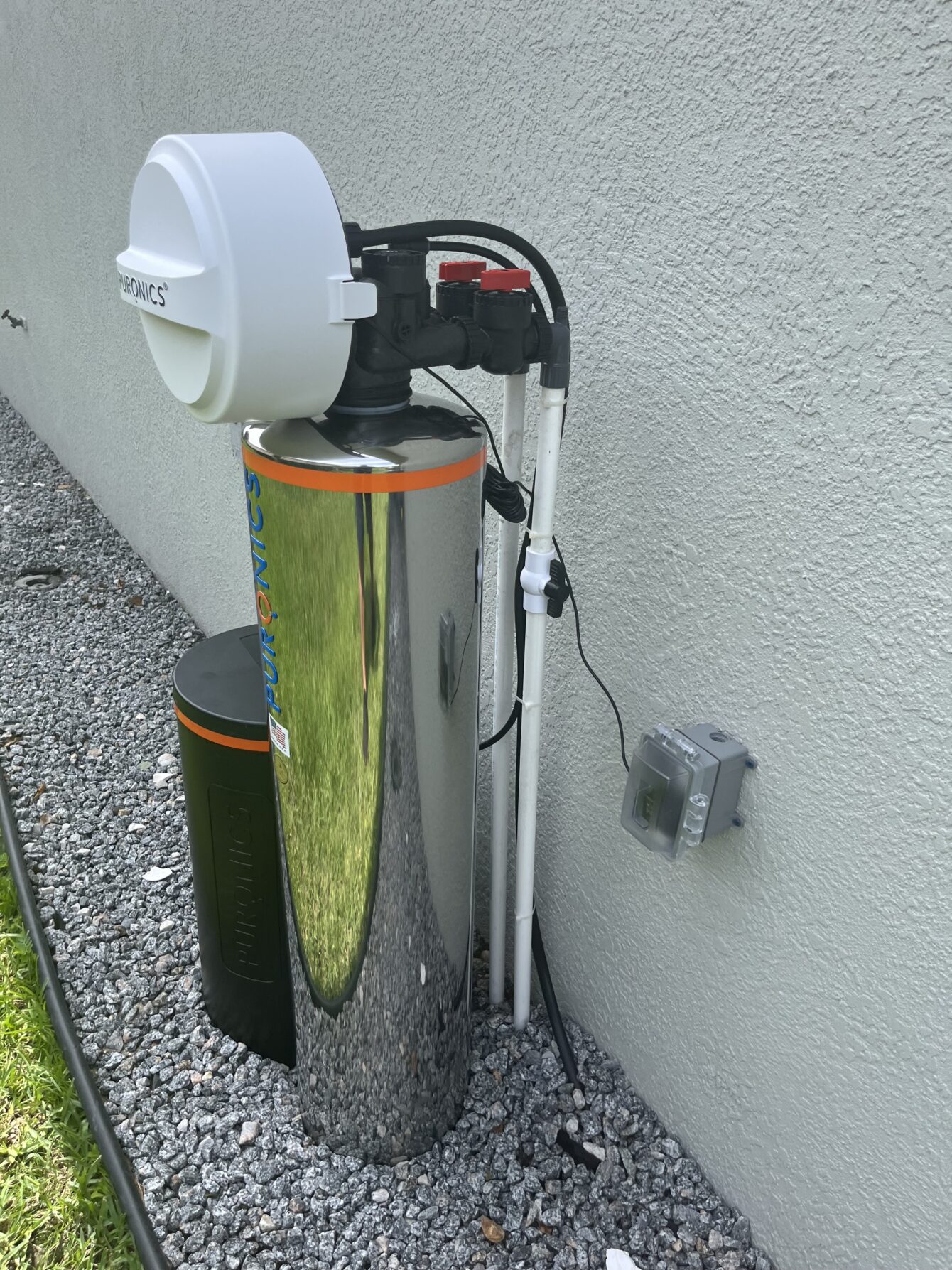
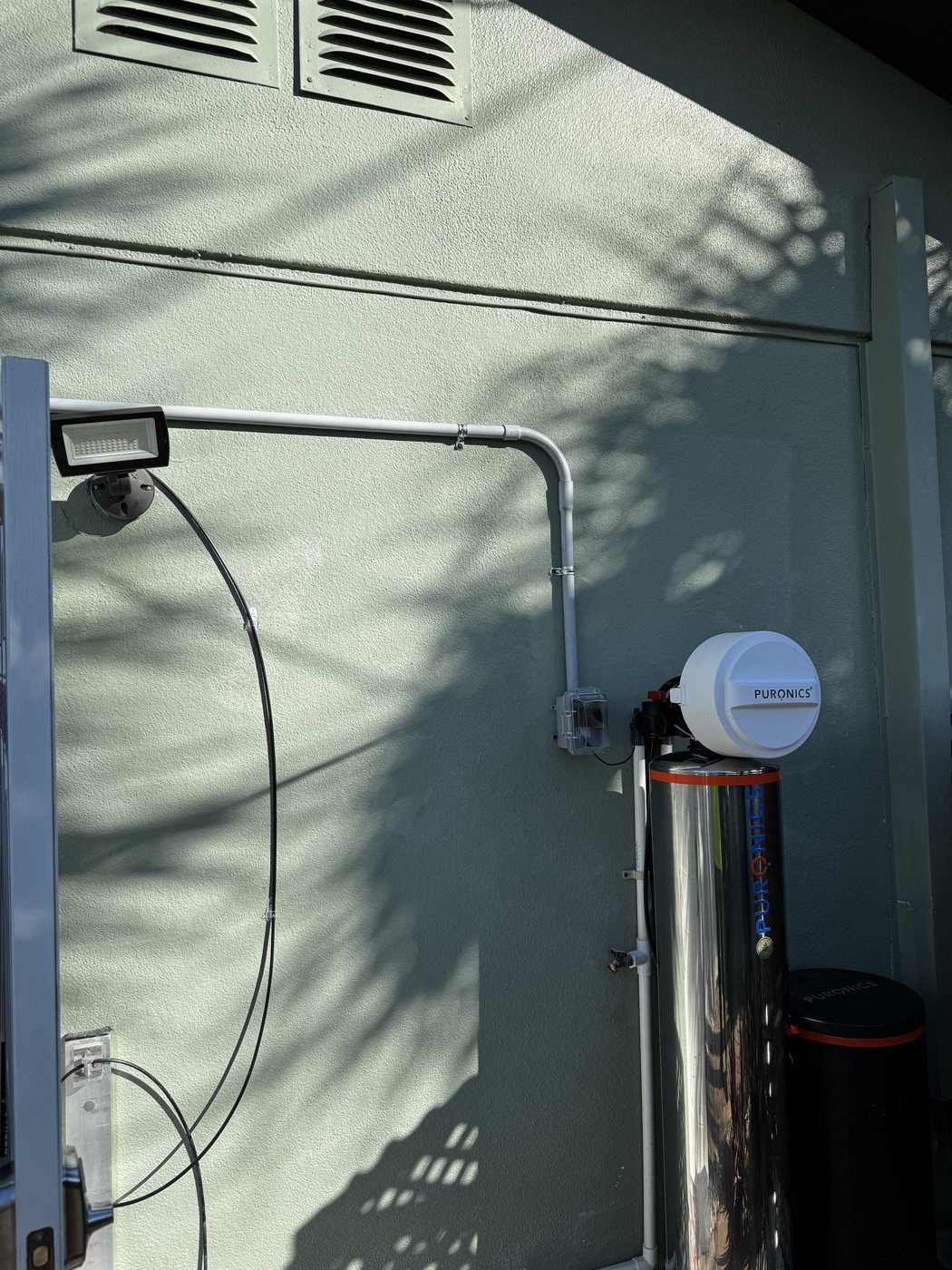
Our install · outdoor softener, St. Pete Beach
The short version
Pinellas County Utilities water comes from Tampa Bay Water, a blend of groundwater, river water and desalinated seawater. The county reports hardness of 189–244 mg/L, about 11 to 14 grains, which is hard to very hard. It’s disinfected with chloramine most of the year, with a highest running average of 3.8 ppm, and the county switches to free chlorine twice a year to flush the lines, which is when the taste changes.
Where the water comes from
Pinellas County Utilities buys its water from Tampa Bay Water, the regional wholesaler, and describes it as a diverse mix of groundwater, river water and seawater. The blend shifts, so the water at your tap isn’t identical to your neighbor’s or to last season’s.
Check the name on your bill. Some cities, including St. Petersburg, run their own water utility with their own report. St. Petersburg also buys Tampa Bay Water, disinfects with chloramine (3.73 ppm on average in its 2025 report) and stopped adding fluoride on June 16, 2025.
How hard is Pinellas County water?
The county reports 189–244 mg/L as calcium carbonate, about 11 to 14 grains per gallon. On the U.S. Geological Survey scale, over 7 grains is hard and over 10.5 is very hard, so most of this water is very hard.
At that hardness, independent Battelle testing for the Water Quality Research Foundation scales out to a tankless water heater needing descaling about every 3 to 4 years without a softener. On softened water, the heaters in that test held their efficiency. What the Battelle study found →
Chloramine, and the twice-a-year switch
Most of the year the county disinfects with chloramine (chlorine combined with ammonia); its report lists a highest running annual average of 3.8 ppm, against a legal limit of 4.0. Twice a year it temporarily switches to free chlorine to clean the distribution system. The most recent one ran September 22 to October 11, 2025.
That switch is when people call us about a stronger pool smell. Carbon built for chloramine handles both, so the taste stays steady through the switch.
- A softener doesn’t remove chloramine. Carbon does, with enough contact time. Catalytic vs activated carbon →
- Chloramine wears softener resin if nothing is in front of it, so we put carbon first.
Radium: under the limit, and a softener reduces it
The county’s 2024 report shows combined radium at 2.5 pCi/L, about half the federal limit of 5. It’s legal and it’s under the limit. It’s also something a softener reduces: the Puronics whole-home systems we install are certified to NSF/ANSI 44, which covers radium 226/228 along with hardness.
The same 2024 report lists PFAS as not detected.
What we usually recommend here
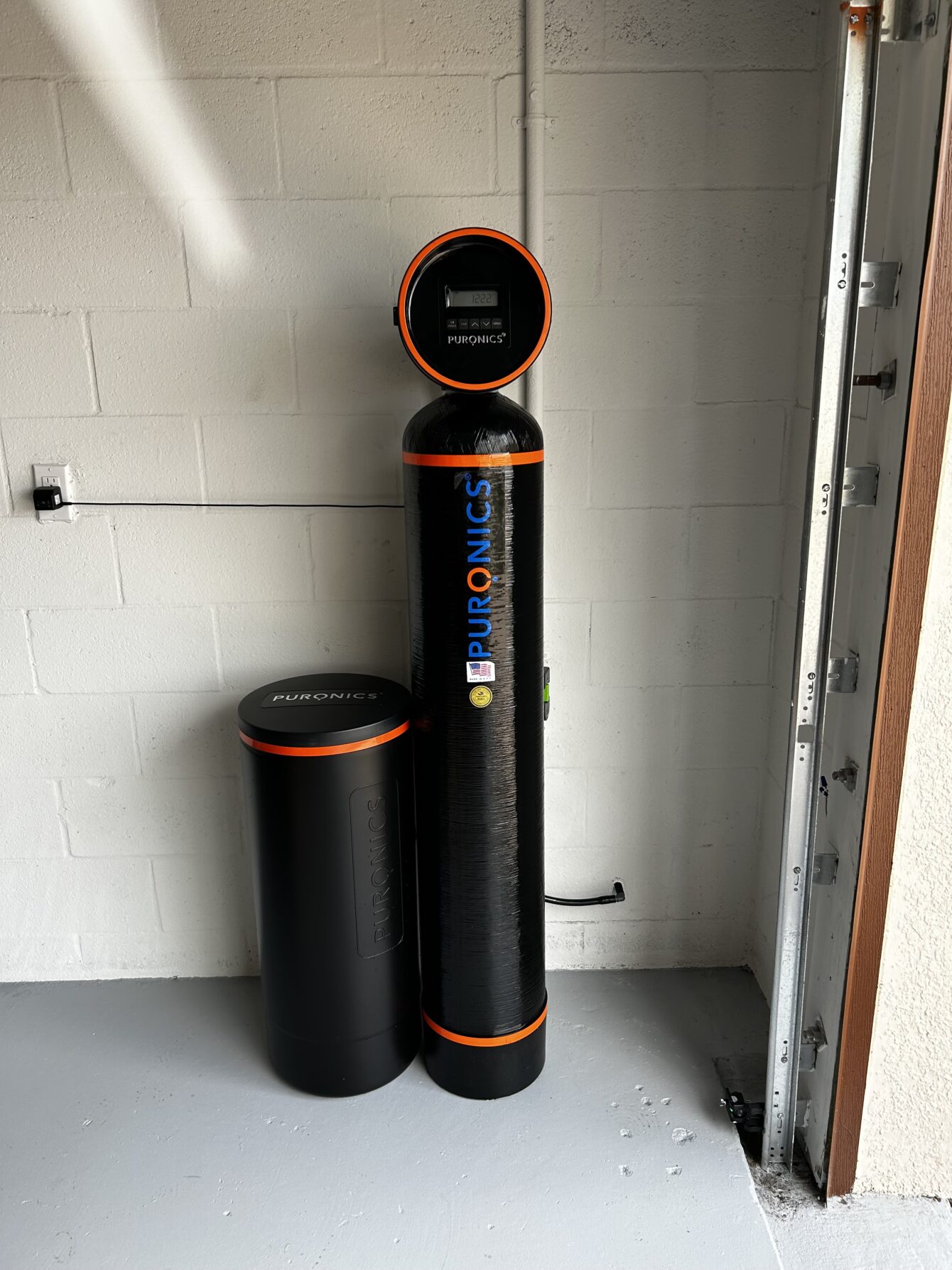
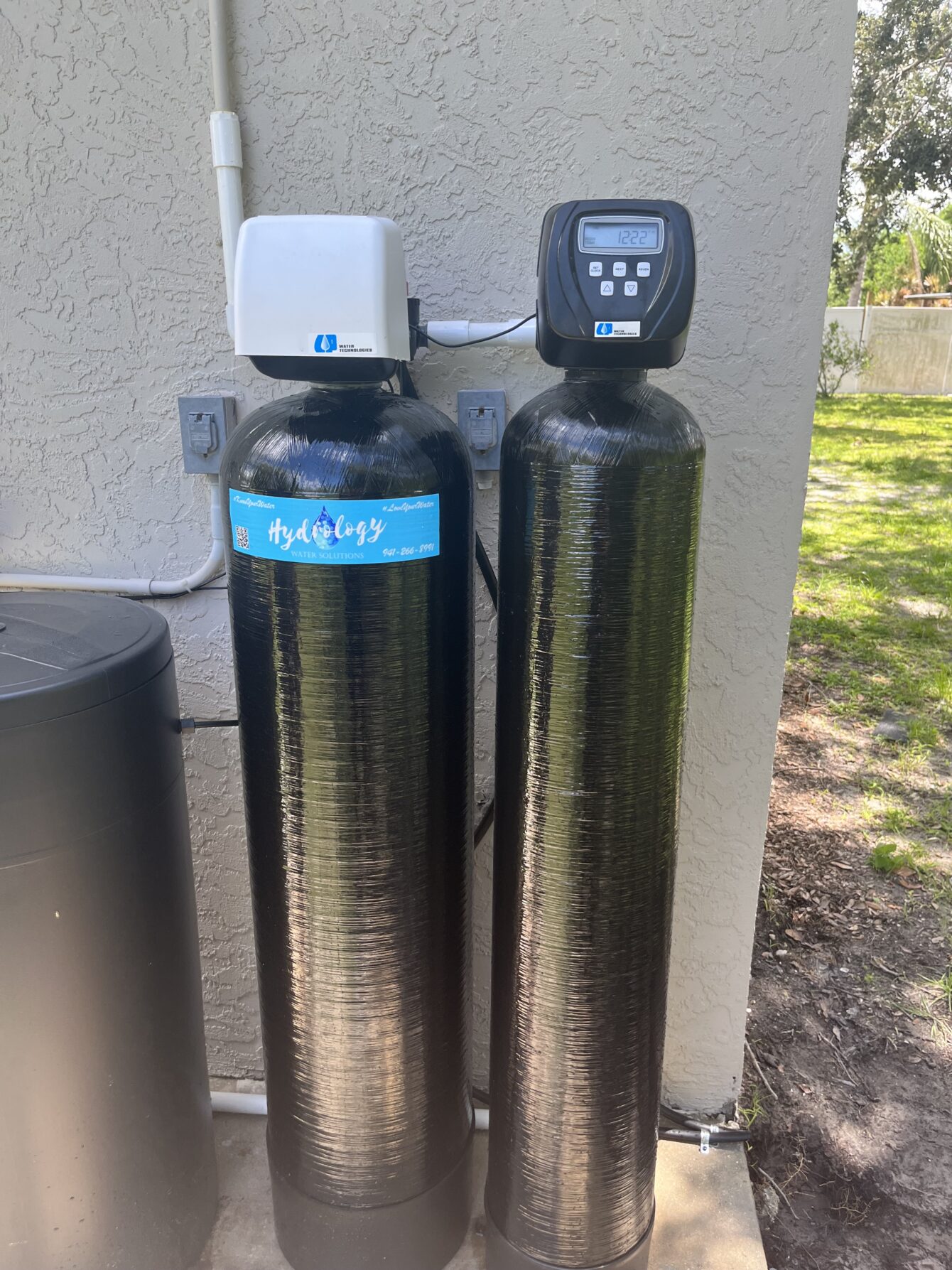
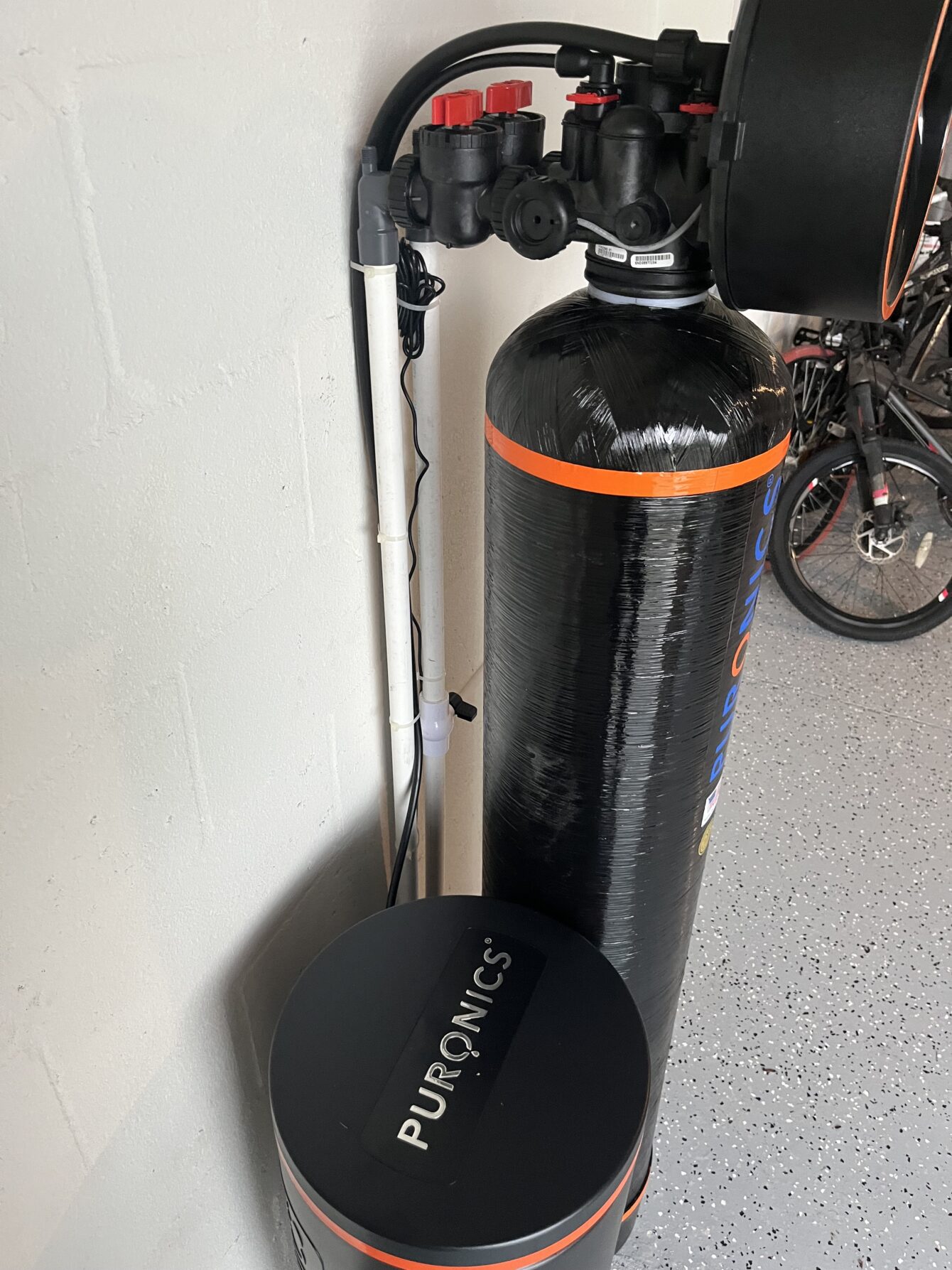
- Hardness plus chloramine taste: a whole-home softener with carbon in front of it, such as the Puronics Hydronex or Defender iGen C (WQA certified to NSF/ANSI 42, 44 and 372), or the value-built Hydrology Essentials.
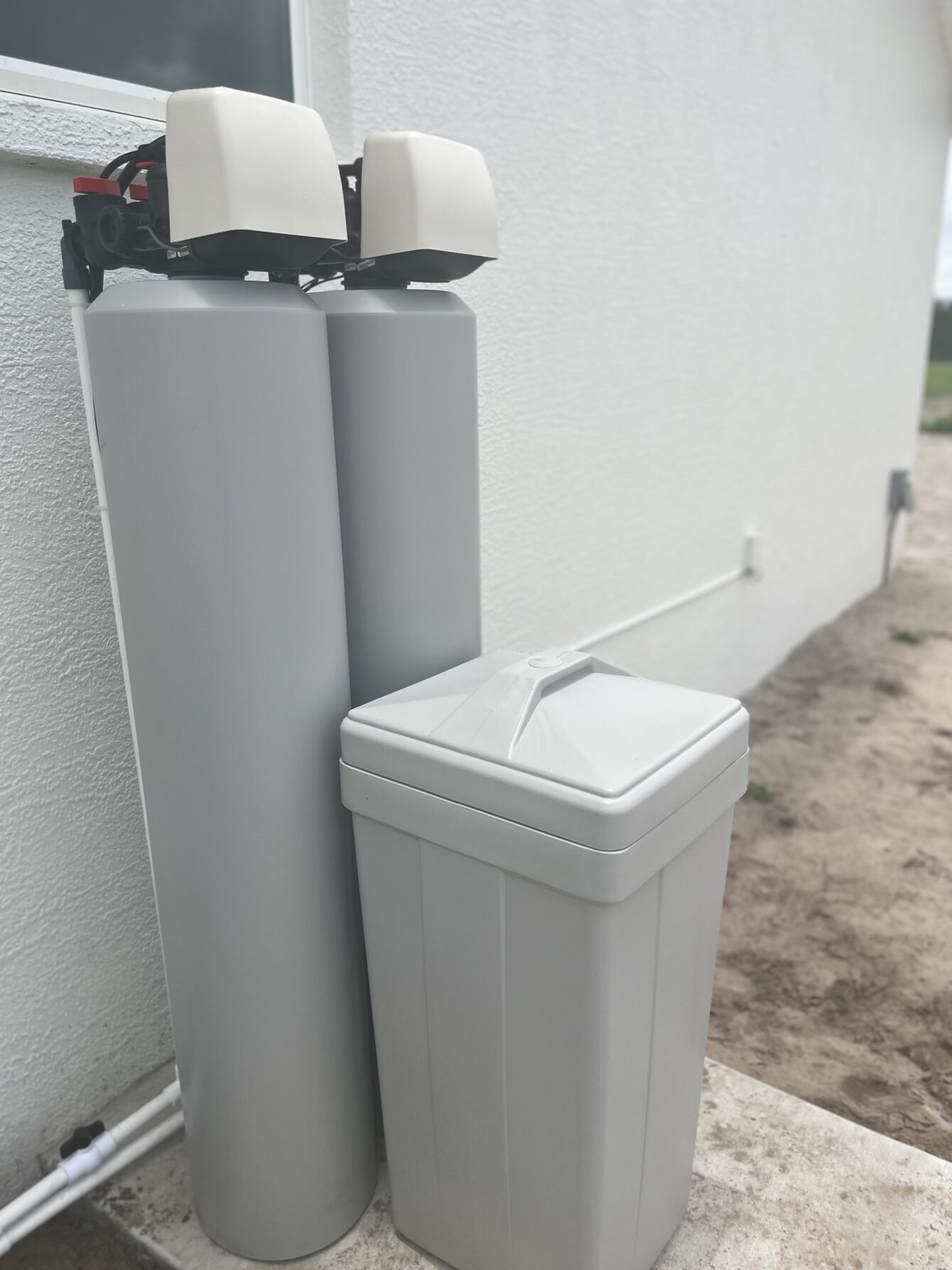
- Near the beaches: we can install outside, with the plumbing raised above grade, like the St. Pete Beach system in the photo above.
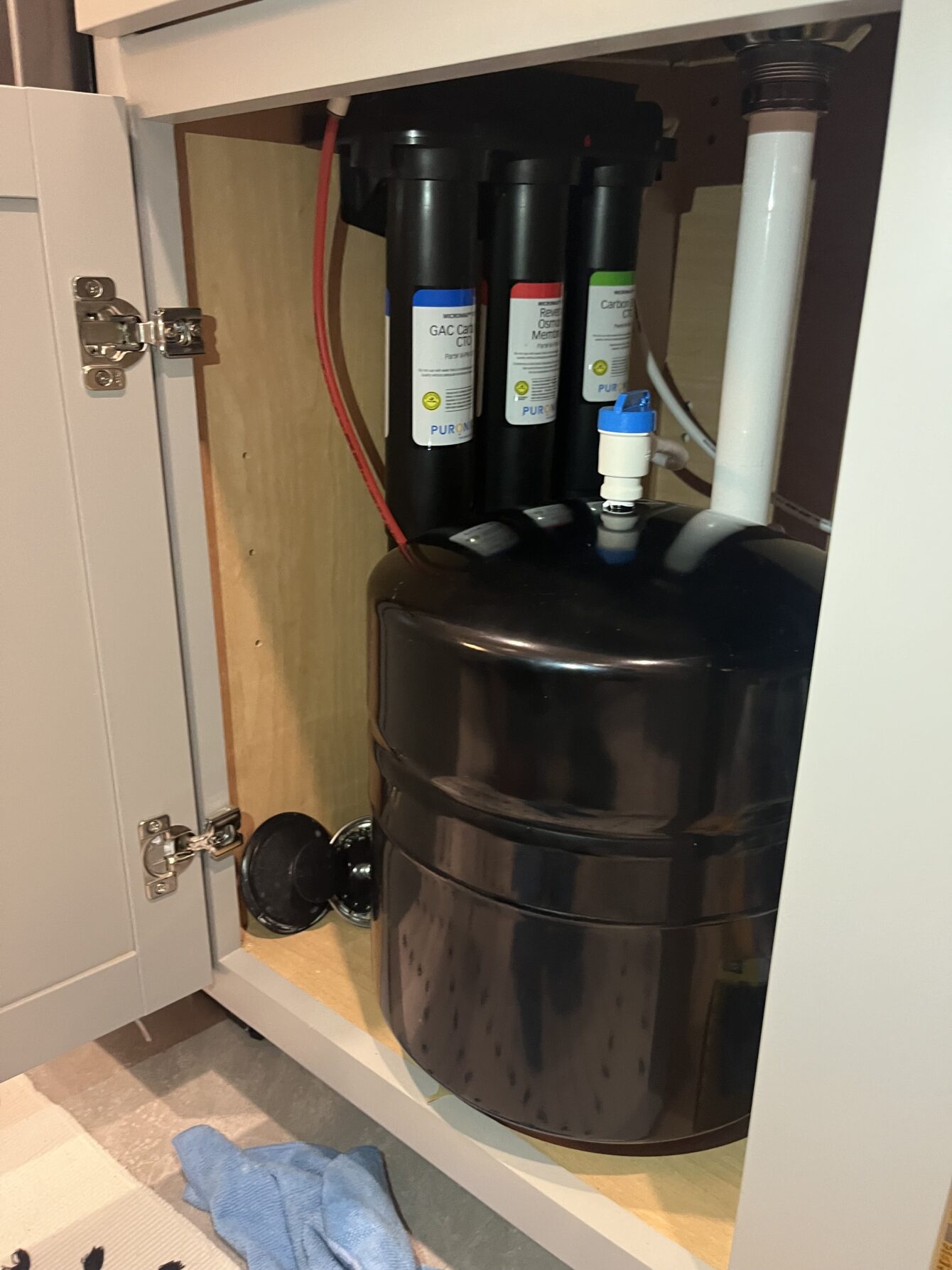
- Drinking and cooking water: reverse osmosis at the kitchen sink with its own faucet. The Micromax 8500 is the one we install that’s certified for PFAS (NSF/ANSI 53).
Everything is sized from a test at your tap.
Common questions
Pinellas County
water, answered.
What people in St. Petersburg, Clearwater and the beaches ask us most.
More water answers →
What hard water does to a home: the Battelle study →
Is Pinellas County water hard?
Yes. The county reports 189–244 mg/L, about 11 to 14 grains per gallon, which is hard to very hard on the U.S. Geological Survey scale.
Why does my water smell like a pool some weeks?
Twice a year the county temporarily switches from chloramine to free chlorine to clean the pipes. The most recent switch ran September 22 to October 11, 2025. Carbon built for chloramine handles both.
Does Pinellas County use chlorine or chloramine?
Chloramine most of the year, with a highest running annual average of 3.8 ppm, and free chlorine during the twice-a-year conversions.
Is St. Petersburg water the same as Pinellas County water?
Not exactly. St. Petersburg runs its own utility and publishes its own report. It also buys Tampa Bay Water and disinfects with chloramine (3.73 ppm on average in 2025). Check the name on your water bill.
Does a water softener remove radium?
The Puronics softeners we install are certified to NSF/ANSI 44, which covers radium 226/228 as well as hardness. The county’s 2024 radium level, 2.5 pCi/L, is under the federal limit of 5.
Can a water softener go outside in Pinellas?
Yes. We install outside when the garage doesn’t work or the home is in a flood zone, with the plumbing raised above grade and the equipment protected from direct sun.
Want your exact numbers?
We’ll test hardness, chloramine, pH and TDS at your tap and tell you straight what’s worth treating, including when the answer is nothing. Book online or call 941-266-8991.
Related answers
Sources: Pinellas County Utilities water quality reports (2024 and 2025) and conversion notice (Sept 22–Oct 11, 2025); City of St. Petersburg 2025 Drinking Water Quality Report; Battelle Memorial Institute for the Water Quality Research Foundation (2009); U.S. Geological Survey hardness scale; NSF/ANSI 44 certification listings (WQA).