Water answers · Hard water research
The Battelle study:
what hard water does.
In independent Battelle testing for the Water Quality Research Foundation, tankless heaters on hard water needed deliming after the equivalent of 1.6 years, and showerheads lost 75% of their flow in under 18 months. Here’s what was tested, what was found, and what it means for water here.
By Brad Germain, owner of Hydrology Water Solutions · Updated September 2026
4.7★ from 212 Google reviews · WQA Gold Seal Puronics dealer · Our own techs, no subcontractors
Request your free water test
★★★★★ 4.7 — a few details and we reach out, usually same day.
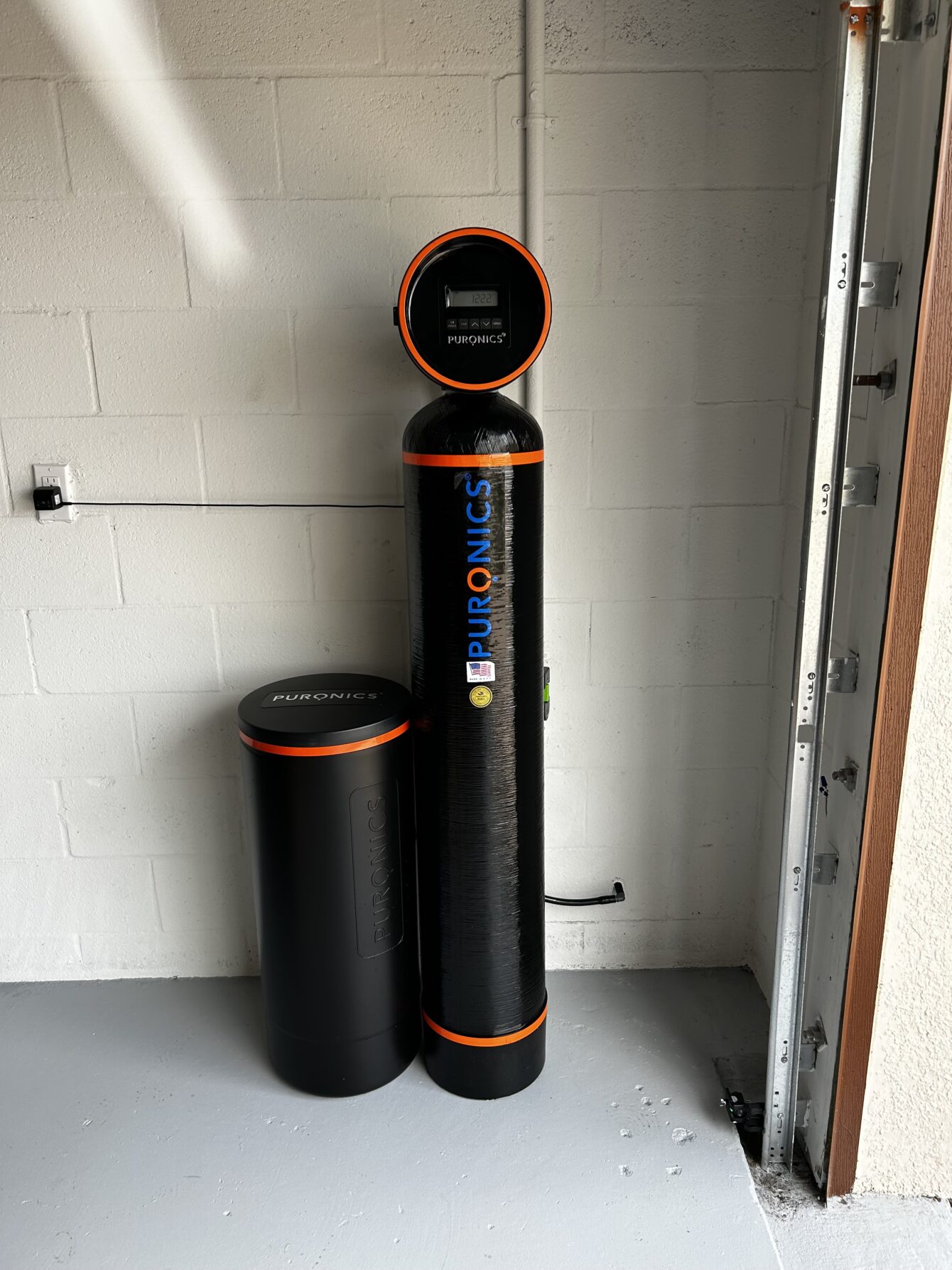
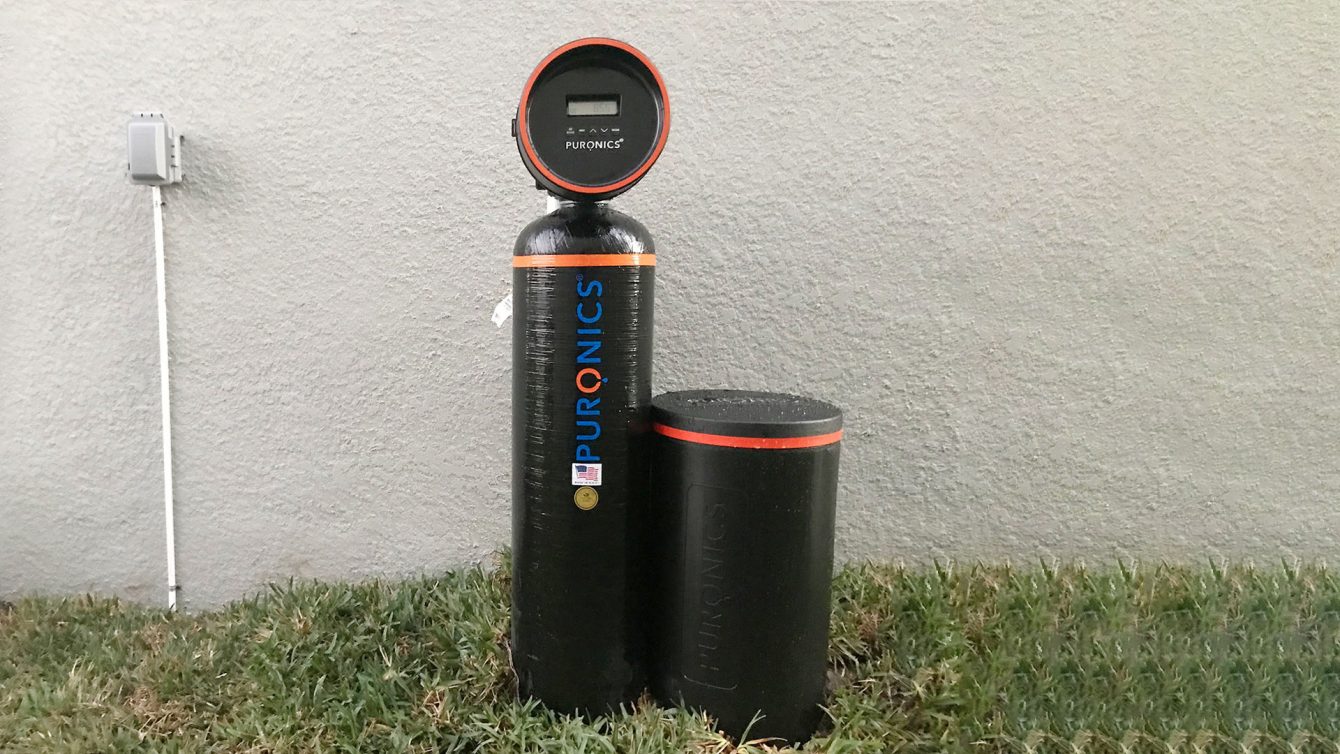
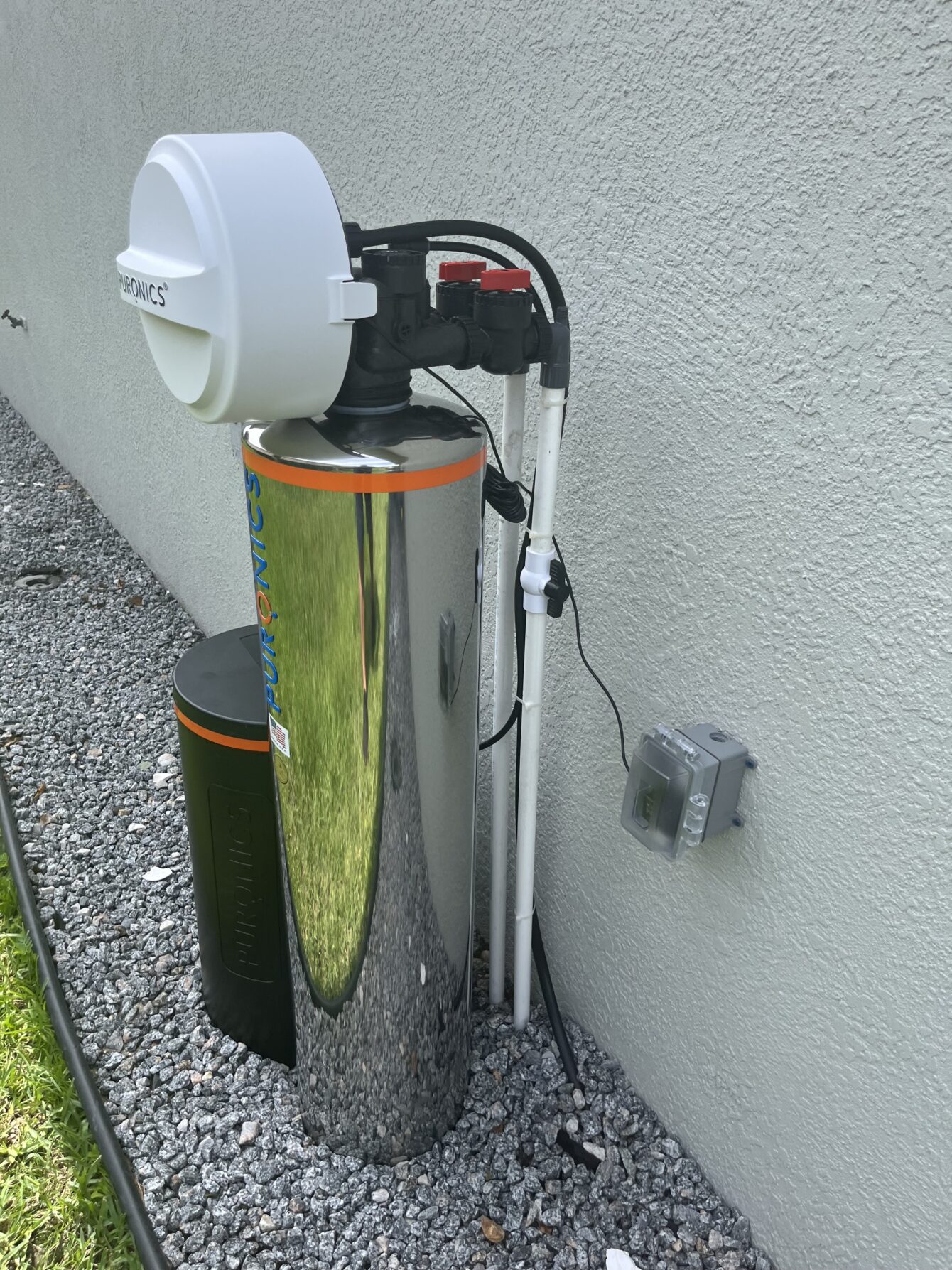
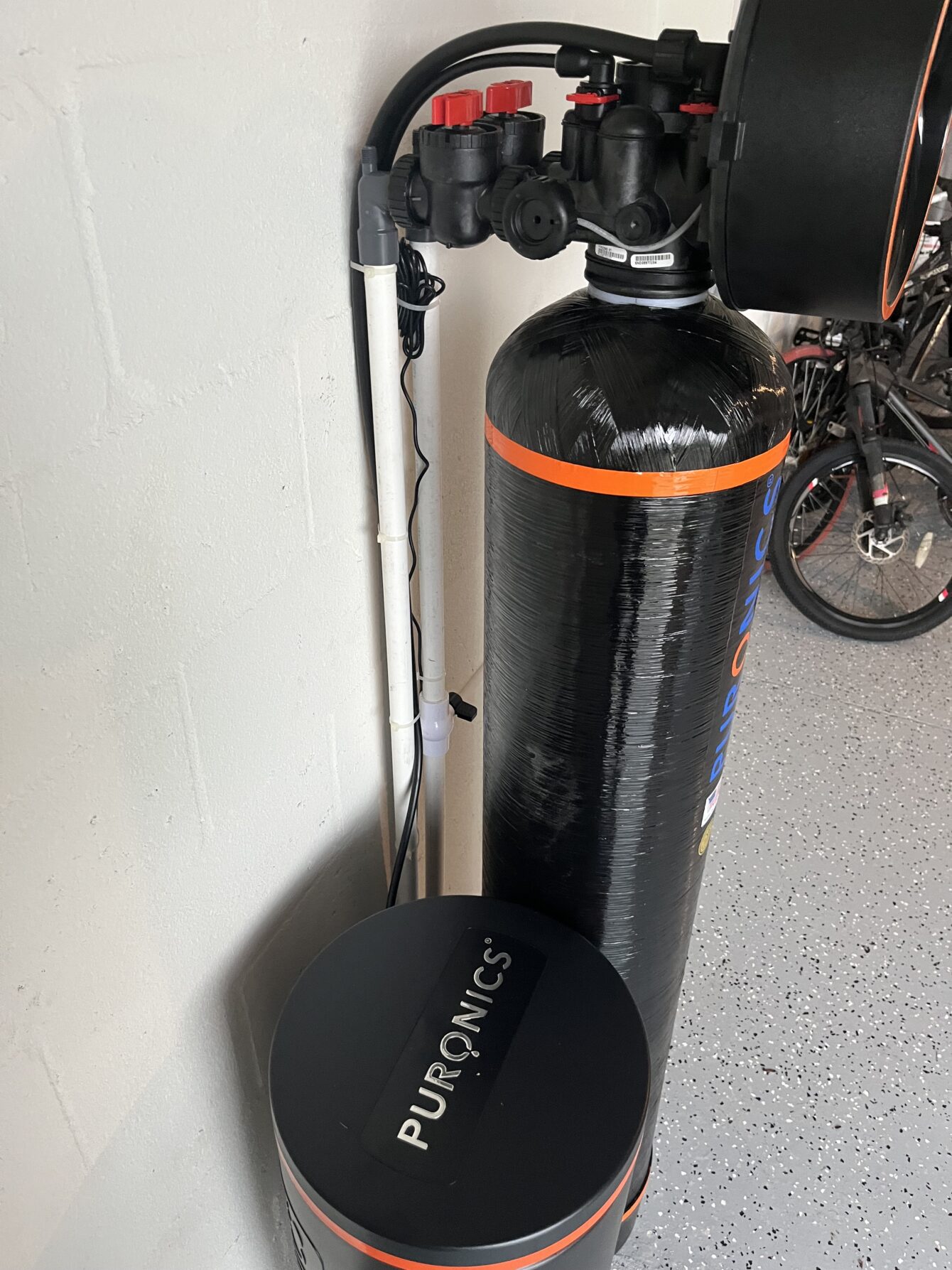
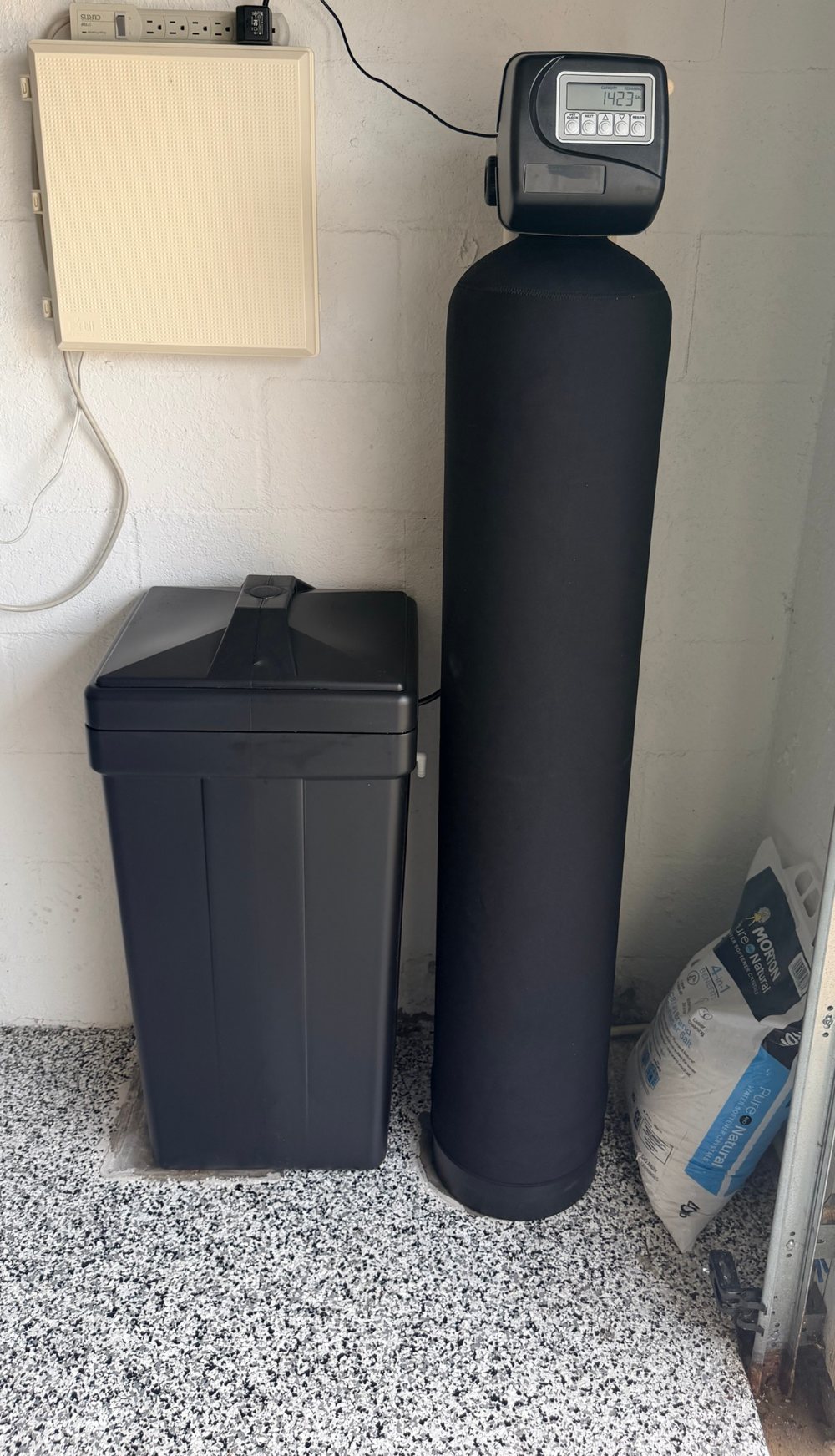
Our install · Hydrology Essentials softener, garage
The short version
In 2009 the Water Quality Research Foundation hired Battelle Memorial Institute, an independent research lab in Columbus, Ohio, to measure what hard water does to water heaters and fixtures. On very hard water, tankless gas heaters had to be delimed after the equivalent of 1.6 years of use, and low-flow showerheads lost 75% of their flow in under 18 months. The same equipment on softened water ran through the whole test without those problems.
What was tested
Battelle ran 30 water heaters, supplied through the Water Quality Association, for 90 days on an accelerated schedule designed to simulate years of household use. The test included gas and electric tank heaters, tankless (instantaneous) gas heaters, low-flow showerheads, faucets, dishwashers and washing machines.
One set of equipment ran on hard water: 26.2 grains per gallon of hardness with 0.99 ppm of iron. A matching set ran on the same water after softening, which brought it to less than 0.55 grains per gallon.
What they found
| Equipment | On hard water (26 grains) | On softened water |
|---|---|---|
| Tankless gas water heaters | Had to be delimed at 1.6 years of equivalent service. Average efficiency fell from 80% to 72% before deliming. | Performed well through the entire test |
| Gas tank water heaters | Efficiency fell from 70.4% to 67.4% at two years | Efficiency stayed essentially constant |
| Low-flow showerheads | Lost 75% of their flow rate in under 18 months | All made it through the test without problems |
| Faucet strainers | Clogged within 19 days | — |
| Dishwashers and washers | Noticeable scale buildup after only 30 days | Nearly free of scale |
Figures from the Water Quality Research Foundation’s summaries of the Battelle study.
WQRF’s summary puts the water heater result this way: heaters on softened water maintained their original factory efficiency rating for as long as 15 years of equivalent use.
What it means for water here
The test water was harder than most city water around Bradenton, so scale builds here more slowly than it did in the lab. It still builds. For reference:
- Manatee County Utilities: 106–279 mg/L in the county’s 2025 report, about 6 to 16 grains per gallon.
- Sarasota County Utilities: softened by the county to around 7 grains.
- Hillsborough County: hardness isn’t published; Pinellas County, on the same Tampa Bay Water regional supply, reports 189–244 mg/L, about 11 to 14 grains.
- Private wells: often harder than city water, and usually with iron too.
The equipment that suffered most in the study is the equipment most new homes here have: tankless heaters, low-flow showerheads and high-efficiency appliances. Narrow passages and small nozzles are where scale shows up first. Tankless heaters and hard water.
Why it matters to us
Brad read the Battelle study early on, then saw the same thing on the job: galvanized pipe cut out of homes with the inside closed down by buildup. It’s a big part of why he went into water treatment. We cite it because it’s independent, measured research rather than a sales brochure, and because you can read it yourself.
It doesn’t mean every home needs a softener. That depends on what your water actually tests at. Our free in-home test measures hardness, chlorine or chloramine, pH and TDS, and we show you each number before recommending anything.
Common questions
The Battelle study,
in plain terms.
What people ask us about the research and how it applies to water around Bradenton.
What is the Battelle softened water study?
A 2009 study by Battelle Memorial Institute, contracted by the Water Quality Research Foundation, that measured how hard water and softened water affect water heaters, showerheads, faucets, dishwashers and washing machines.
How hard was the water in the Battelle study?
The hard water was 26.2 grains per gallon with 0.99 ppm of iron. The softened water was under 0.55 grains per gallon.
What did the Battelle study find about tankless water heaters?
Tankless gas heaters on hard water had to be delimed at 1.6 years of equivalent service, and their average efficiency fell from 80% to 72%. The units on softened water performed well throughout the test.
What happened to showerheads on hard water?
Low-flow showerheads on hard water lost 75% of their flow rate in under 18 months of equivalent use. All of the showerheads on softened water made it through the test without problems.
Is the water around Bradenton as hard as the study water?
City water here is usually softer than the 26 grains tested. Manatee County reports about 6 to 16 grains, and Pinellas County, on the regional supply Hillsborough also uses, reports about 11 to 14. Private wells can be as hard or harder.
Where can I read the study?
The Water Quality Association and the Water Quality Research Foundation publish summaries of the Softened Water Benefits Study on their websites.
Want to know how hard your water is?
Our free in-home test gives you the number, and we explain what it means for your heater and fixtures. Book online or call 941-266-8991.
Related answers
Sources: Water Quality Research Foundation, “Softened Water Benefits Study” (Battelle Memorial Institute, 2009), summary at wqrf.org and wqa.org; Manatee County Utilities 2025 Water Quality Report; Sarasota County Public Utilities 2025 Consumer Confidence Report.