Water answers · TDS, softeners & RO
Does a water softener
lower TDS?
No — and it isn’t supposed to. A softener trades hardness for sodium, so TDS stays about the same. Reverse osmosis is what lowers it, and a high reading on its own doesn’t tell you what’s in your water. Here’s how to read your meter or test strips — in plain English.
By Brad Germain, owner of Hydrology Water Solutions · Updated September 2026
4.7★ from 212 Google reviews · WQA Gold Seal Puronics dealer · Our own techs, no subcontractors
Request your free water test
★★★★★ 4.7 — a few details and we reach out, usually same day.
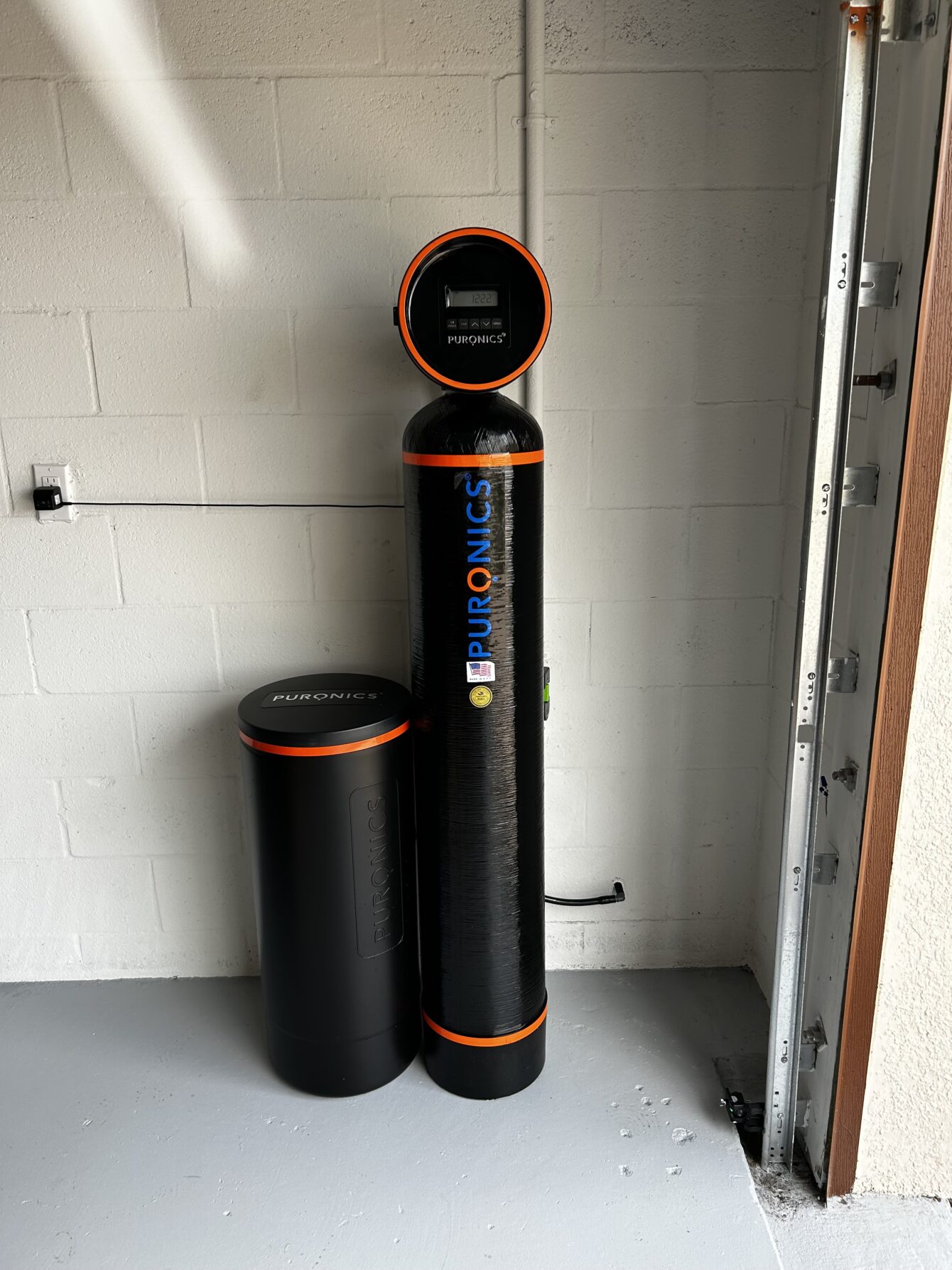
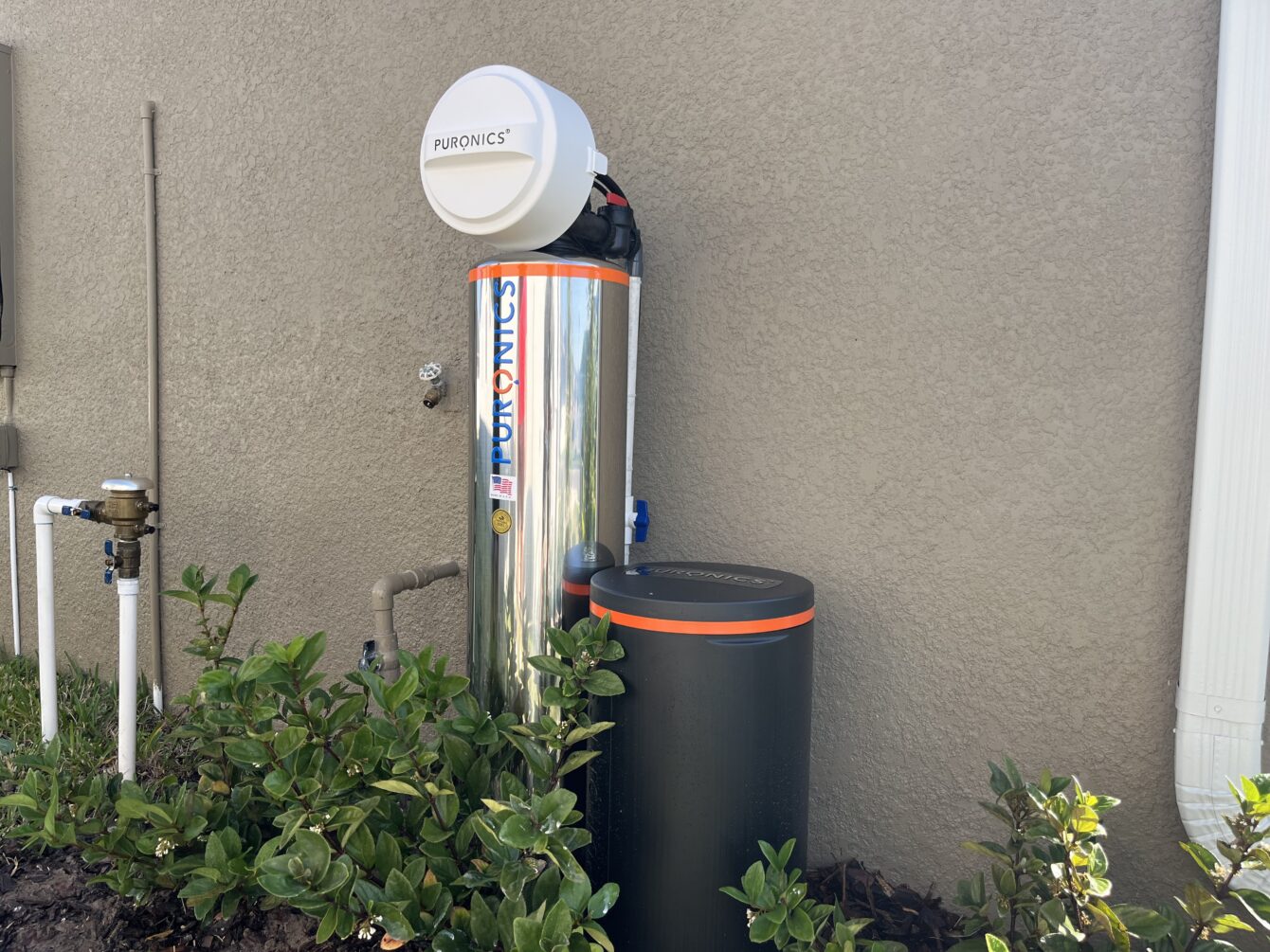
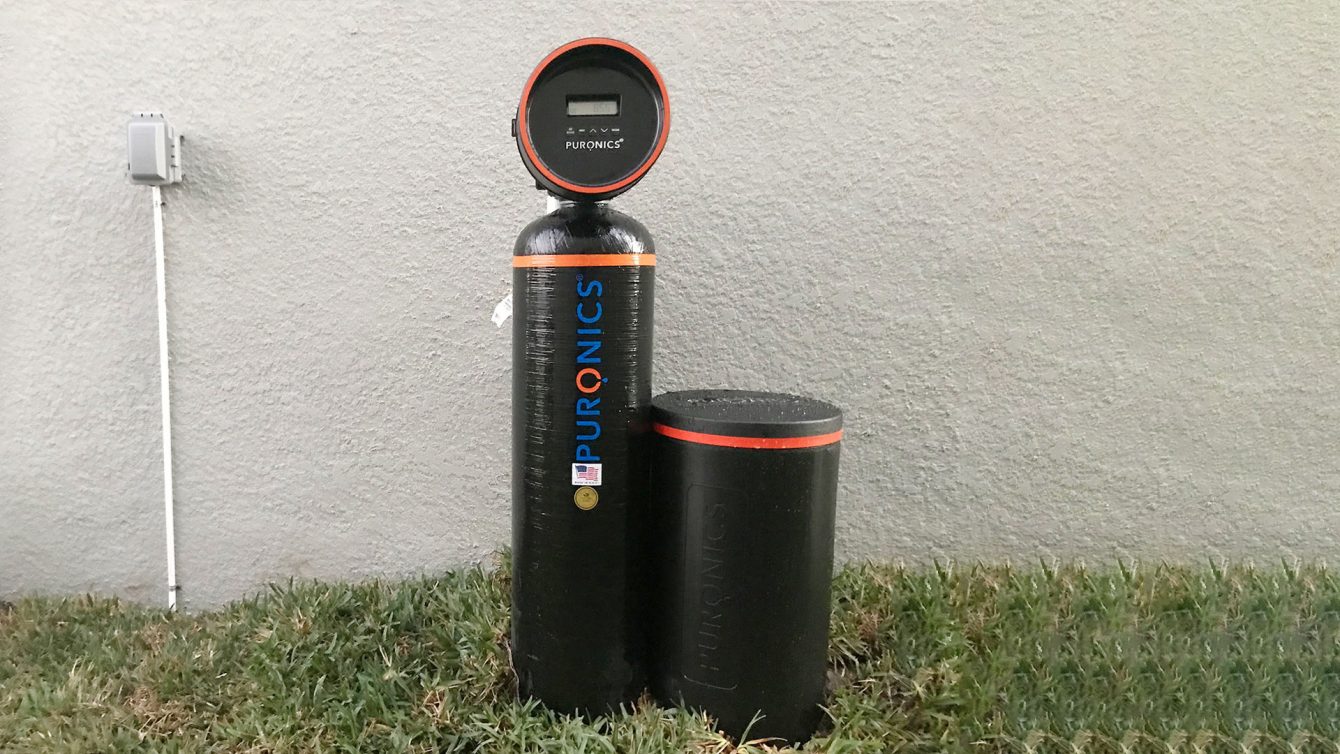
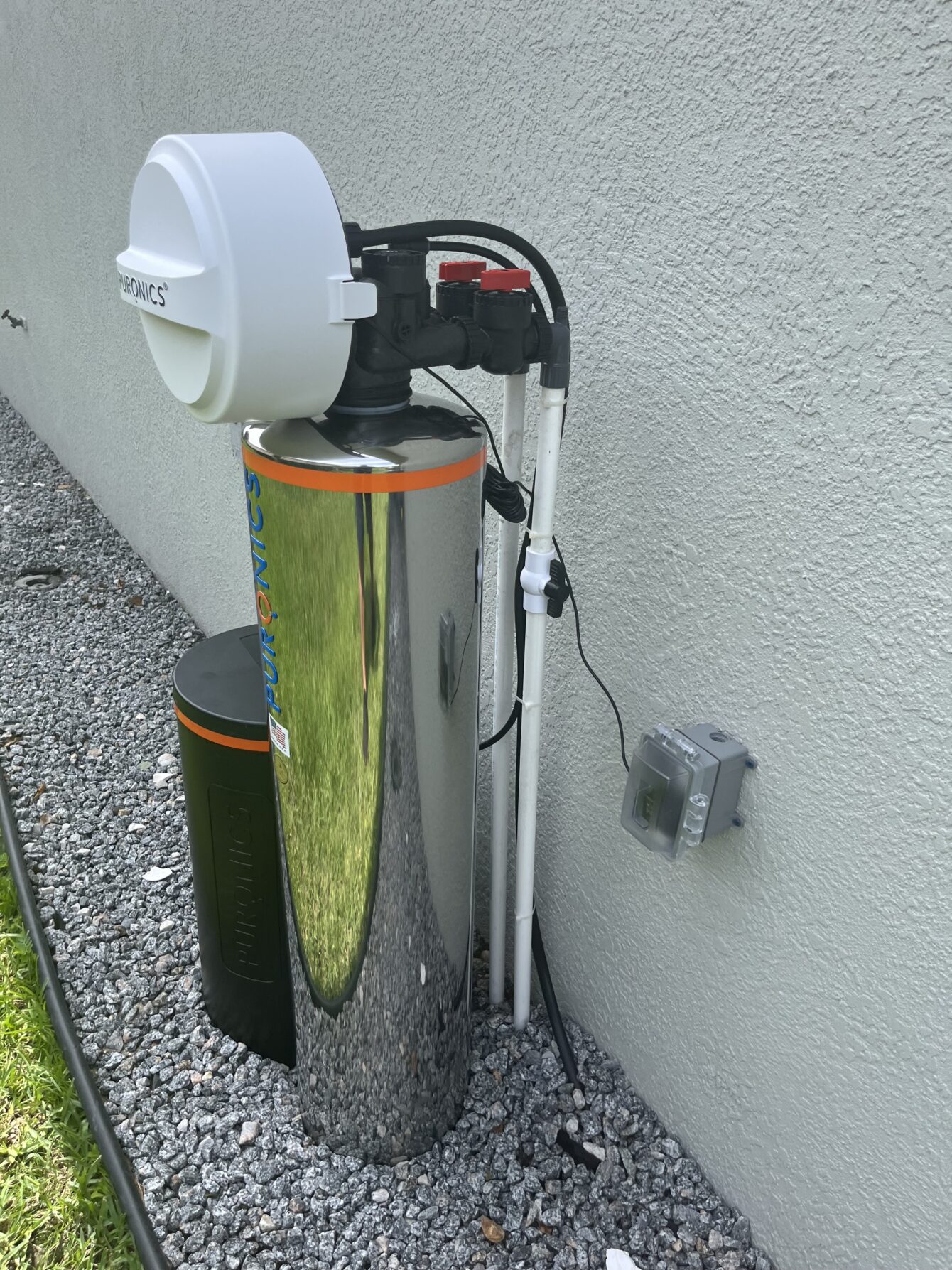
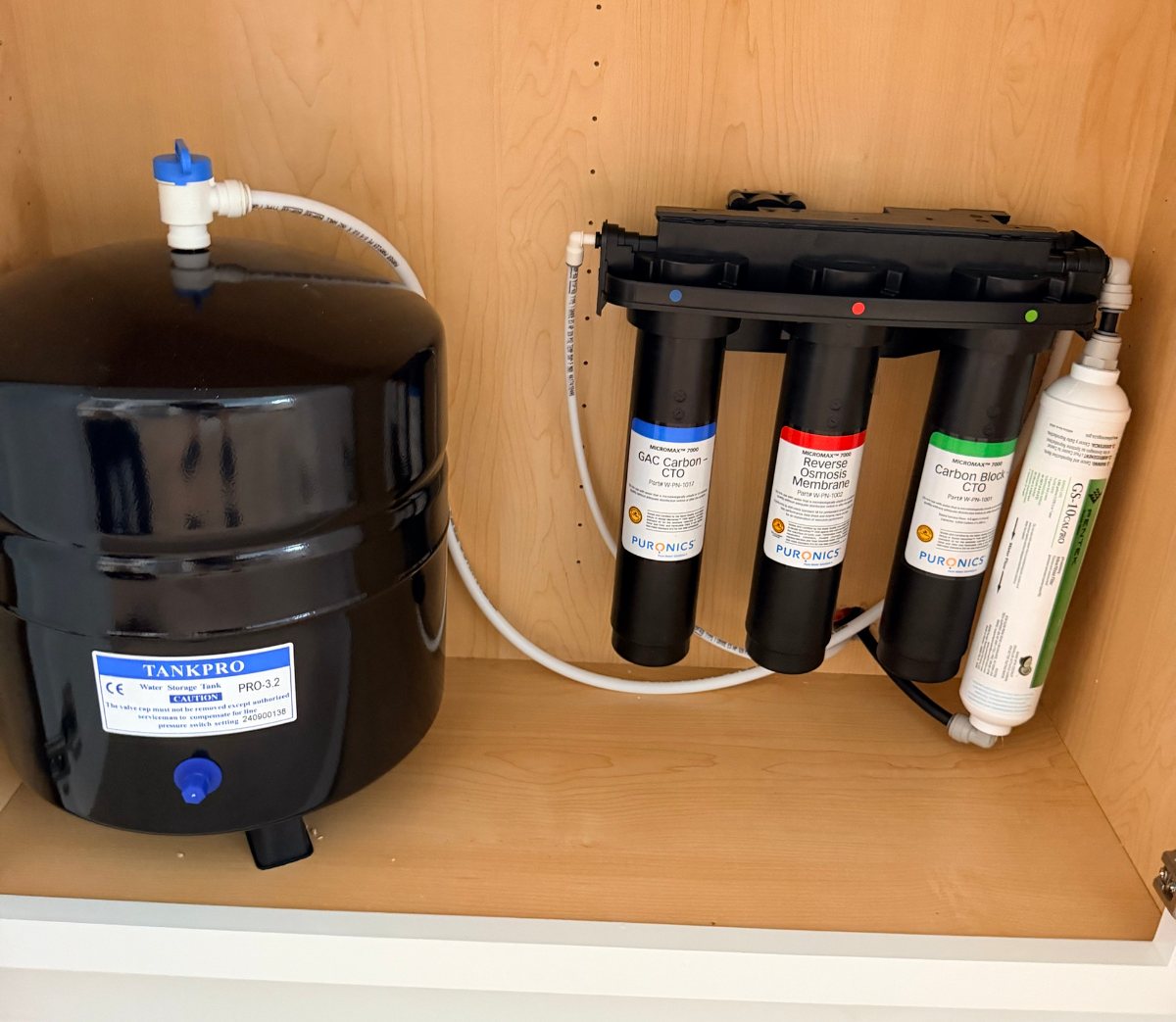
Our install · Micromax 7000 with alkaline filter, Bradenton
The short version
- A softener swaps calcium and magnesium for sodium. All three are dissolved minerals, so your TDS reading stays about the same — sometimes a little higher.
- Reverse osmosis is what lowers TDS. It pushes water through a membrane that holds back most dissolved solids, typically cutting the reading by 90% or more.
- TDS measures how much is dissolved, not what it is. Ordinary minerals push the number up. Lead, PFAS and bacteria barely move it, if at all.
- The economical setup: a softener for the whole house, and RO only where you drink and cook. RO sends water down the drain, so running the whole house on it would push your water bill way up.
How a water softener works — no chemistry degree needed
Hard water is hard because it carries dissolved calcium and magnesium — rock, basically, picked up on the way through the ground. Manatee County’s own 2025 water report puts hardness as high as 279 mg/L, about 16 grains per gallon. That’s the white crust on your faucets and the spots on your glasses.
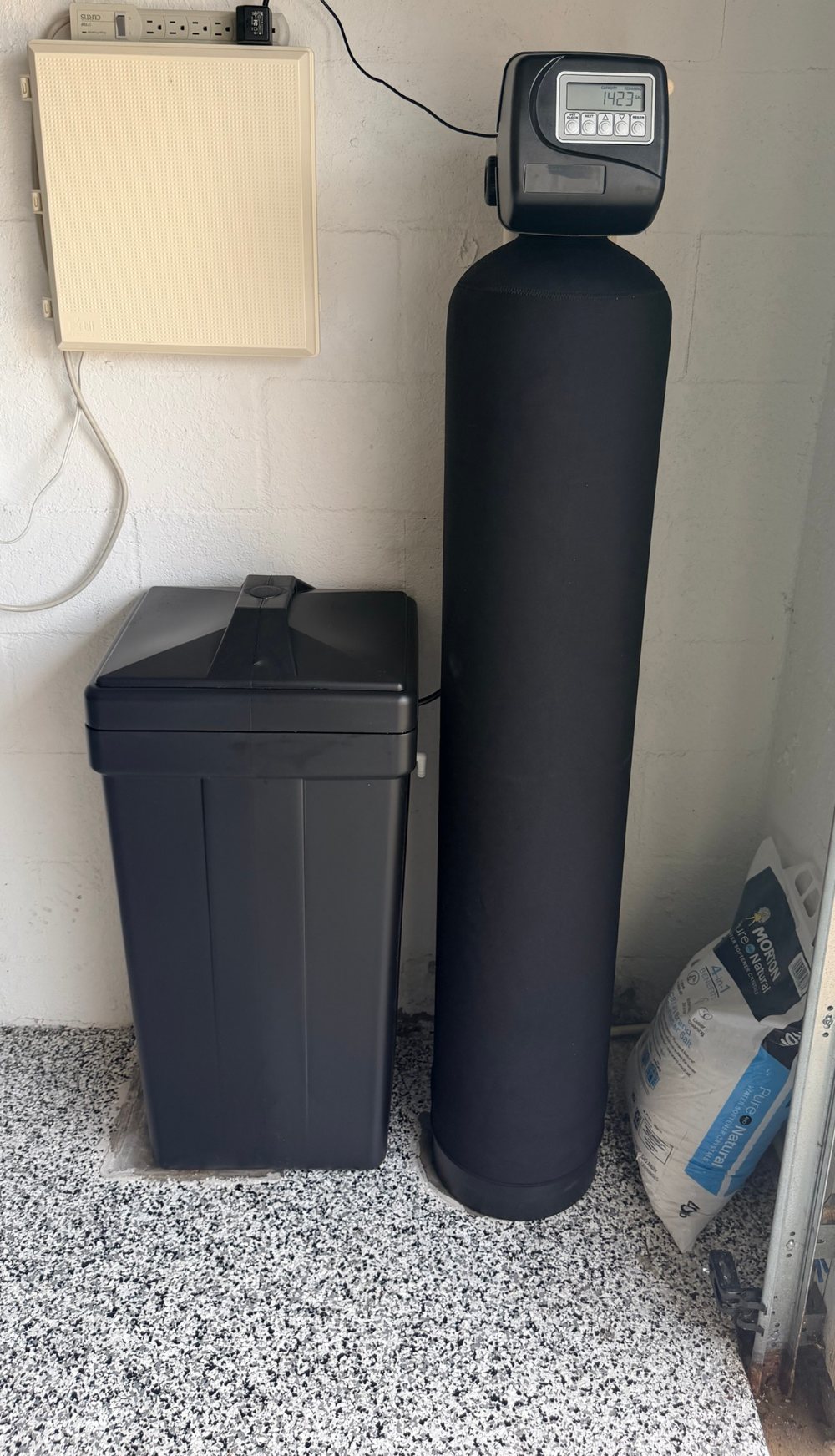
Inside the softener tank is a bed of small resin beads, each one holding sodium. As hard water flows through, the beads grab the calcium and magnesium and let go of sodium in exchange. It’s a swap, not a filter.
What comes out has roughly the same amount of dissolved minerals — just a different kind. Sodium doesn’t form scale, so the crust, the spots and the soap film stop.
When the beads are full of hardness, the softener rinses them with salty water from the brine tank. The salt pushes the hardness off the beads and down the drain, and the beads are ready to trade again. That’s what the salt is for.
On city water we also put carbon in front of the softener. Chlorine and chloramine wear out softener resin over time, and the carbon takes them out first — it’s why our Hydrology Essentials carries catalytic carbon and activated carbon in the same tank as the resin.
Why your TDS doesn’t drop after a softener
TDS stands for total dissolved solids — everything dissolved in the water, added up. Calcium, magnesium and sodium all count. A softener takes out one calcium or magnesium and puts two sodium back in its place, so the total barely changes. Sodium is a little heavier than what it replaces, so the number can even tick up slightly.
That’s why a TDS reading tells you nothing about whether a softener is working. The right test for a softener is a hardness test. If hardness reads near zero at the tap, the softener is doing its job — whatever the TDS meter says.
If someone checks your softened water with a TDS meter and tells you the softener isn’t working, ask them to run a hardness test instead.
What a TDS number does — and doesn’t — tell you
A handheld TDS meter doesn’t actually count anything. It measures how easily electricity passes through the water and converts that into a number. Dissolved minerals carry current, so more minerals means a higher number. The meter can’t tell calcium from lead.
Pushes a TDS meter up
- Calcium and magnesium — the hardness
- Sodium, including what a softener adds
- Bicarbonate and other everyday minerals
- The minerals an alkaline filter adds back
Barely moves it — or not at all
- Lead — a concern at parts per billion. On a meter reading in the hundreds of parts per million, it’s invisible.
- PFAS — measured in parts per trillion.
- Bacteria — not a dissolved solid at all.
- Chloramine — the county’s 3.3 ppm is a sliver of a reading in the hundreds, even though it’s what you smell in the shower.
The EPA does have a TDS guideline — 500 mg/L — but it’s a secondary standard, set for taste and appearance, not health. To know what’s in your water, you test for the specific things that matter.
On our local water, a high reading usually goes with hard water. Calcium and magnesium are a big share of the dissolved solids here, and they’re what builds up as scale in pipes, faucets, fixtures and water heaters. That’s why our usual answer to a high reading is a softener for the whole house and reverse osmosis at the kitchen sink.
Salt-free systems don’t lower TDS either
A salt-free system, usually sold as a salt-free conditioner, doesn’t take hardness out of the water. The most common kind uses a media that turns calcium and magnesium into microscopic crystals, so they’re less likely to stick to pipes and fixtures as scale. The minerals are still there. They just behave differently. Magnetic and electronic descalers work on the same idea.
What a TDS meter shows
About the same number before and after. Nothing was removed, so there’s nothing for the meter to see.
What a hardness strip shows
Still hard. That doesn’t mean the system failed. A salt-free system isn’t designed to change that reading, so judge it by the scale on your fixtures instead.
Salt-free systems have a real place: no salt to carry, no brine going down the drain, nothing to regenerate. We install them too. But if the goal is a lower number on a meter, neither a salt-free system nor a salt-based softener gets you there. Only reverse osmosis does. Salt-free vs salt-based softeners →
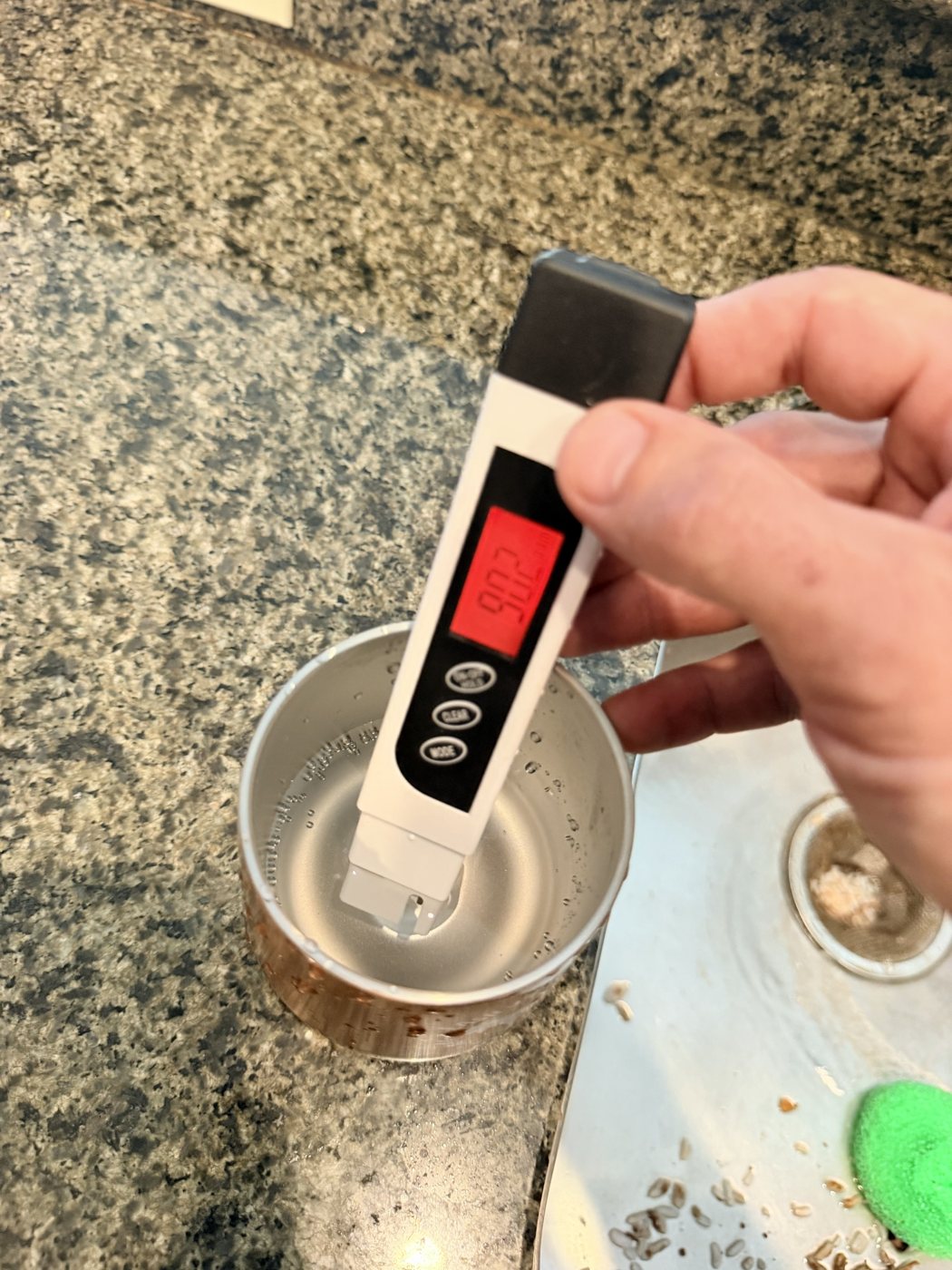
“My TDS meter turned red at 200”
We hear this a lot. Someone buys a TDS meter or a pack of test strips — which is great. We enjoy curious clients, because we enjoy educating and answering questions — tests the kitchen tap, sees 200-something, watches the display turn red, and assumes the water is dangerous or the softener is broken.
On city water around here, a reading in the hundreds is expected. Manatee County’s own 2025 report lists TDS anywhere from 110 to 280 mg/L. Inside Bradenton city limits, the city’s 2025 report puts it at 550 mg/L — over the EPA’s 500 guideline, which, again, is a taste guideline, not a health limit. The red light is whatever cutoff the meter’s maker picked — it isn’t a health standard.
A TDS meter is a genuinely good tool for one job: checking that a reverse osmosis system is working. More on that below.
Testing your own water: strips, meters and what each one tells you
Home testing is worth doing — as long as you use the right tool for the question. Here’s what each common kit actually measures.
| Tool | What it tells you | What it can’t tell you | Best used for |
|---|---|---|---|
| Hardness test strip | Roughly how much calcium and magnesium is in the water, by color | Anything about sodium, TDS or safety | Checking a softener — soft water reads near zero |
| TDS meter | How much is dissolved, from electrical conductivity | What is dissolved — minerals, sodium and contaminants all look the same | Checking a reverse osmosis system — tap vs RO faucet |
| Chlorine strip | Chlorine in the water. On chloramine-treated water, read the total chlorine pad | Whether it’s chlorine or chloramine | Checking a whole-home carbon filter |
| pH strip | A rough acidic-to-alkaline reading | Precise pH, or why it’s off | A first look on well water |
| Lab test | Specific contaminants — lead, arsenic, PFAS, bacteria | — | Anything health-related |
How to check your softener at home in two minutes
- Run the cold water at the kitchen sink for about 30 seconds.
- Dip a hardness strip and read it at the time printed on the package.
- Test an outside hose spigot too. On many homes the outside spigots aren’t softened, so that reading shows your hardness before the softener.
- Compare. Near zero inside and high outside means the softener is doing its job. If the inside reading is close to the outside one, check that there’s salt in the brine tank and the bypass valve isn’t turned — then give us a call.
What actually lowers TDS: reverse osmosis
Reverse osmosis pushes water through a membrane with openings so fine that most dissolved solids can’t follow. What gets through is your drinking water. What stays behind is rinsed down the drain — that rinse is what keeps the membrane from clogging. A good RO system typically cuts TDS by 90% or more.
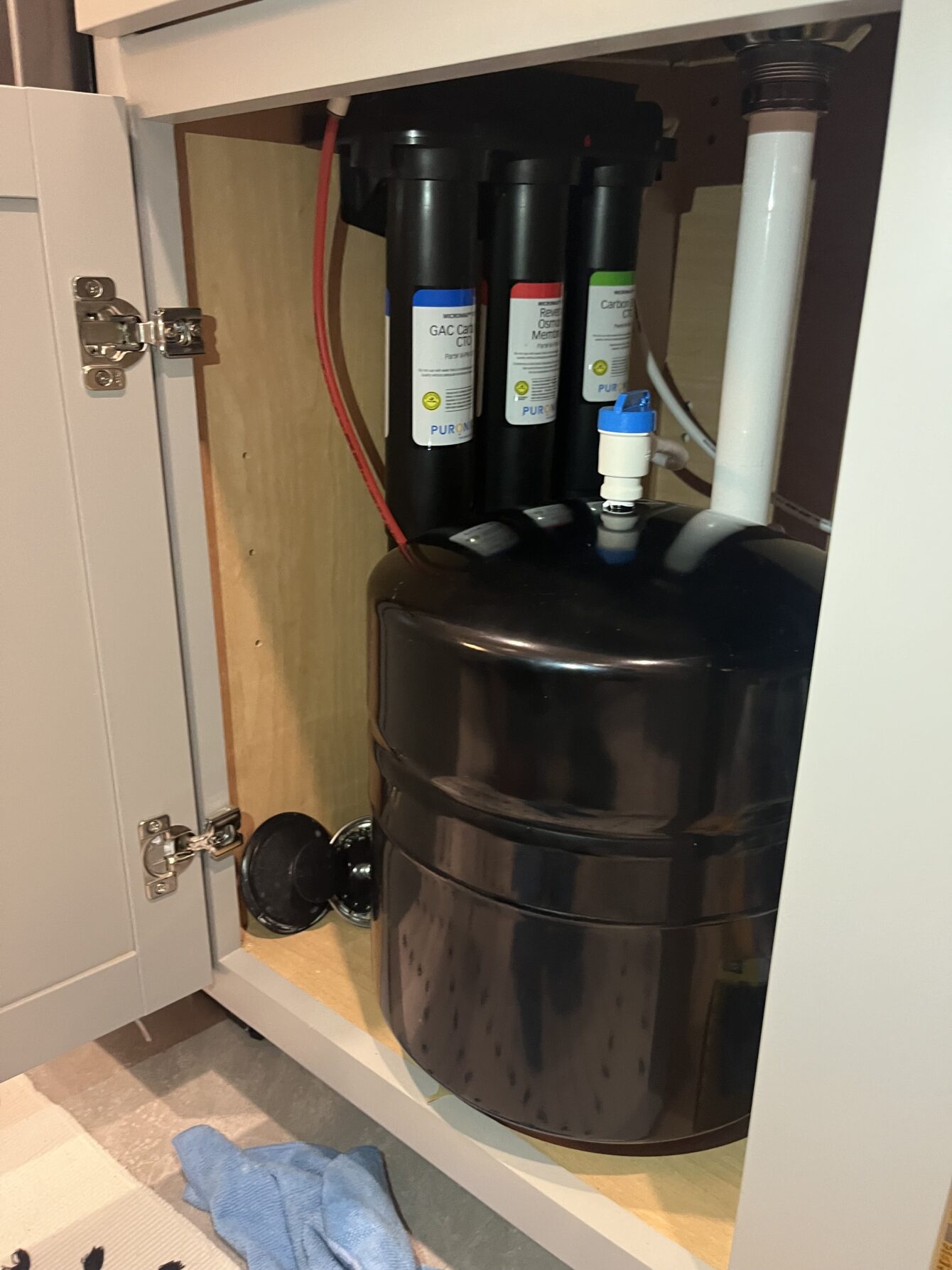
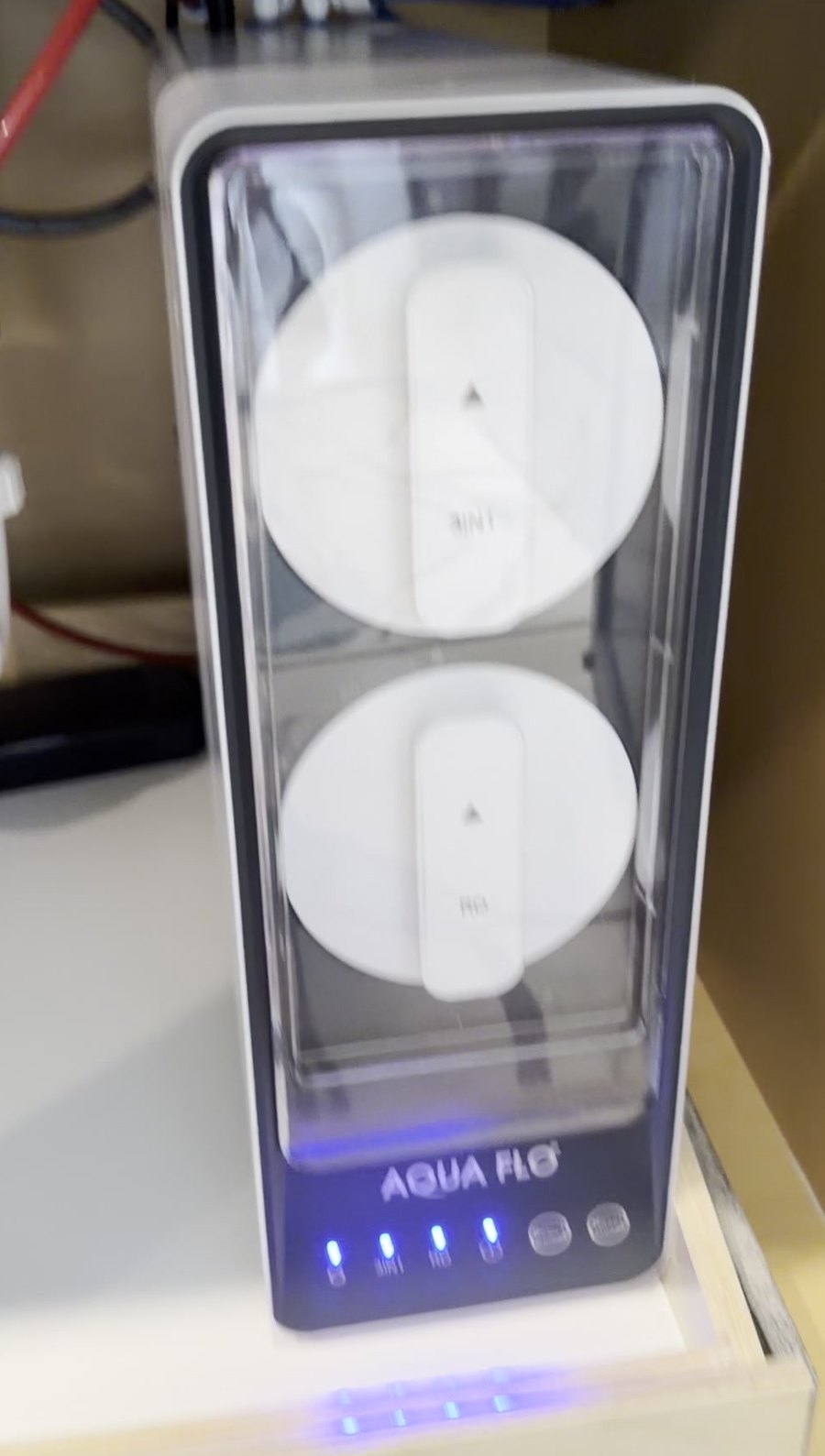
Certified systems go further than a TDS number can show. The Micromax 8500 is certified to NSF/ANSI 53 for PFOA and PFOS and to NSF/ANSI 58 for lead and arsenic. The Micromax 7000 is the everyday RO under most of the sinks we service, and a tankless RO is the pick when cabinet space is tight, when the household uses a lot of drinking water, or when you want strong flow at the refrigerator. A tankless unit has a built-in pump and makes water on demand at steady pressure, while a tank system’s pressure drops as the tank empties — which is why a refrigerator on a long line can run slow. The pump needs an outlet under the sink.
Why RO goes at the kitchen sink — not the whole house
That rinse water is the catch. The EPA says a typical under-sink RO sends five gallons or more down the drain for every gallon it makes. Efficient systems that earn the EPA’s WaterSense label are held to 2.3 gallons or less.
RO for drinking and cooking
A household drinks and cooks with a few gallons a day. Even at the EPA’s typical ratio, the rinse water is a small slice of what the house uses — most people never notice it on the bill.
RO for the whole house
The EPA puts the average American family at more than 300 gallons a day at home. Every shower, load of laundry and toilet flush would run through a membrane first, and a big share would go down the drain as rinse water — water you pay for, with sewer charges on top. Water stripped of its minerals is also harder on pipes and fixtures unless it’s remineralized.
Whole-home RO does have a place. On a well with saltwater intrusion or very high dissolved solids, it can be the only real fix, and we design those systems. On city water, a softener for the house and RO at the tap gets you the same result where it counts, for a fraction of the cost.
The alkaline filter makes the number go back up — on purpose
Many RO systems finish with an alkaline or remineralizing filter. Its job is to put a little calcium and magnesium back in, mostly for taste. Minerals are dissolved solids, so the TDS reading at the RO faucet goes up again after that stage.
That’s the filter working, not the RO failing. If you have an alkaline stage, expect a higher RO reading than a system without one — and judge the system by how much lower the RO faucet reads than the regular tap, not by the final number alone.
Softener and RO work as a team
The softener protects the RO
Hardness scales RO membranes. Soft water going into the RO helps the membrane last longer between changes.
The RO takes the sodium back out
Penn State Extension puts it at about 7.5 mg of sodium per quart for every grain of hardness removed — roughly 120 mg in a quart on 16-grain water, about 5% of the FDA’s 2,300 mg daily value. RO removes most of that from your drinking water. Some softeners can also run on potassium chloride instead of salt — ask us.
How to use a TDS meter the right way
- Test the kitchen tap, then the RO faucet. The RO number should be a small fraction of the tap number.
- Write both numbers down and check again every few months.
- If the RO number creeps up toward the tap number, the filters or the membrane are due. That’s the moment to call.
- Remember the alkaline stage. If your system has one, the RO reading will sit a bit higher, and that’s normal.
- Don’t use it to judge a softener. Use a hardness test for that — it’s part of our free water test.
Where the confusion usually starts
We get this question a few different ways. Sometimes a homeowner bought a TDS meter online and the display turned red. Sometimes it’s a pack of test strips with a color that doesn’t match the chart. And sometimes someone else ran a TDS test on a perfectly good softener and said it wasn’t working.
The answer is the same every time: a softener is checked with a hardness test, and reverse osmosis is checked with a TDS meter. A softener doesn’t lower TDS, and it isn’t supposed to. If what you really want is lower TDS — better-tasting drinking water with less sodium and fewer dissolved minerals — that’s the job of an RO system at the kitchen sink, with the softener handling the rest of the house.
Hardness and TDS where we work
These are the published numbers for the two biggest water systems in our area. Your tap can be different — that’s what the free test is for.
| Water system | Hardness | TDS | Disinfectant |
|---|---|---|---|
| Manatee County Utilities Lakewood Ranch, Parrish, Ellenton, Anna Maria Island, Longboat Key and most of Manatee outside city limits |
106–279 mg/L (about 6–16 grains) | 110–280 mg/L | Chloramine, 3.3 ppm average |
| City of Bradenton inside city limits |
Not published — we measure it | 550 mg/L | Chlorine and chloramines, up to 3.41 ppm average |
From each utility’s 2025 water quality report.
We’re Hydrology Water Solutions, a family-owned water treatment company in Bradenton, and we test, install and service systems across Manatee, Sarasota, Hillsborough, Pinellas and Charlotte counties:
Keep reading
Does reverse osmosis remove PFAS? →
Chlorine vs chloramine in Manatee County water →
Salt-free vs salt-based softeners →
Sources: Manatee County Utilities 2025 Water Quality Report and Additional Water Quality Information 2025; City of Bradenton 2025 Water Quality Report; U.S. EPA WaterSense, point-of-use reverse osmosis systems; U.S. EPA secondary drinking water standards; Penn State Extension, Water Softening; U.S. FDA sodium daily value.
Common questions
Straight answers
about TDS.
The questions we get most from people testing their own water — with a meter, test strips or someone else’s kit.
More water answers →
What hard water does to a home: the Battelle study →
Does a water softener reduce TDS?
No. A softener swaps calcium and magnesium for sodium, and all of them count as dissolved solids, so TDS stays about the same and can rise slightly. To check a softener, test hardness, not TDS.
Does a salt-free water softener lower TDS?
No. A salt-free conditioner changes how calcium and magnesium behave so they’re less likely to form scale, but it leaves them in the water. TDS and a hardness test both read about the same before and after. Reverse osmosis is what lowers TDS.
What’s the difference between TDS and hardness?
Hardness is only the calcium and magnesium. TDS is everything dissolved — hardness, sodium, bicarbonate and more. That’s why a softener drops hardness to near zero while TDS stays about the same.
What TDS level is safe to drink?
TDS alone can’t tell you. The EPA’s 500 mg/L guideline is a secondary standard for taste and appearance, not health. Water can read low and still carry lead or PFAS, or read high from ordinary minerals. Knowing what’s in your water comes from testing for specific contaminants.
Why does my tap water read 200 or higher?
Because that’s what the water carries. Manatee County’s 2025 report lists TDS from 110 to 280 mg/L, and the City of Bradenton’s lists 550. A reading in the hundreds is normal on city water around here — softened or not.
What should my RO water read?
A small fraction of your tap reading — a good system typically cuts TDS by 90% or more. If your system has an alkaline filter, the reading will be somewhat higher, and that’s expected.
Why did my TDS go up after I added an alkaline filter?
Because it adds minerals back after the membrane, and minerals are dissolved solids. The RO is still working; judge it by the gap between the tap and the RO faucet.
Is whole-house reverse osmosis worth it?
On city water, usually not. RO rinses a share of the water it treats down the drain, so treating every shower and load of laundry would raise your water and sewer bill significantly. A softener for the house and RO for drinking and cooking gets you the same result where it counts. Whole-home RO makes sense for problem wells, like saltwater intrusion.
Does softened water have too much sodium?
About 7.5 mg per quart for every grain of hardness removed, per Penn State Extension — roughly 120 mg a quart on 16-grain water. RO at the kitchen sink removes most of it from what you drink, and some softeners can run on potassium chloride instead of salt.
How do I know if my water softener is working?
Test hardness, not TDS. A hardness strip at a softened tap should read near zero. Compare it with an outside spigot, which on many homes isn’t softened.
Are water test strips accurate?
They’re good for a yes-or-no answer — is the water soft, is there chlorine — but not for precise numbers. Read the color at the exact time on the package, and on chloramine-treated water use the total chlorine pad.
Why does my outside spigot test hard?
On many homes the hose spigots are plumbed before the softener, so there’s no point softening water for the lawn. That makes the spigot a handy way to see your hardness before treatment.
Can a TDS meter detect lead or PFAS?
No. Lead matters at parts per billion and PFAS at parts per trillion — far too small to show up on a meter reading in the hundreds of parts per million. They need their own lab tests.
Why is my RO water slow at the refrigerator?
A tank RO system’s pressure drops as the tank empties, and a long line to the refrigerator makes it worse. A tankless RO with a built-in pump delivers steady pressure, which is why we recommend it for refrigerator lines and heavy use.
Does a water softener remove chlorine or chloramine?
No — softener resin doesn’t. Carbon does, which is why we put catalytic carbon ahead of the softener on city water. It also protects the resin, since chlorine in any form wears it out.
Does boiling water lower TDS?
No. Boiling kills bacteria, but as water evaporates the dissolved solids stay behind, so the TDS of what’s left goes up slightly.
Do refrigerator or pitcher filters lower TDS?
Barely. Most are carbon filters built for chlorine taste and odor. Reverse osmosis is what lowers TDS.
Does reverse osmosis remove fluoride?
Certified systems do — the Micromax 8500’s NSF/ANSI 58 certification includes fluoride. The City of Bradenton stopped adding fluoride on July 1, 2025.
Is RO water bad for you because it removes minerals?
Tap water isn’t a meaningful source of minerals for most people — they come from food. If you prefer the taste of mineralized water, an alkaline filter adds some back after the membrane.
How often do RO filters need changing?
On a schedule we set with you, based on your water and how much you use. A TDS meter helps: when the RO reading creeps up toward the tap reading, it’s time. Platinum Care members get 10% off RO filter changes.
Can I drink softened water?
It carries a little added sodium — about 7.5 mg per quart for each grain removed — and RO at the kitchen sink removes most of it.
What your neighbors say
4.7★ from 212 Google reviews.
“I cannot say enough amazing things about this company and system! We had three companies come out and Hydrology stood out on every level.”
“We’ve had our system now a month and absolutely love it. My wife is a hair beautician with over 30 years of experience and definitely can tell the difference with the water.”
“Wow, I can definitely feel a difference in my hair, skin, and when I wash my hands. I knew getting a water softener was a priority and I’m so glad I decided to go with Hydrology.”
Every review is on our Google profile — read all of them there. We don’t cherry-pick; we just answer the phone.