Manatee · Sarasota · Hillsborough · Pinellas · Charlotte
Hydrology Help Center
4.7★ from 212 Google reviews · WQA Gold Seal Puronics dealer · Our own techs, no subcontractors
Request your free water test
★★★★★ 4.7 — a few details and we reach out, usually same day.
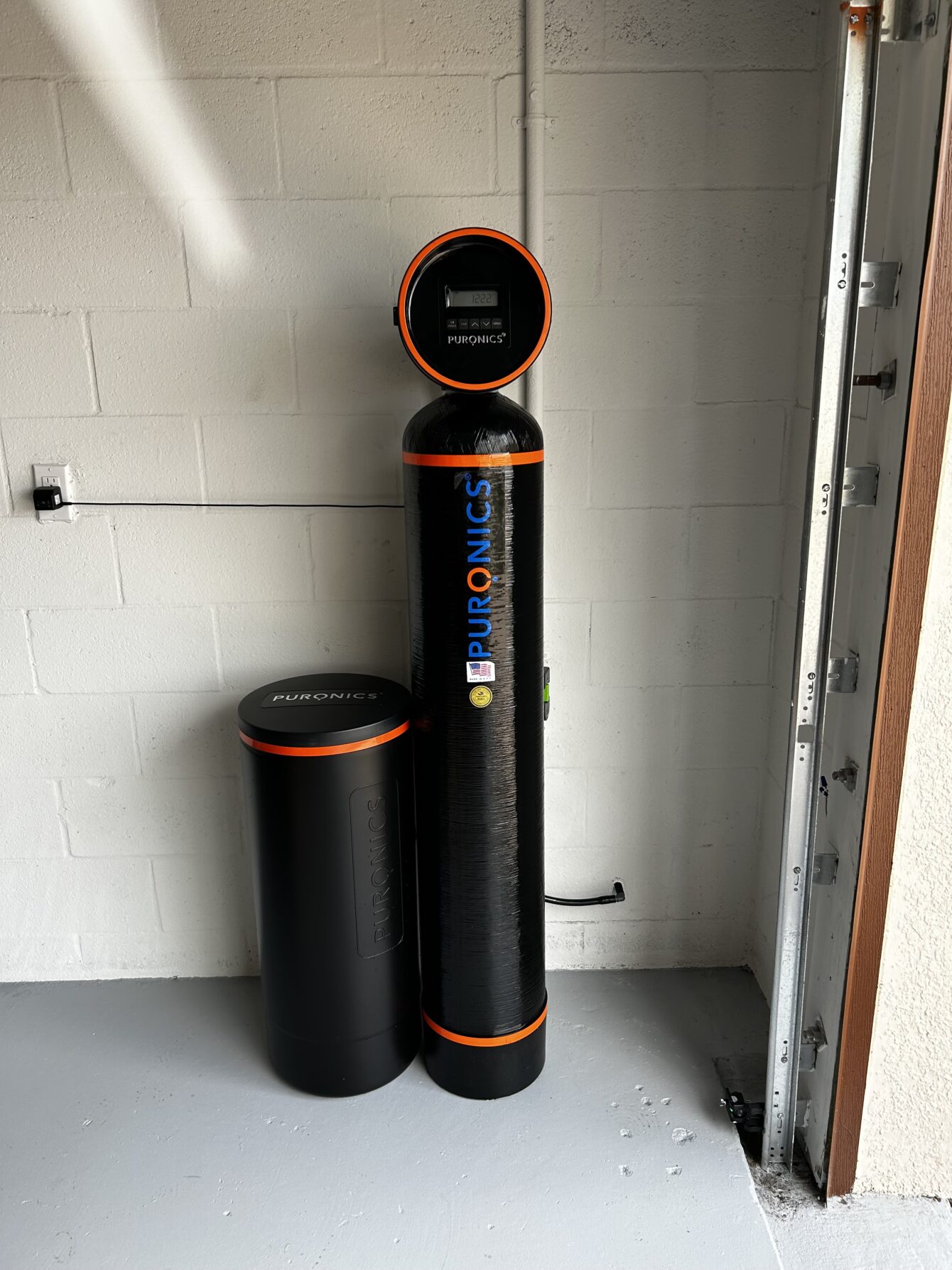
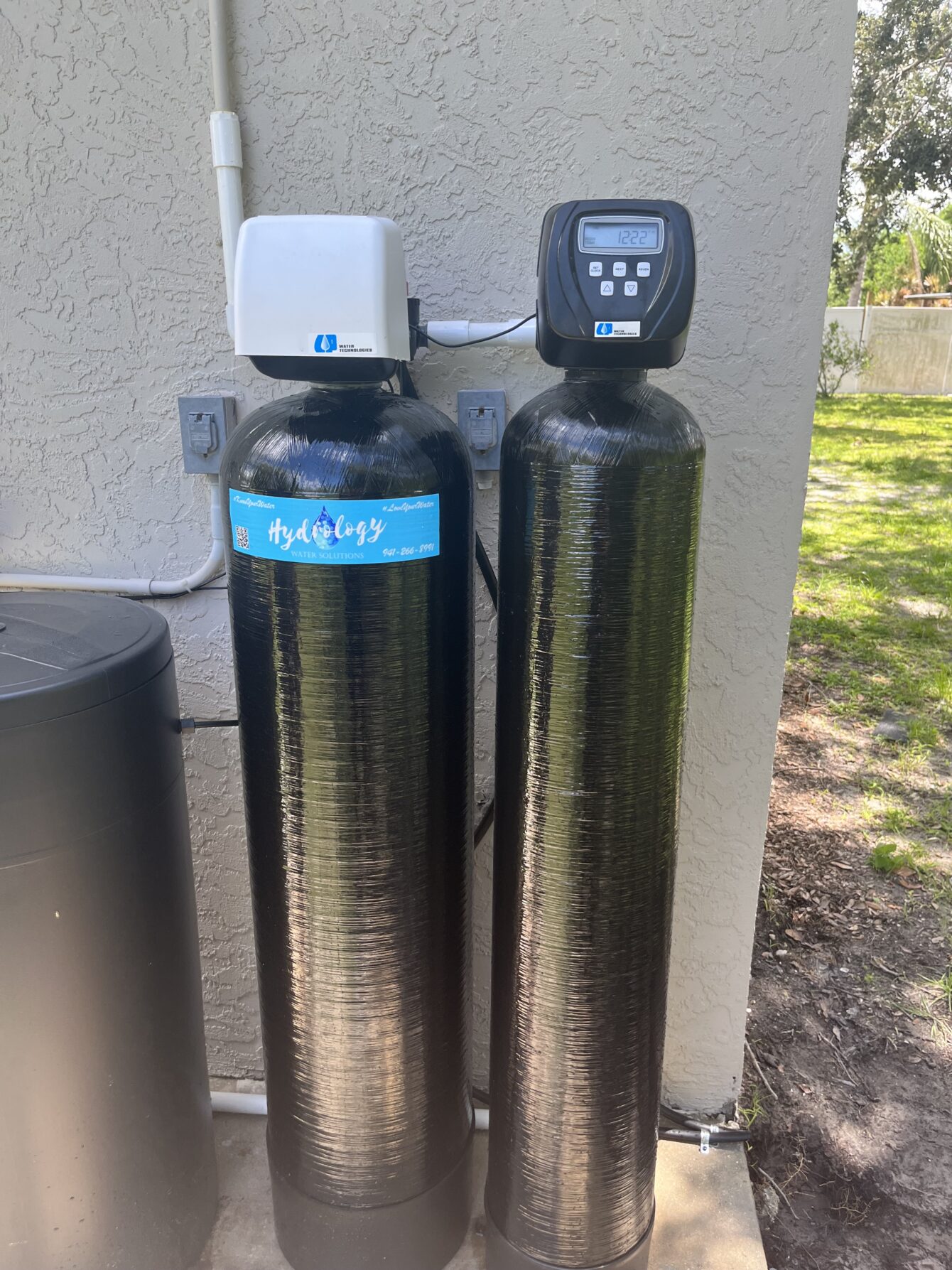
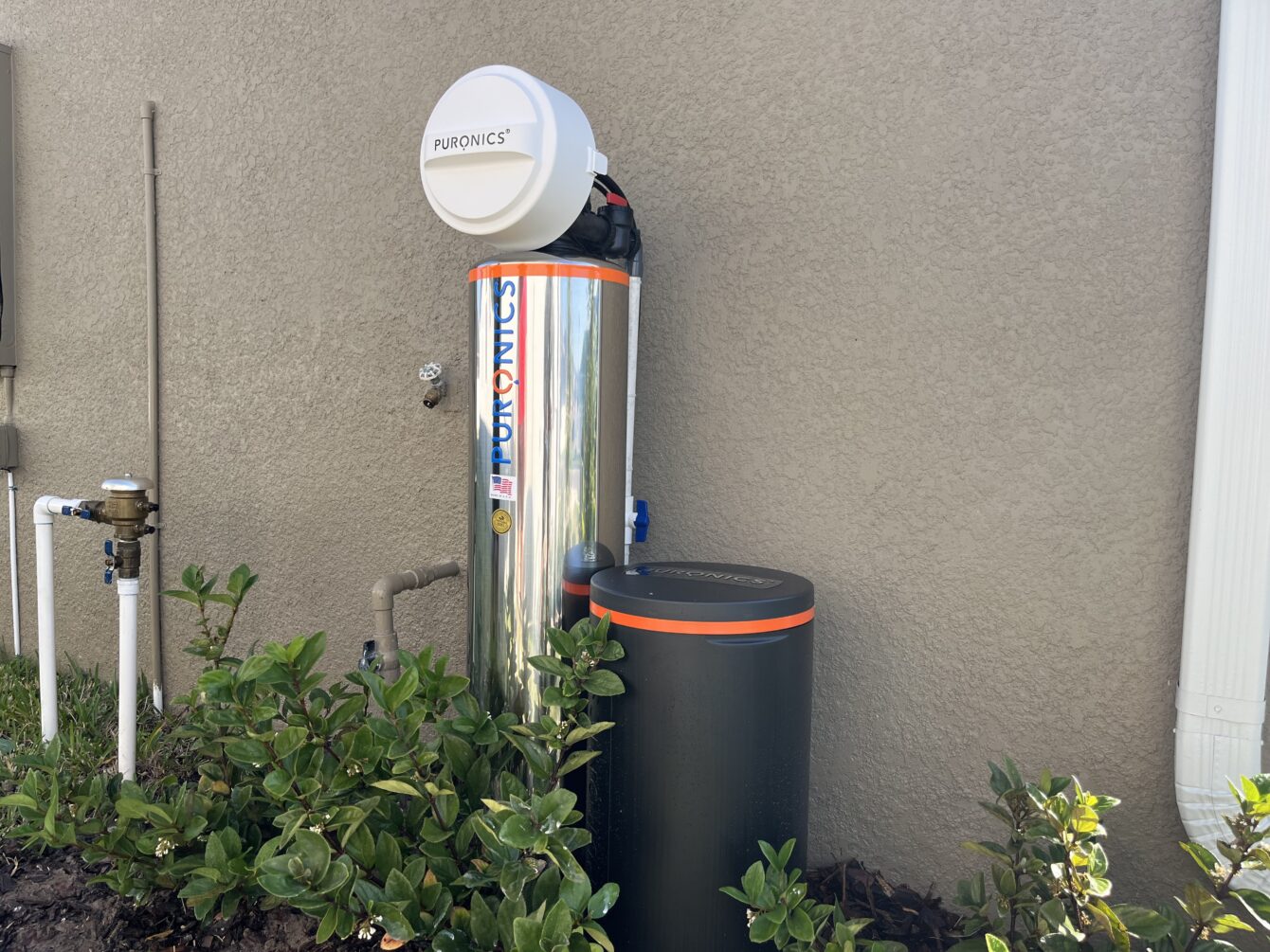
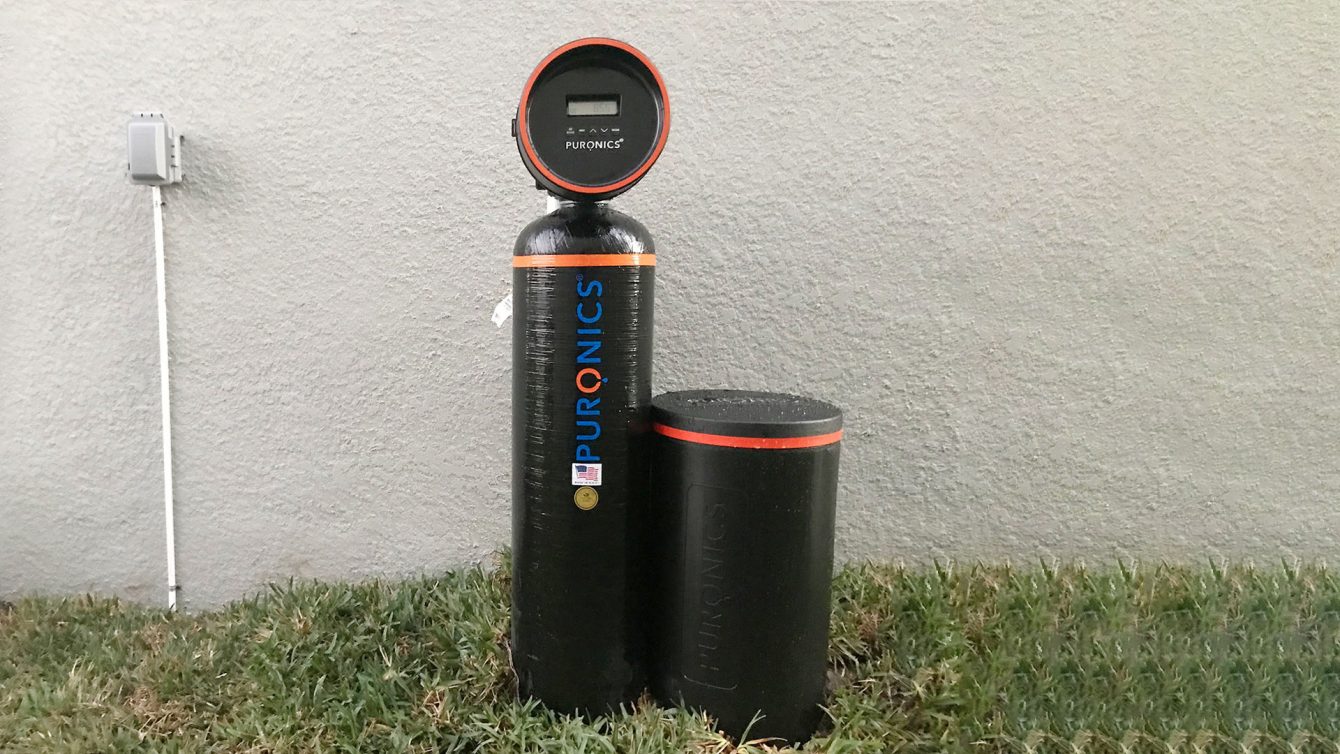
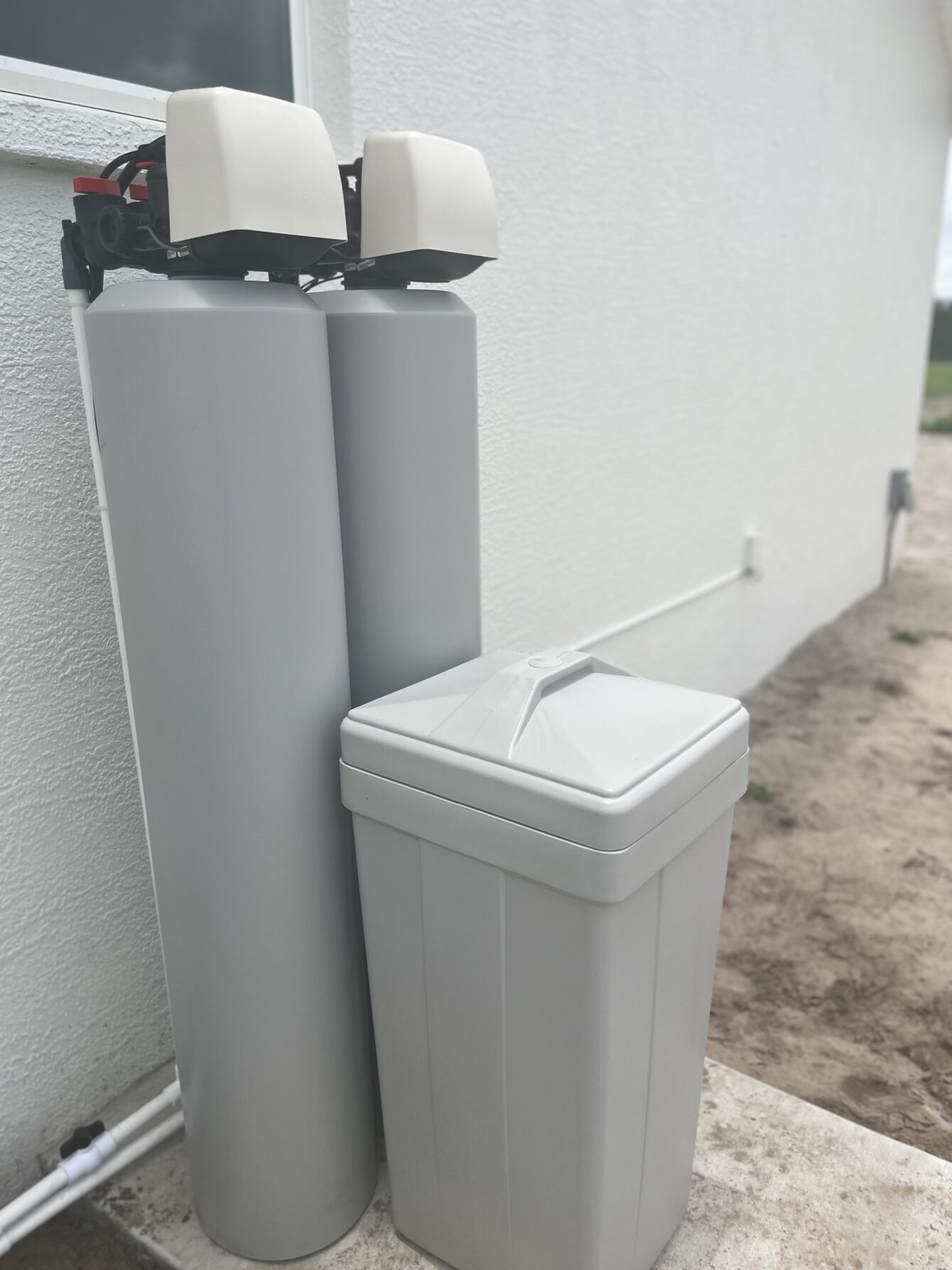
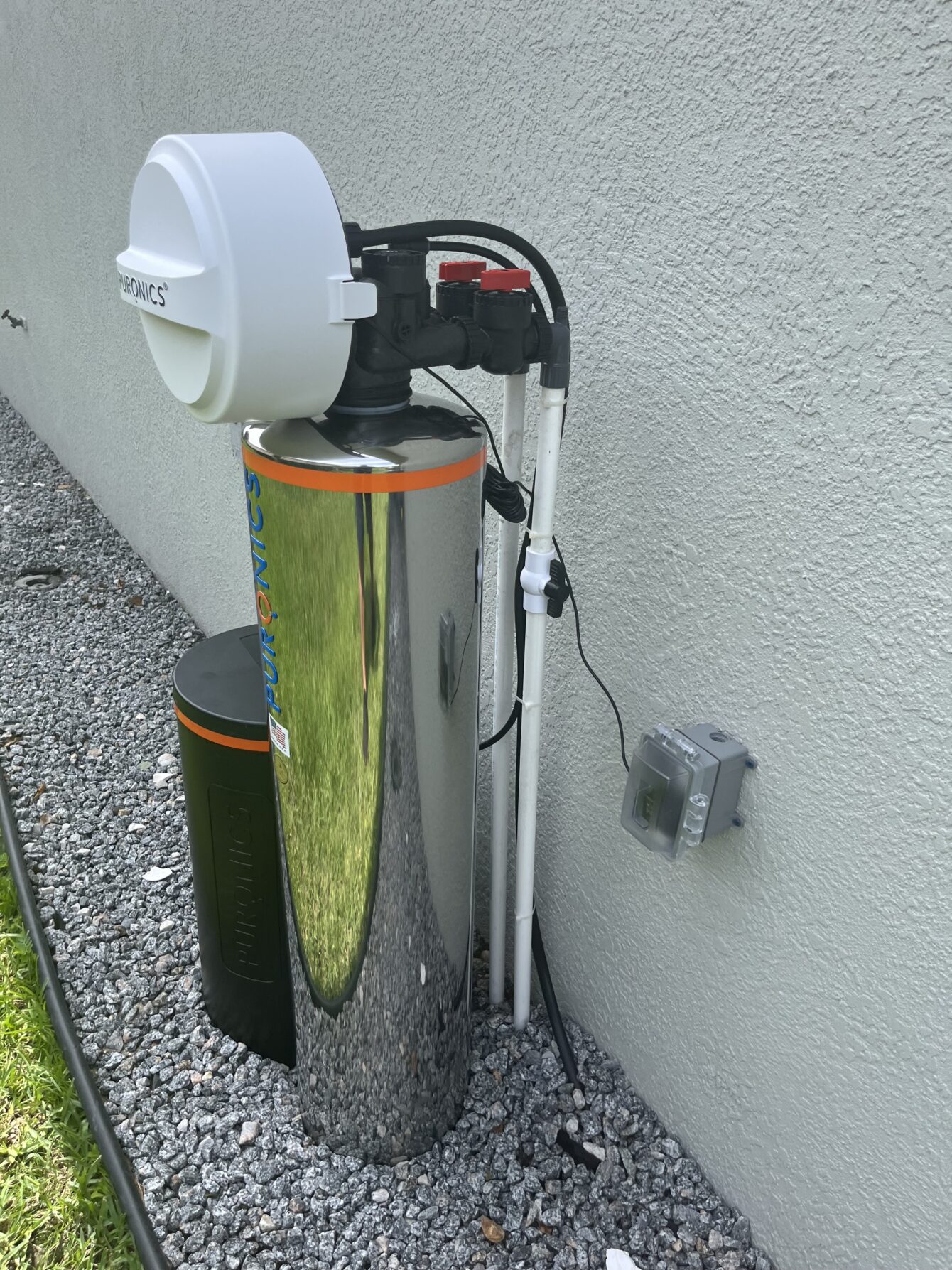
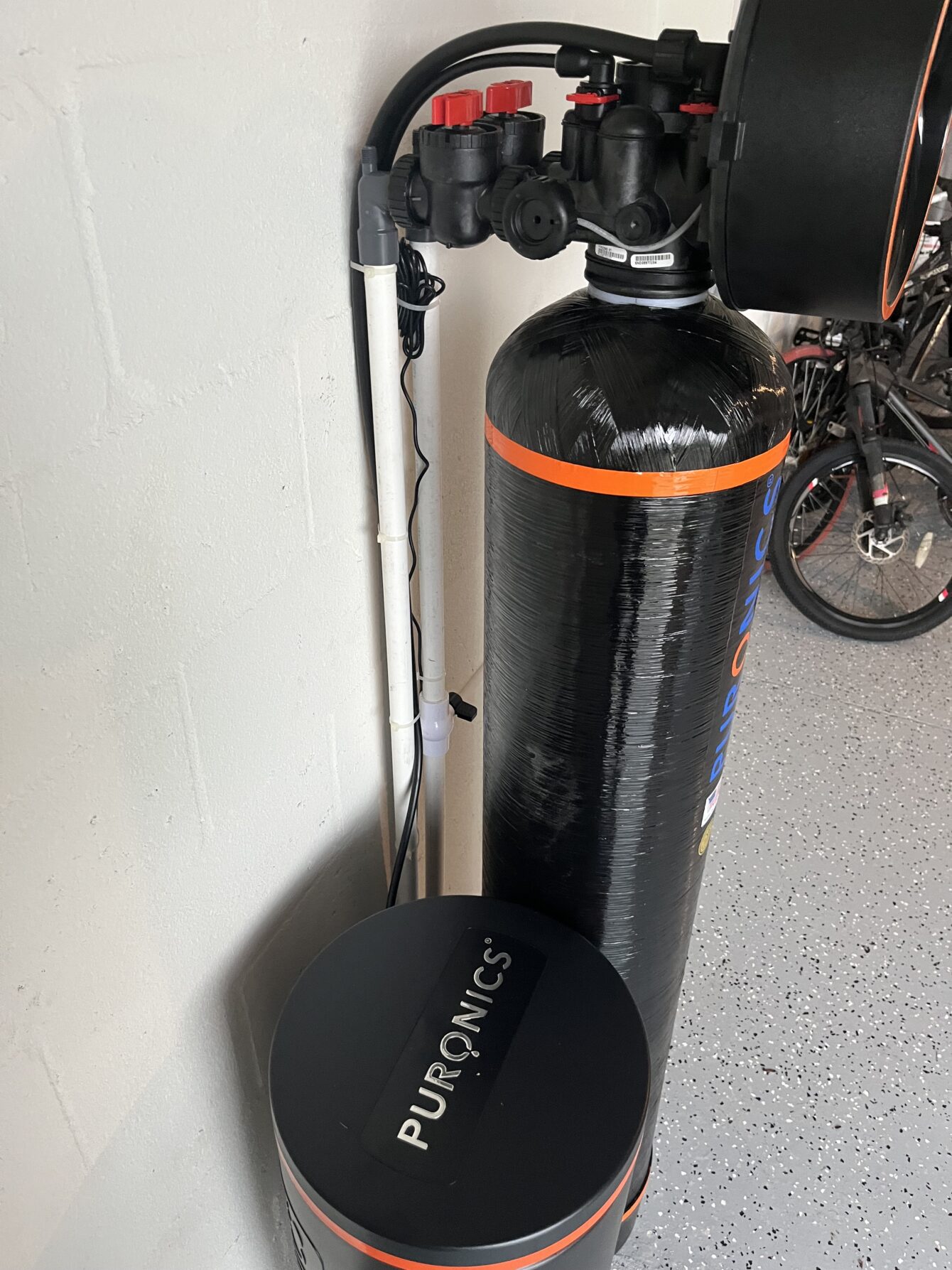
Our install · a real job, not stock
Help center
Common questions.
Most calls we get are about the same few things. The answers are below, written the way we would explain them on the phone. If something needs a visit, the answer will say so.
Jump to: Is this normal? | Still feels hard | Softener | Reverse osmosis | Leaks | When to call
What the tags mean:
Normal all goodInfo good to knowService may need a visitEmergency act now
Is this normal?
These are normal.
NormalMy drain line is running — is something wrong?
Usually not. Your system cleans itself on an automatic cycle (called regeneration), and the drain line runs during it. That normally happens overnight, between about 2:00 and 5:00 AM.
If it’s running at another time of day, see “draining at the wrong time of day” below.
NormalMy water looks cloudy or milky since the install
It’s just air in the lines after installation. Let a cold tap run for a moment; it clears on its own within a day or two.
NormalMy cold water feels soft but my hot water doesn’t yet
Your cold water is soft immediately. Your water heater still holds about 40 gallons of your old water, so the hot side feels soft once the tank naturally turns over. Give it a little time.
Still feels hard
My water still feels or tests hard.
ServiceRun through these quick checks first
Before booking a visit, a few things solve this most of the time:
- Where did you test/feel it? Test from a cold tap and let it run for 15–20 seconds first. Hot water (and any outside spigot plumbed before the system) can still be hard.
- Is the system in bypass? If the bypass valve was left on, no water is being treated. Make sure it’s in the normal/service position.
- Is there salt in the tank? If your system uses salt, an empty tank means it can’t soften. Top it up.
- Salt “bridge”? Sometimes salt forms a hard crust with an empty gap underneath, so it looks full but isn’t working. Gently break it up with a broom handle.
- Did it regenerate? If the clock is set wrong, it may be cleaning at the wrong time or skipping. See the clock section.
ServiceI started getting water spots again after a while
If your glasses and dishes were spot-free and then spotting slowly crept back, check two things. First, make sure you haven’t run low on salt (and that there’s no salt bridge). Second, your hardness setting may need adjusting — your water’s hardness can drift over time, and the system has to keep up with it.
Keeping those settings dialed in is exactly what our signature maintenance plan is for — we come out, check the salt, and fine-tune the settings so your water stays right without you having to think about it. Ask us about it.
Softener
Softener and whole-home questions.
NormalShould my whole-home water have a low TDS reading like my RO?
A whole-home softener/conditioner isn’t meant to lower TDS. It removes the hardness (calcium & magnesium) that causes scale, swapping it for a tiny amount of sodium — so the total dissolved solids stay about the same. The carbon media removes chlorine and taste/odor, not dissolved minerals.
Low TDS comes from your reverse-osmosis drinking-water system, which removes dissolved solids at your kitchen tap. That’s why the RO faucet reads low and the rest of the house doesn’t — exactly as intended.
A TDS meter measures dissolved solids, not softness. Your whole-home system is doing its job even though the TDS number barely moves. Softness is measured in grains of hardness, not TDS — and you don’t actually want zero-mineral water running to every tap and appliance.
InfoHow do I bypass the system?
Your install includes a bypass and a new main shut-off. Turning the bypass sends water around the system (untreated) — useful to stop an issue or during maintenance.
InfoHow often do I add salt?
It varies with your water and usage — many homes add a bag every few weeks to a couple of months. Keep the tank at least a third full. Ask us about salt delivery so you never have to think about it.
NormalMy water tastes salty after I added salt
It’s usually brine that got into the lines while the softener was regenerating, and it rinses out. Two common causes: water was used during the regeneration (a toilet flushed while it was rinsing, for example), or the drain line is clogged so the brine can’t rinse out the way it should.
- Run your cold taps for a couple of minutes. That’s usually all the cold lines need.
- Run the fridge water dispenser about a gallon, until the water comes out warm. Warm means the water stored in the fridge has been flushed. If the ice tastes salty, toss it and let the ice maker make a fresh batch.
- Hot water salty too? Then the brine got into the water heater. A typical tank holds about 40 gallons, so run the hot side longer (a tub faucet empties it fastest) until it tastes normal.
- Watch whether it comes back. A one-time salty taste after a regeneration was most likely a usage thing. If it keeps happening, something needs a look, often the drain line. Call or text 941-266-8991 and we’ll come check it.
ServiceWater is draining at the wrong time of day
Most often this happens after a power outage — if the time on the display is flashing, that’s the giveaway it just needs to be reset.
Check the display:
- If it shows “Backwash” or “Rinse,” the clock is probably set to the wrong time. Reset the time of day and it’ll go back to cleaning overnight.
- If the clock is correct and it’s still cycling at odd hours, that’s worth a call. In the meantime you can put the system in bypass to stop it.
Reverse osmosis
Drinking water questions.
NormalMy RO water looks cloudy or milky
That’s tiny air bubbles — common when the system is new or freshly filtered, and even more so if you have an alkaline (remineralization) filter that adds minerals back. It clears after the water sits a moment. If it continues for more than a few days, let us know.
NormalMy fridge ice maker or water dispenser is slow after connecting the RO
RO water comes from a storage tank at lower pressure than your main line, so feeding your fridge causes a noticeable pressure drop: the ice maker fills slower, cubes can be smaller, and the dispenser runs slower. That’s the trade-off for RO-quality water and ice — we always give you a heads-up before connecting it.
InfoNo water or slow water from my RO faucet
The storage tank takes about 3 hours to fill from empty, so right after install or a filter change it needs time. Slow flow over time usually means the filters are due or the membrane needs replacing.
InfoHow often do the RO filters and membrane need changing?
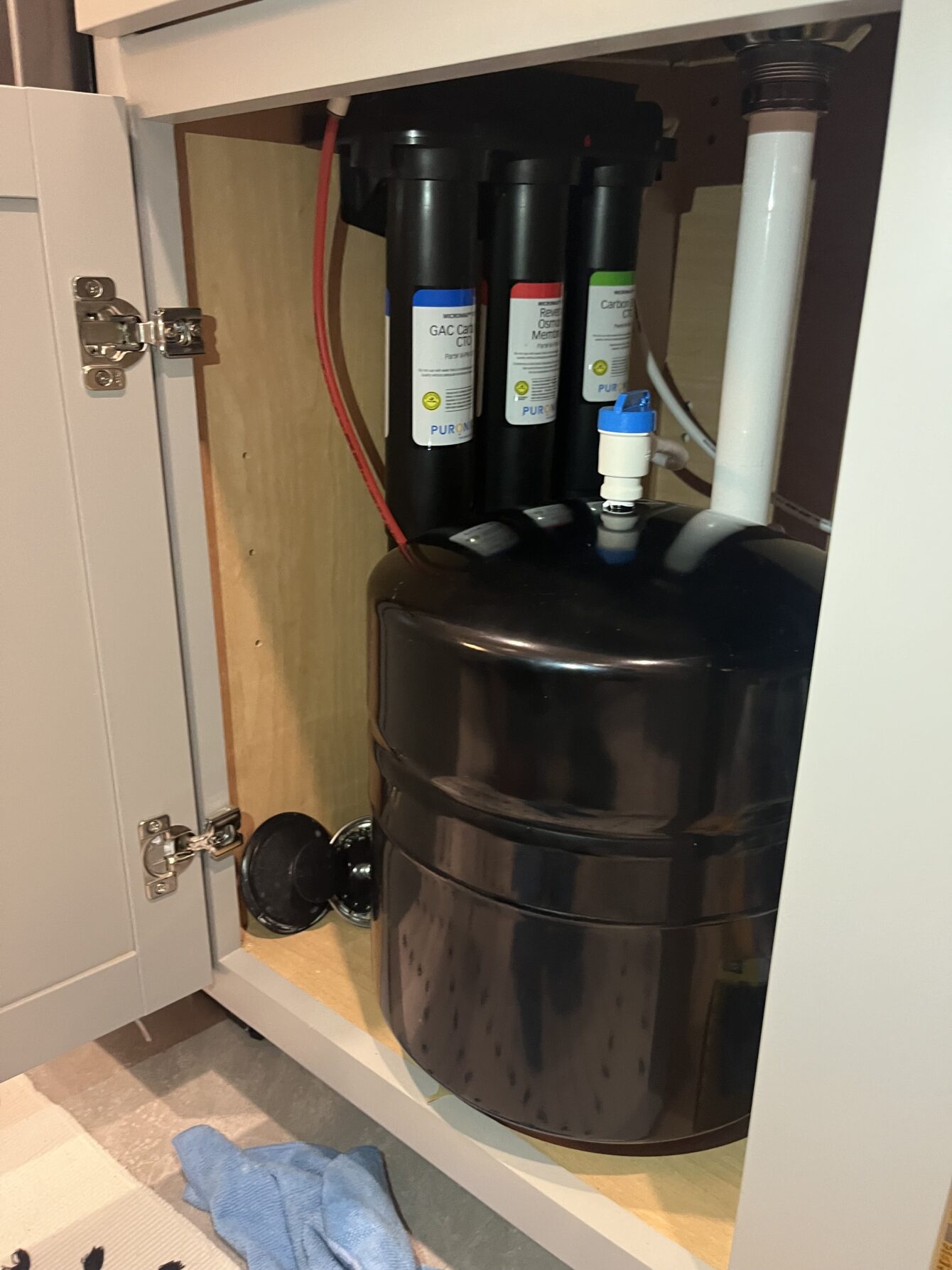
Pre-filter and post-filter (the two carbon cartridges): every 6 to 12 months. Puronics says at least once a year, or about every 2,500 gallons. Change them sooner if you use a lot of water or the faucet starts running slow.
RO membrane (the red cartridge in the center): about every 2 years on our local water. Puronics says a membrane can last 3 to 5 years when the water’s pH is under 7.5 and as little as 6 months when it’s over 8.0. We test it at service so it gets replaced when it’s due.
Alkaline filter, if you have one: every 6 to 12 months.
Signs you’re due: the faucet runs slow, the tank takes longer to refill, or the taste changes.
Slow faucet with new filters, or less than a gallon out of the tank? It may not be the filters. The storage tank could need to be recharged with air or replaced. Here’s how to tell.
InfoHow do I change my RO filters?
Most clients have us handle filter changes on their maintenance & delivery plan. If you’d rather do it yourself, watch Brad do it, then follow the steps:
- Shut off the water supply. Turn the small blue valve on the line feeding the filters.
- Close the tank valve. Turn the blue valve on top of the storage tank.
- Open the RO faucet to let the pressure out. A little water may still be in the line.
- Put a paper towel down under the filters. You may get a few drips.
- Swap the two carbon filters (blue and green labels). Give the old one a quarter turn and pull it out. Line up the new one, push it up, and give it a quarter turn.
- Swap the membrane (red label, in the center). Quarter turn and pull it off. It has a small tube at the bottom: push the collar in and pull the tube out. There’s a little flow restrictor in that line. Make sure it stays in, or water will run to the drain constantly. Push the tube into the new membrane, set it with the rectangle tab toward the front, push up, and quarter turn.
- Turn the water back on. With the faucet still open, open the tank valve (handle pointing along the line is open), then slowly open the supply.
- Check for drips, then flush. Let the tank fill, drain it completely through the faucet once, and let it refill before drinking.
Only doing part of it? Two shorter videos:
Pre and post filters, every 6 to 12 months (1:31)
Membrane, about every other year (1:54)
Rather we handle it? We’ll keep you on schedule so you never have to think about it.
InfoI’m going out of town
Turn off the RO’s back supply valve and open the faucet to let the water drain out. We rarely have issues, but this makes sure a leak can’t happen while you’re away.
Watch Brad do it:
ServiceMy RO water tastes off
Usually the filters are due. Right after install, be sure you did the initial flush: fill the tank (~3 hrs), drain it completely by opening the faucet, then let it refill — after that it’s ready to drink.
Leaks & emergencies
If you see water where it should not be.
InfoHow do I shut off my water?
Worth knowing before you ever need it. Your install includes a new main shut-off — turning it stops water to the system and the line it feeds. For the RO drinking-water unit, use its own supply valve.
EmergencyI see a leak
- Turn off the new main shut-off at your system (or the RO supply valve if it’s the drinking-water unit).
- Wipe up standing water so you can see where it’s coming from.
- Call Hydrology — we’ll walk you through it or come out.
Always check fittings after anyone touches or moves the equipment.
When to call
When you really should call us.
ServiceCall us if…
- Water still tests hard after the quick checks above.
- The system cycles at odd hours with the clock set correctly.
- Any leak, or water where it shouldn’t be.
- A sudden change in taste, smell, color, or pressure.
- You’re due for filter/membrane service.
That’s exactly what we’re here for — no such thing as a dumb question when it’s your home’s water.
Dig deeper
Full guides.
Optional add-ons & upgrades
Upgrade your system.
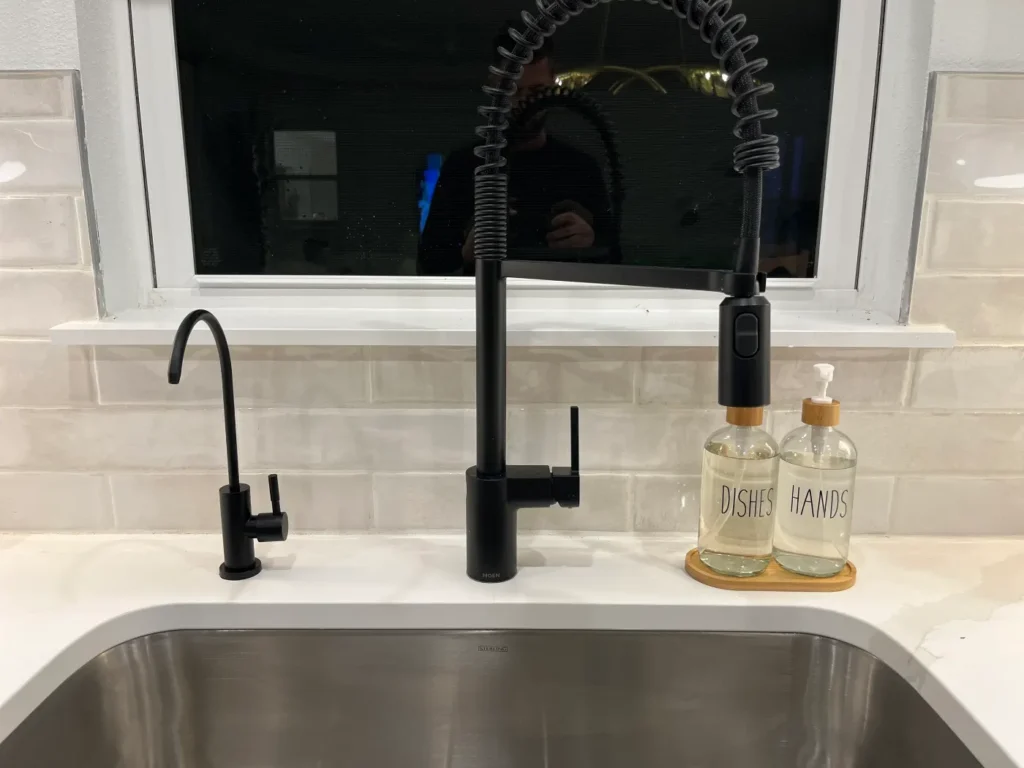
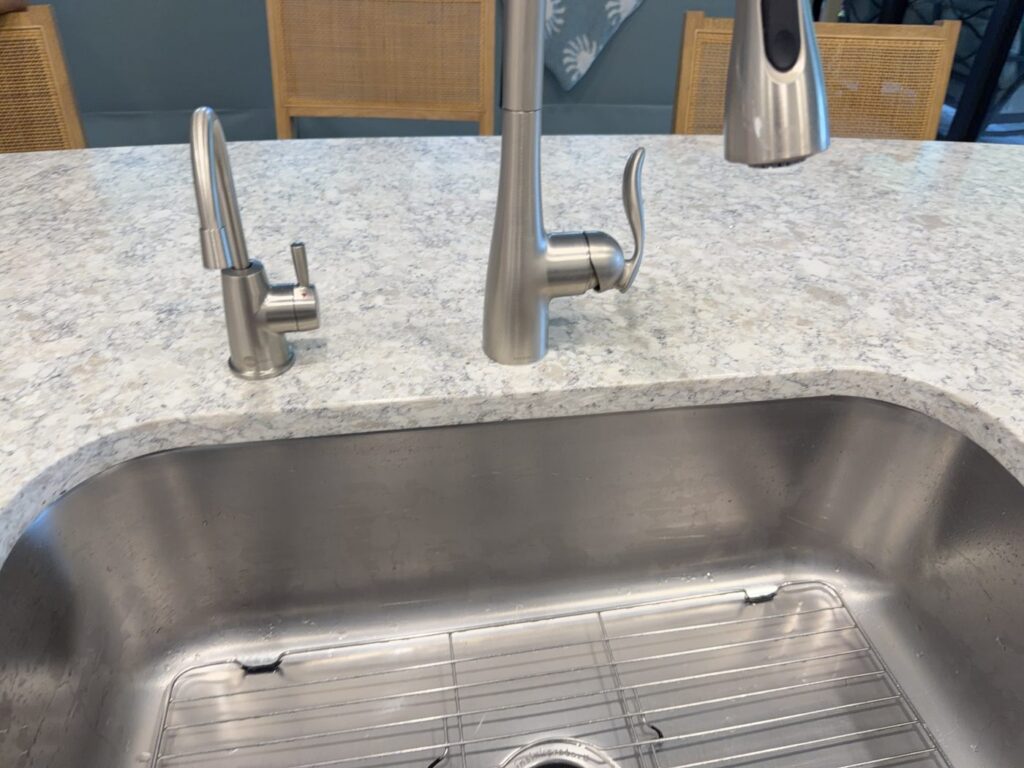
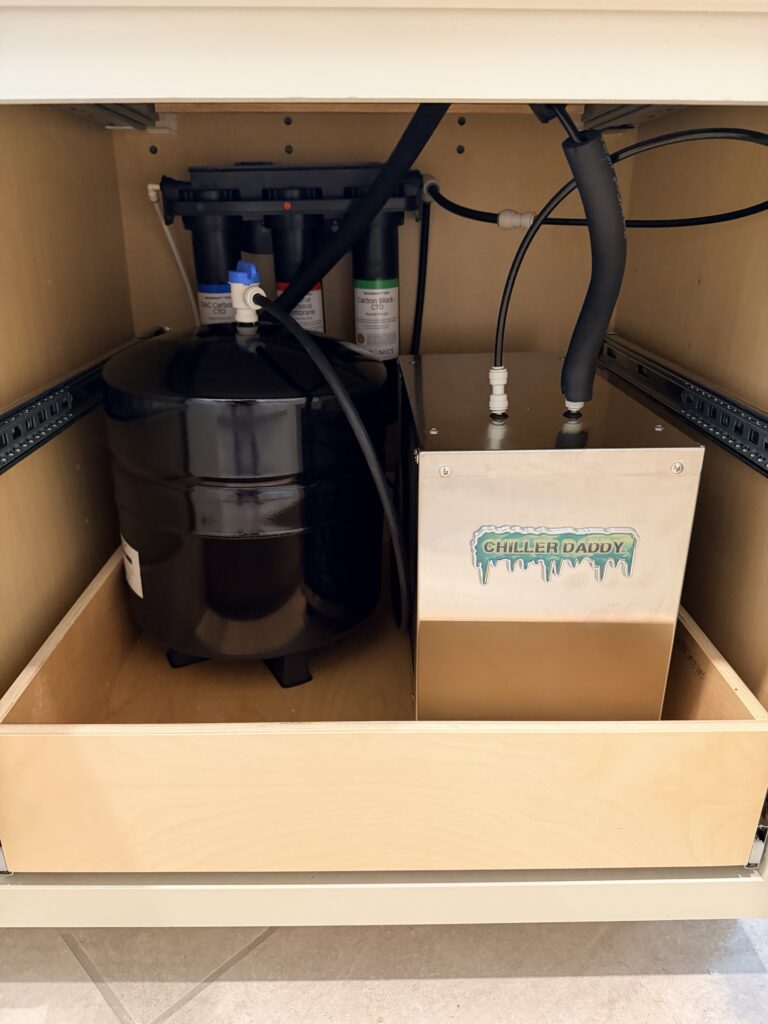
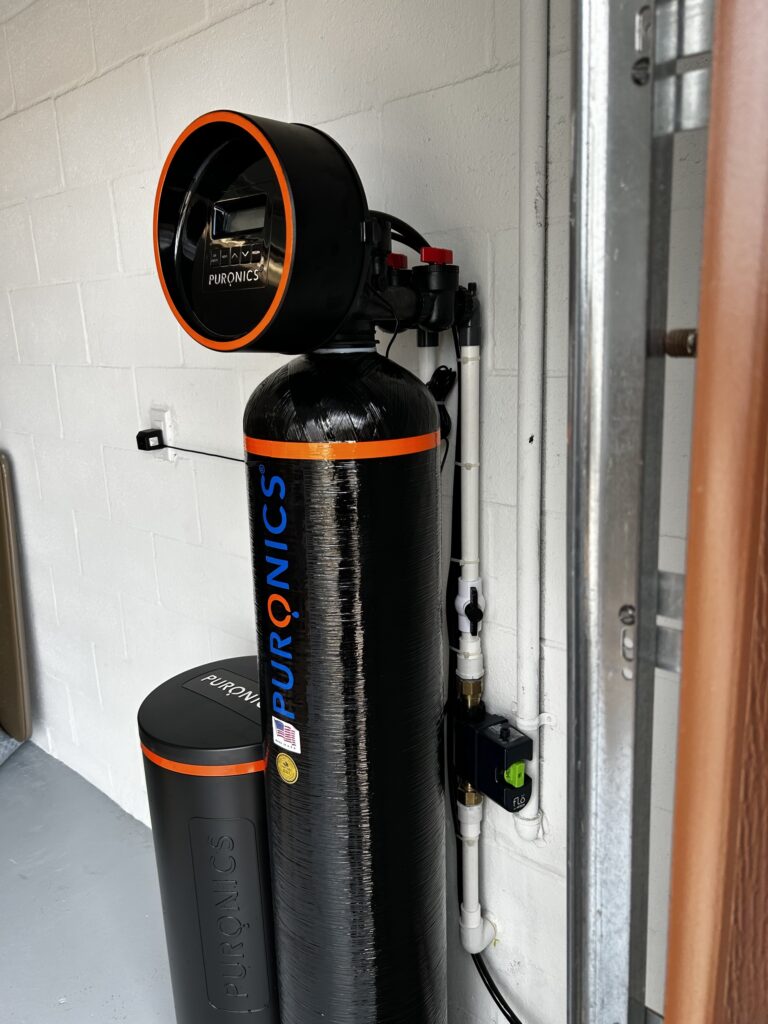
Already love your water? Take it further. Add any of these with a new system, or later on. Every photo here is one of our own installs.
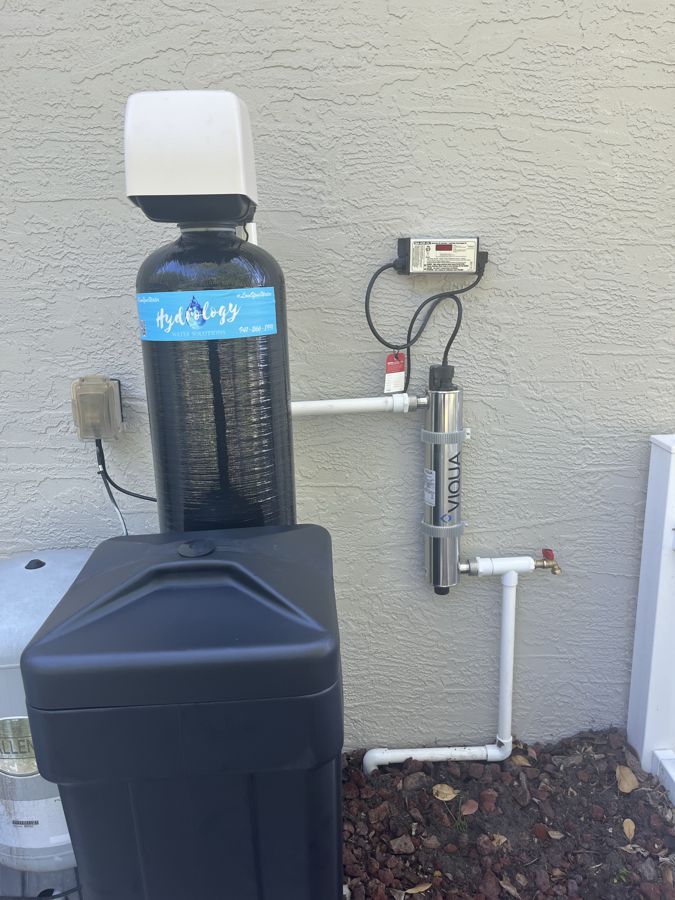
Not sure which one fits your home? Ask at your free water test →
What your neighbors say
4.7★ from 212 Google reviews.
“I cannot say enough amazing things about this company and system! We had three companies come out and Hydrology stood out on every level.”
“We’ve had our system now a month and absolutely love it. My wife is a hair beautician with over 30 years of experience and definitely can tell the difference with the water.”
“Wow, I can definitely feel a difference in my hair, skin, and when I wash my hands. I knew getting a water softener was a priority and I’m so glad I decided to go with Hydrology.”
Every review is on our Google profile — read all of them there. We don’t cherry-pick; we just answer the phone.