Manatee · Sarasota · Hillsborough · Pinellas · Charlotte
Well Water Case Study: Air Injection vs. Chlorine Injection
4.7★ from 212 Google reviews · WQA Gold Seal Puronics dealer · Our own techs, no subcontractors
Request your free water test
★★★★★ 4.7 — a few details and we reach out, usually same day.
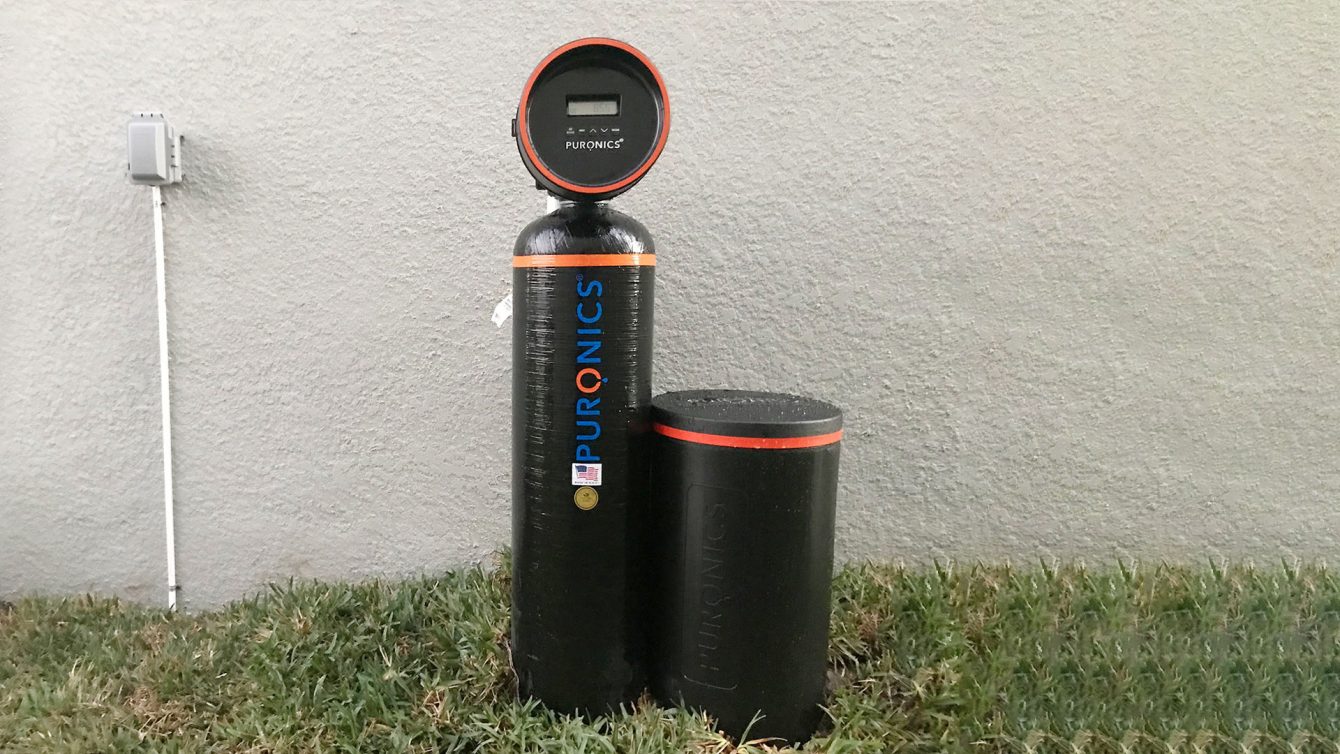
When this homeowner in the Lakewood Ranch / Palmer Ranch area called us, their private well had it all: iron staining, a rotten-egg sulfur smell, bacteria and slime, tannins, and hard water. They already had a treatment system in place — it just wasn’t getting the job done. Here’s what was happening, what we changed, and why.
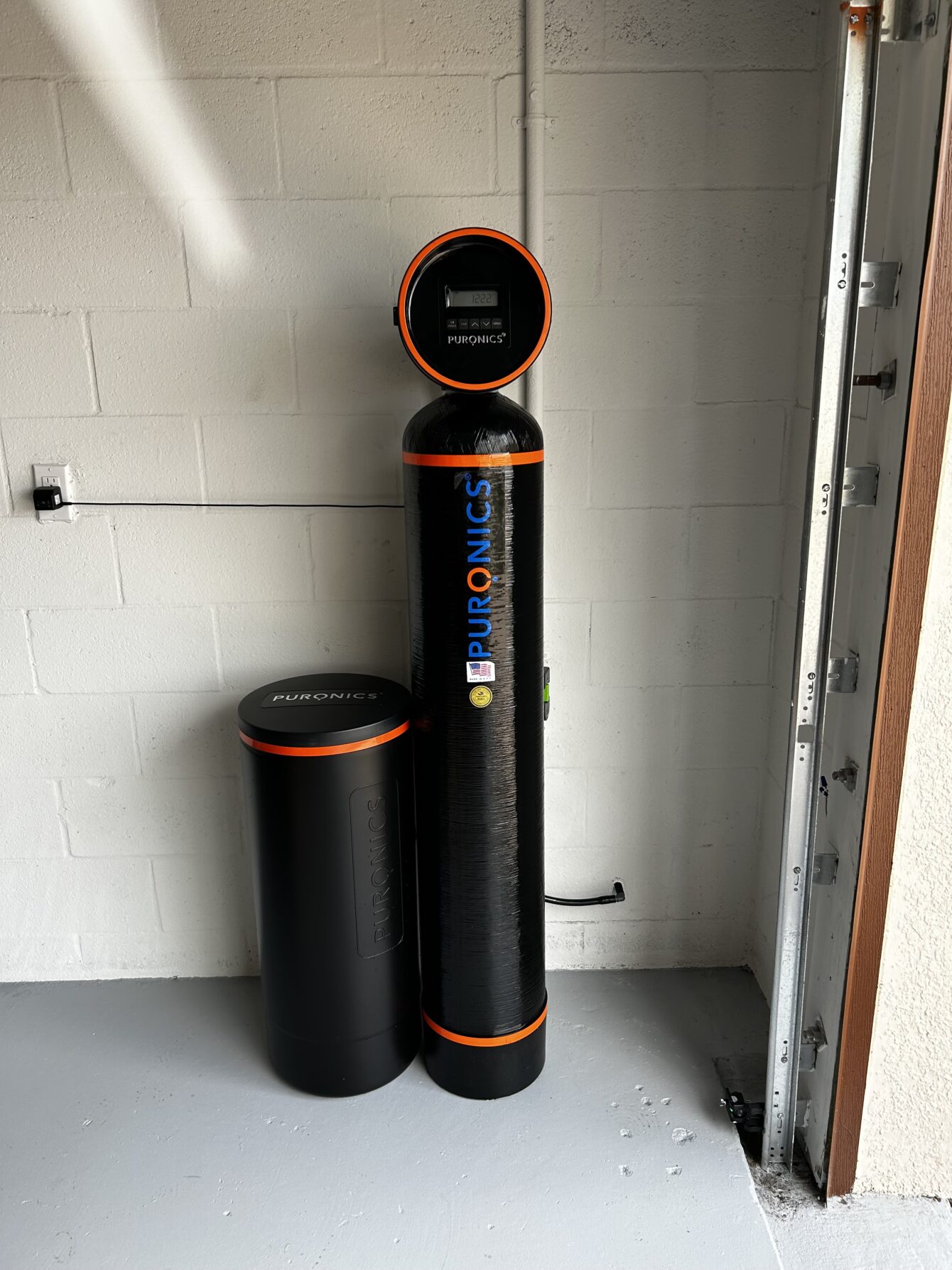
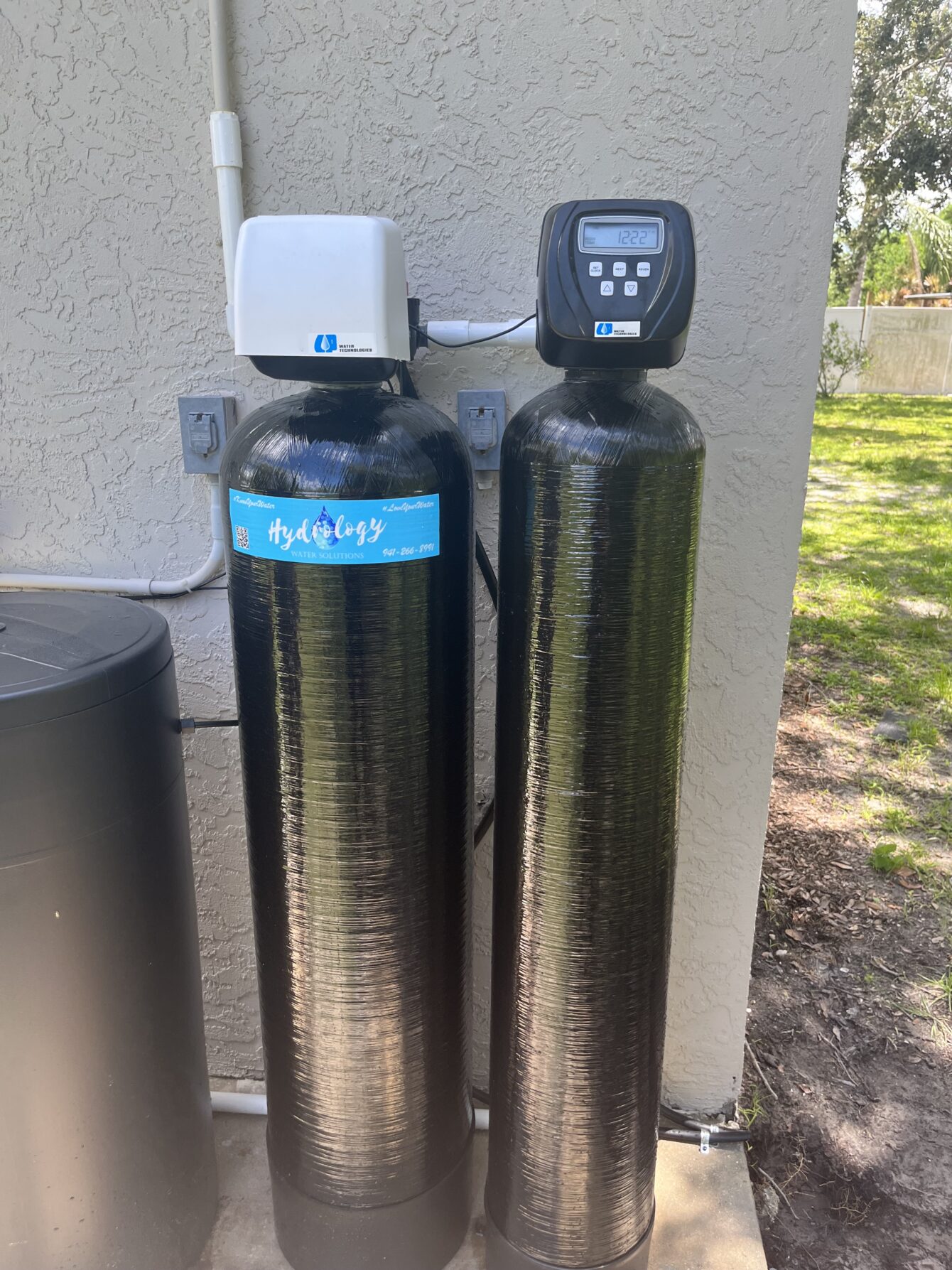
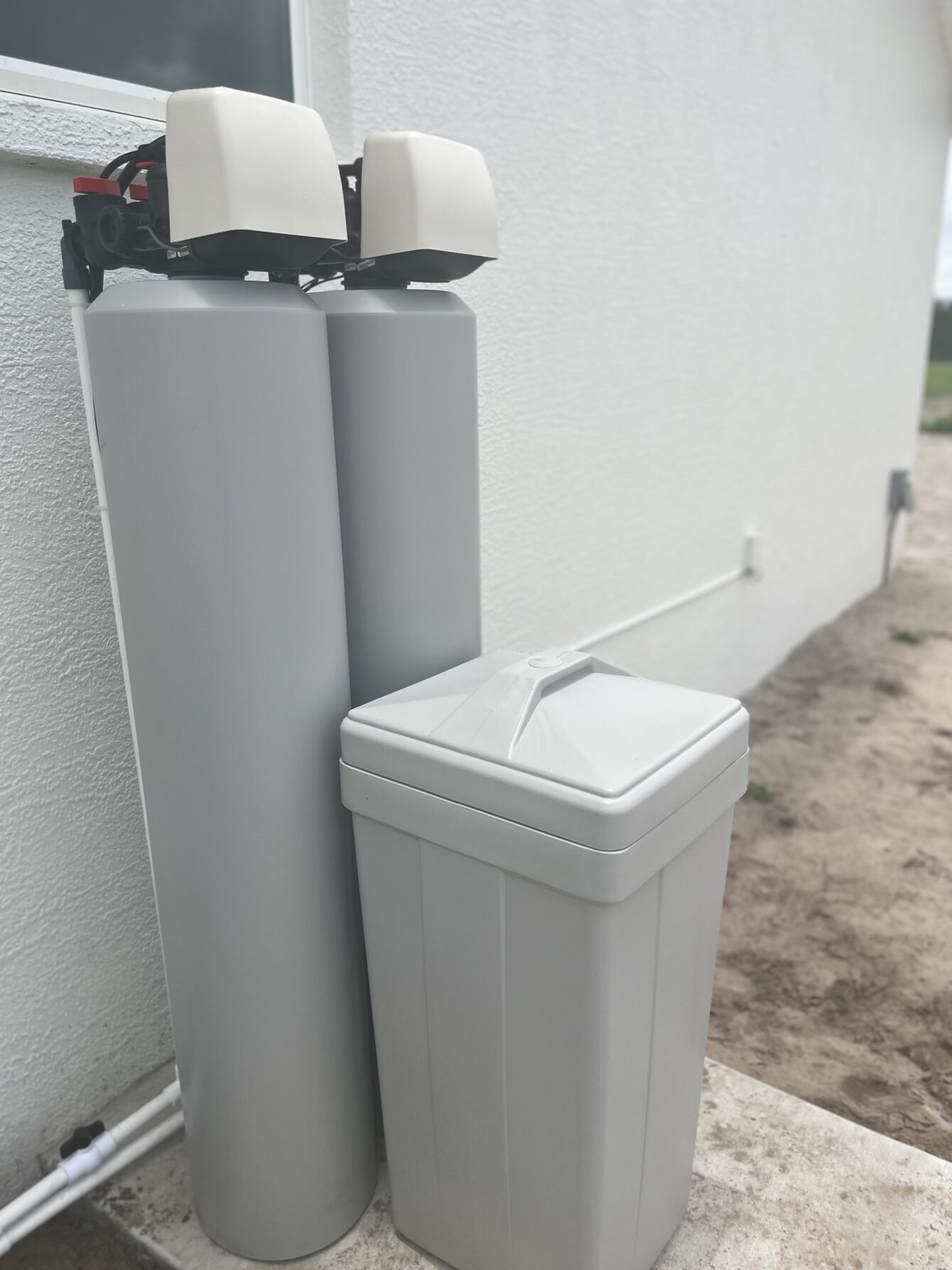
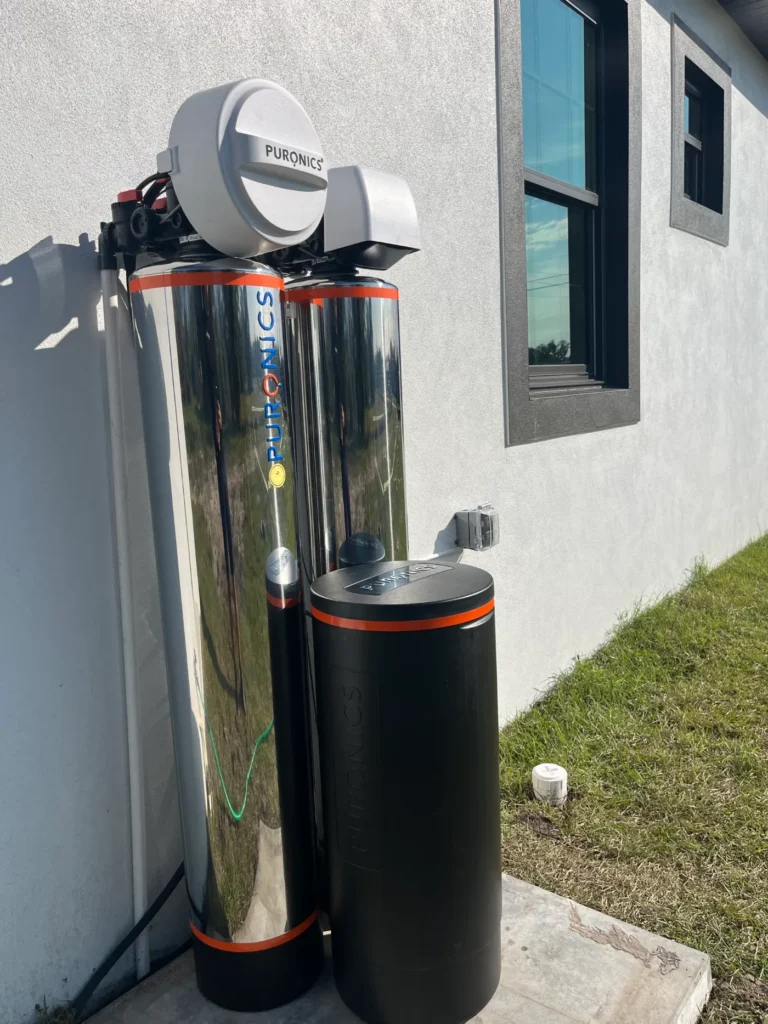
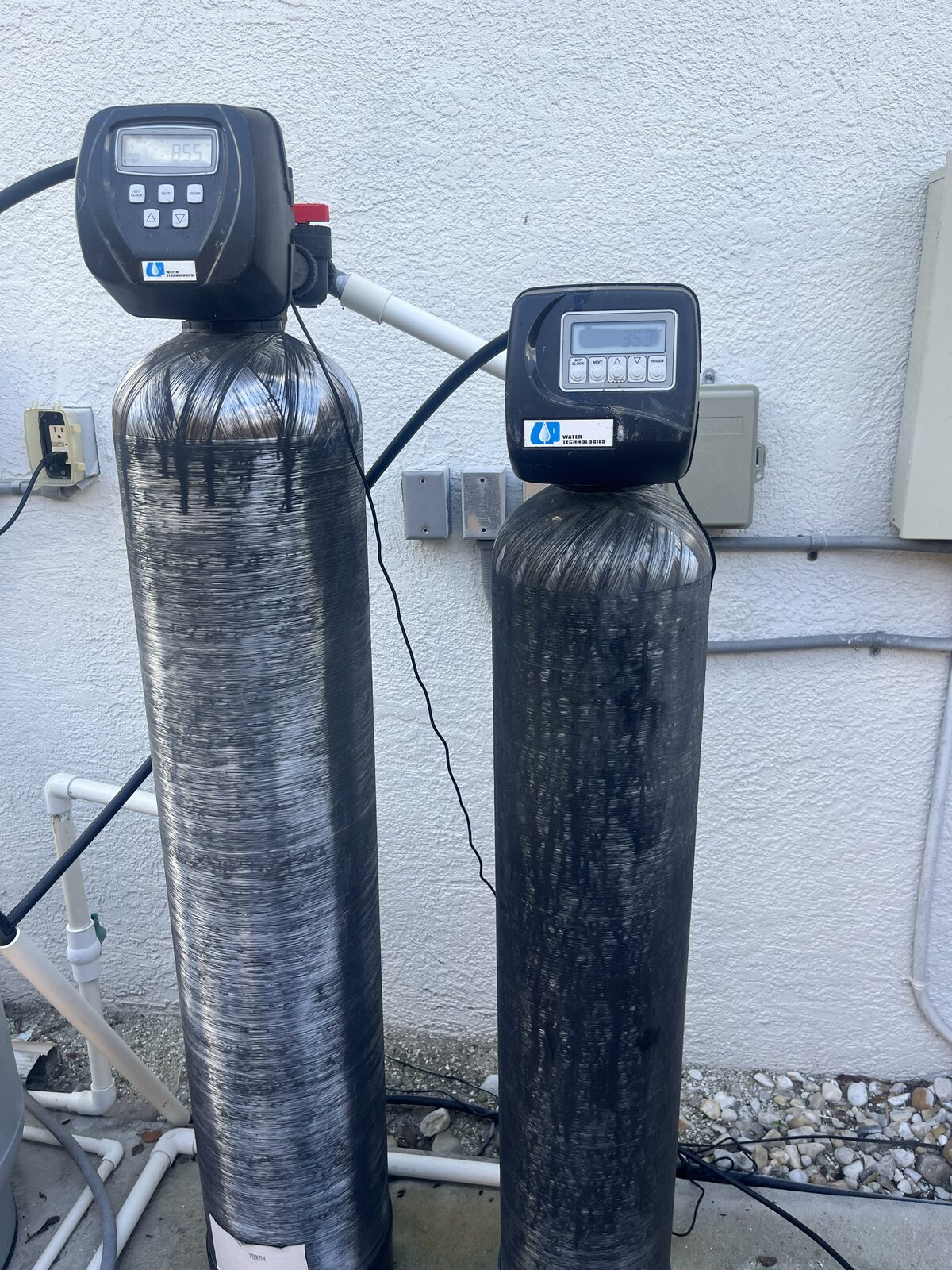 BEFORE · air injection
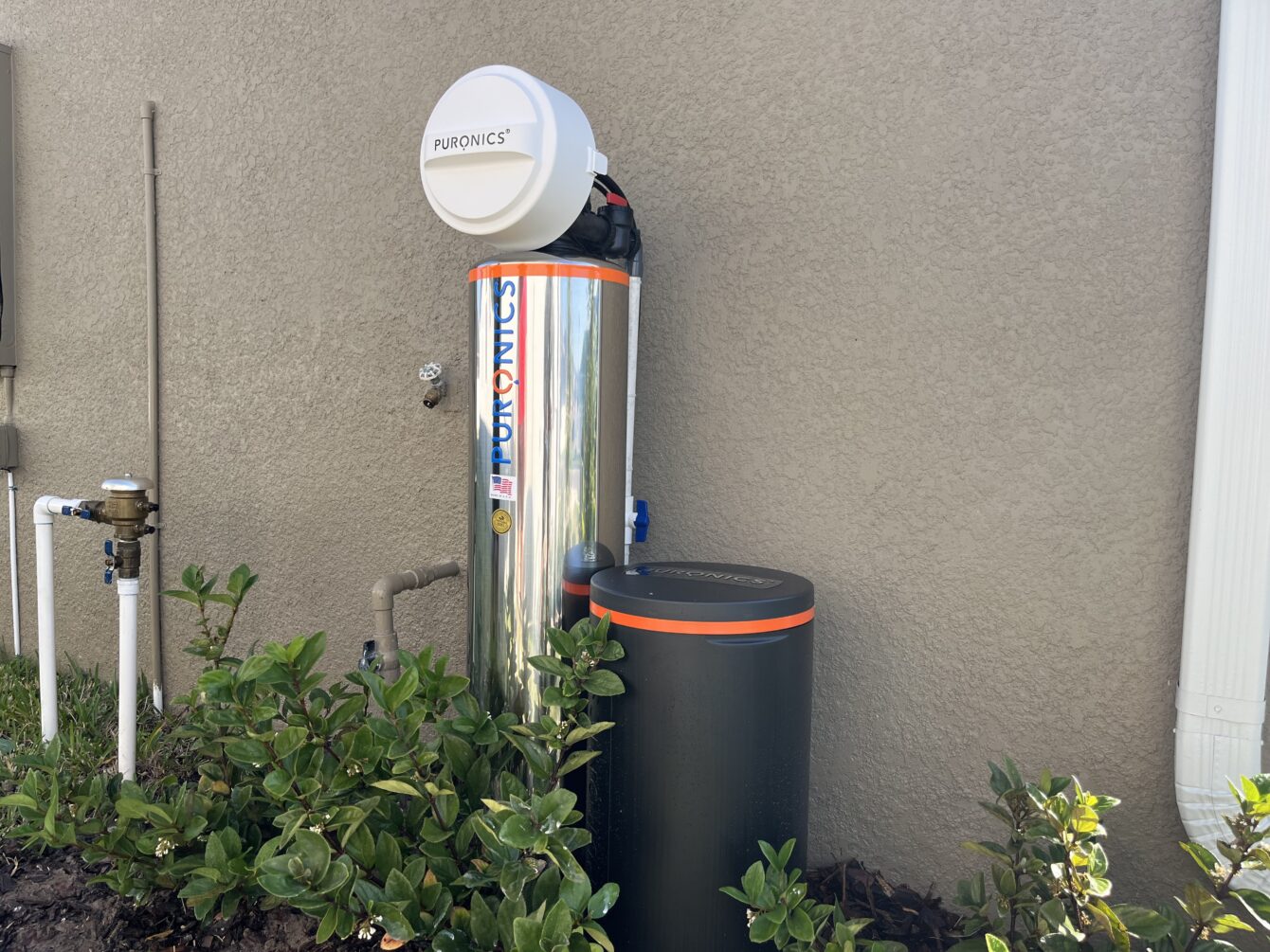
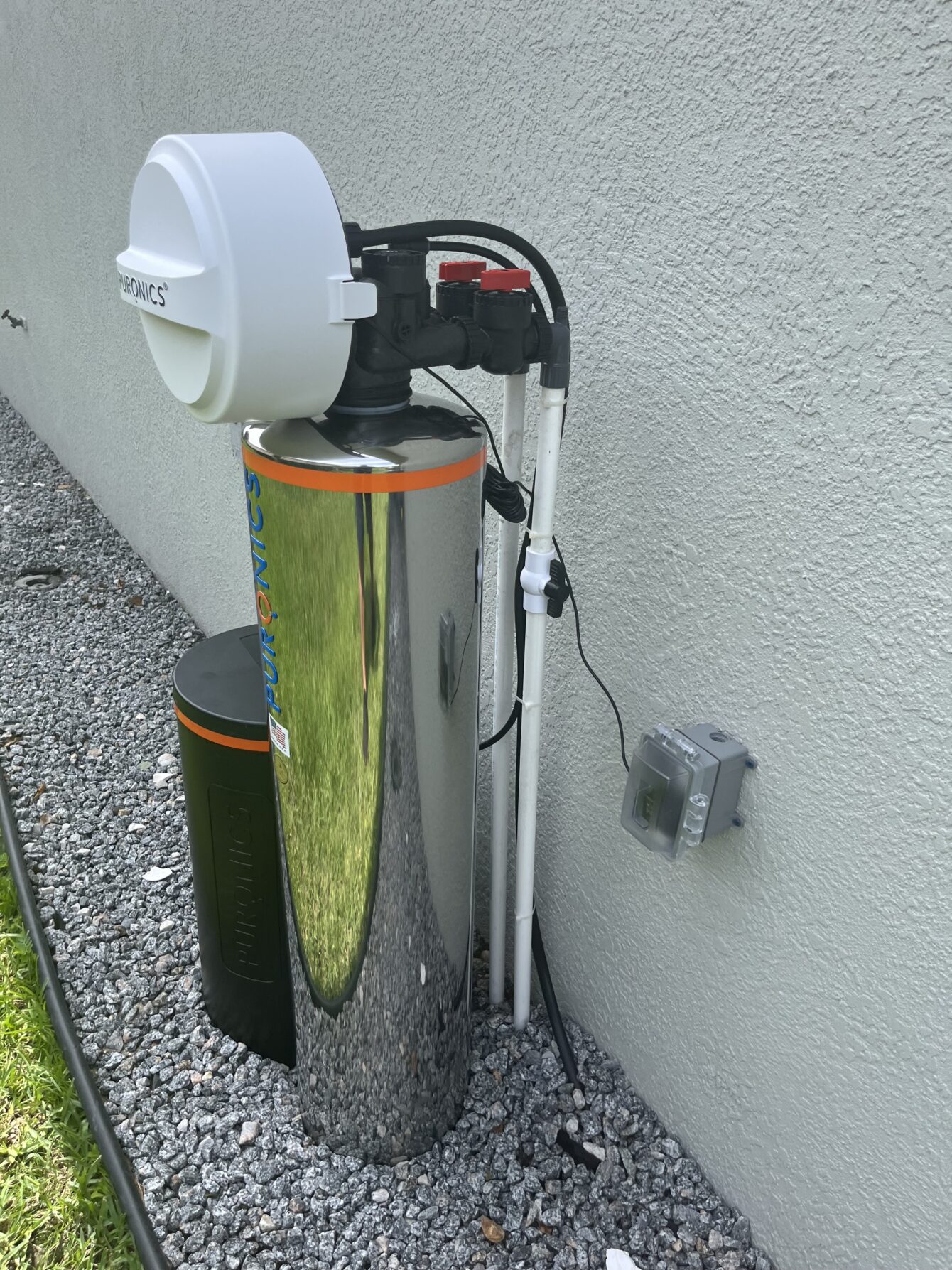
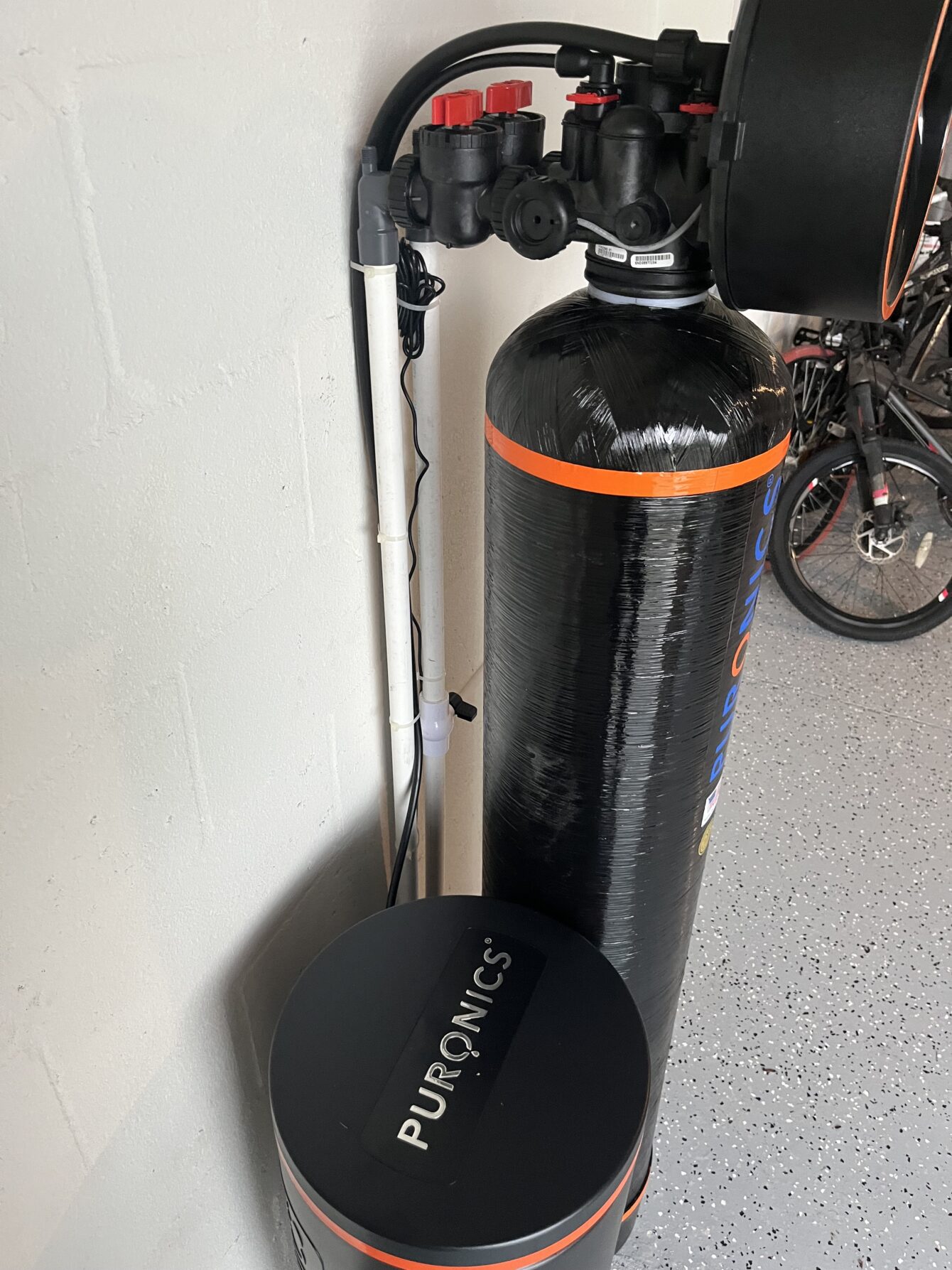
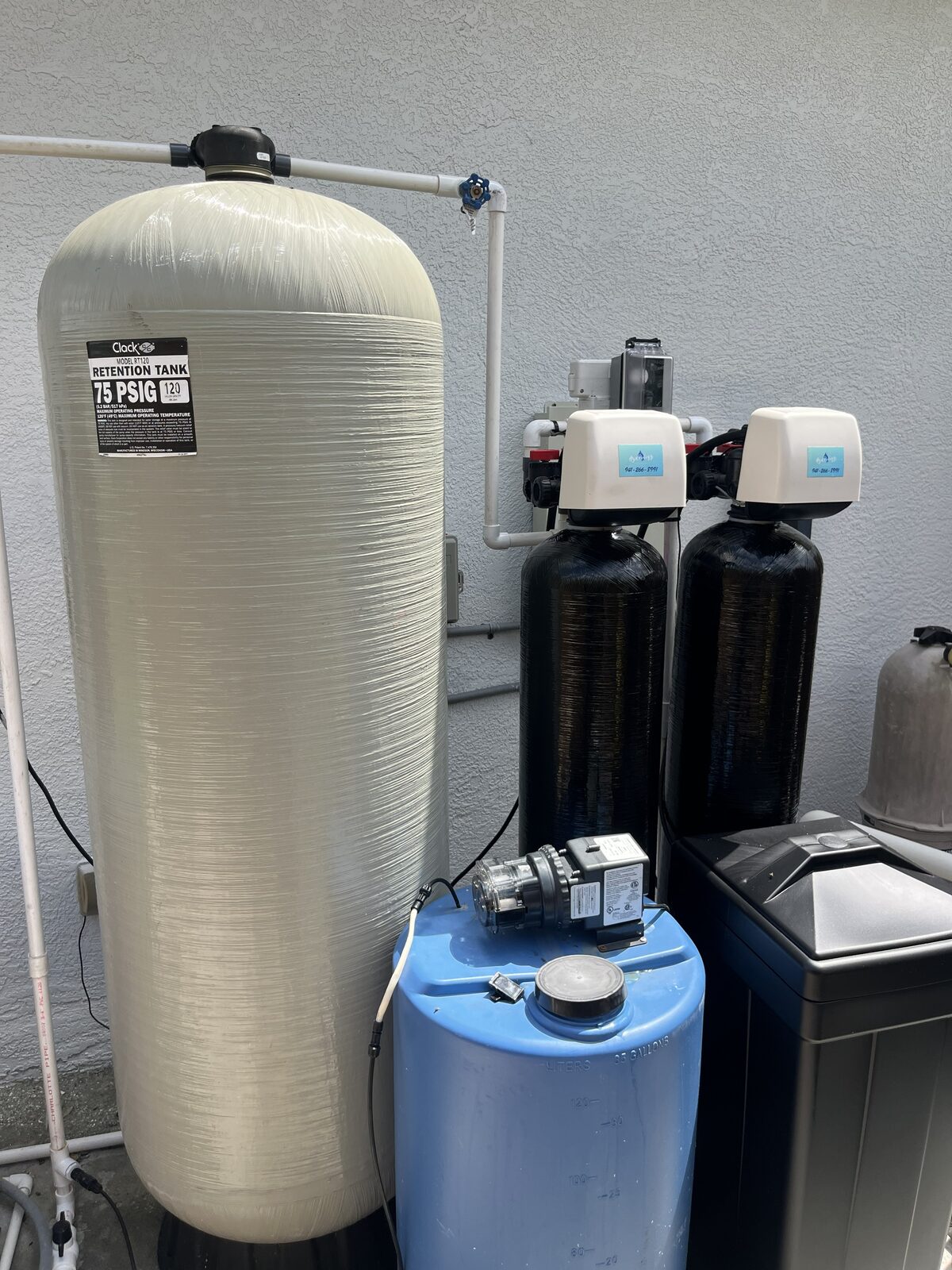
AFTER · chlorine injection
⇆
Drag the handle to compare the old air-injection setup with the new chlorine-injection build.
What was there before: air injection + softener
The existing setup was an air-injection (AIO) system paired with a softener — two tanks. Air injection pulls in a pocket of air to oxidize iron and hydrogen sulfide so they can be filtered out. On a lot of wells that’s enough. On this one it wasn’t:
- It couldn’t keep up with the sulfur on this well.
- Bacteria and slime (biofilm) were working their way into the filters and the home’s pipes — something air injection alone doesn’t address, because it oxidizes but doesn’t disinfect.
What we installed: chlorine injection + retention tank
We removed the air-injection system and built a chlorine-injection system in its place:
- Metered chlorine injection ahead of a Clack RT120 retention (contact) tank — the retention tank gives the chlorine enough contact time to oxidize the heavier iron and sulfur and knock down the bacteria and biofilm.
- Filtration to remove the oxidized iron and sulfur.
- A softener for the hard water.
The difference: instead of partially oxidizing and letting slime through, the system is built to treat the actual problem — the sulfur load and the bacteria/biofilm — at the source, before it reaches the filters and pipes.
Bottom LineThe takeaway
This homeowner went from a system that couldn’t keep up to one matched to what their water actually tested for. Whether you’re on a well in Lakewood Ranch, Palmer Ranch, or anywhere on the Suncoast — if your water smells like sulfur, stains fixtures, or you’re finding slime in filters or faucets, air injection may not be enough — and a chlorine-injection system with proper contact time is often the right call. Every well is different, so we test first and match the system to your results.
FAQWhat was there before: air injection + softener
The FixWhat we installed: chlorine injection + retention tank
We removed the air-injection system and built a chlorine-injection system in its place:
- Metered chlorine injection ahead of a Clack RT120 retention (contact) tank — the retention tank gives the chlorine enough contact time to oxidize the heavier iron and sulfur and knock down the bacteria and biofilm.
- Filtration to remove the oxidized iron and sulfur.
- A softener for the hard water.
The difference: instead of partially oxidizing and letting slime through, the system is built to treat the actual problem — the sulfur load and the bacteria/biofilm — at the source, before it reaches the filters and pipes.
Bottom LineThe takeaway
This homeowner went from a system that couldn’t keep up to one matched to what their water actually tested for. Whether you’re on a well in Lakewood Ranch, Palmer Ranch, or anywhere on the Suncoast — if your water smells like sulfur, stains fixtures, or you’re finding slime in filters or faucets, air injection may not be enough — and a chlorine-injection system with proper contact time is often the right call. Every well is different, so we test first and match the system to your results.
FAQWhat your neighbors say
4.7★ from 212 Google reviews.
“I cannot say enough amazing things about this company and system! We had three companies come out and Hydrology stood out on every level.”
“We've had our system now a month and absolutely love it. My wife is a hair beautician with over 30 years of experience and definitely can tell the difference with the water.”
“Wow, I can definitely feel a difference in my hair, skin, and when I wash my hands. I knew getting a water softener was a priority and I'm so glad I decided to go with Hydrology.”
Every review is on our Google profile — read all of them there. We don't cherry-pick; we just answer the phone.
Straight answers
Well water treatment: common questions
What people ask before they book.
More water answers →
What hard water does to a home: the Battelle study →
Air injection vs. chlorine injection — what’s the difference?
Air injection (AIO) oxidizes iron and hydrogen sulfide with a pocket of compressed air, then filters them out — simple and chemical-free, but it doesn’t disinfect bacteria and can fall behind on heavy sulfur. Chlorine injection meters a small amount of chlorine ahead of a retention tank, which oxidizes iron and sulfur and addresses bacteria and biofilm. For wells with bacteria/slime or a high sulfur load, chlorine injection is often the better fit.
What does a retention (contact) tank do?
It holds the water long enough for the injected chlorine to react — “contact time.” That contact time is what lets the system oxidize iron and sulfur and address bacteria before the water reaches your filters and pipes.
How do I know my current well system isn’t keeping up?
Common signs: a returning rotten-egg (sulfur) smell, iron staining, or slime/biofilm showing up in filter housings, aerators, or fixtures. A water test tells you what’s actually there so the system can be matched to it.
“We researched and met with a few water softener companies and Hydrology stood out in the best ways. Genuine people, transparent pricing, quick communication, and informative guidance every step of the way. 10/10. Highly recommend. Thanks again Brad and Keith!”
“Hydrology is a great company with fabulous products. Brad and Keith are very knowledgeable about the products they sell. No pressure to buy. The product sells itself. Our water tastes fantastic. Our dishes and clothes are cleaner. Give them a call, you won’t be disappointed.”
“Great family company! Responsive and even came out to check out a false alarm. Highly recommended.”
“Excellent service and very knowledgeable about your water filtration needs. Brad is very likeable and tries to accommodate the client as best he can. Doesn’t try to upsell. Highly recommend his company.”
“Excellent service from start to finish. Would highly recommend!”
“Amazing service. We found a solution to the problem and it was addressed professionally.”
Air injection vs. chlorine injection for well water — what is the difference?
Air injection (AIO) oxidizes iron and hydrogen sulfide using a pocket of compressed air, then filters them out. It is simple and chemical-free, but it does not disinfect bacteria and can fall behind on heavy sulfur. Chlorine injection meters a small amount of chlorine ahead of a retention tank, which oxidizes iron and sulfur and also addresses bacteria and biofilm. For wells with bacteria or slime, or a high sulfur load, chlorine injection is often the better fit.
What does a retention or contact tank do?
A retention tank holds the water long enough for the injected chlorine to react — called contact time. That contact time lets the system oxidize iron and sulfur and address bacteria before the water reaches the filters and the home's pipes.
How do I know my well treatment system is not keeping up?
Common signs include a returning rotten-egg sulfur smell, iron staining, or slime and biofilm showing up in filter housings, aerators, or fixtures. A water test shows what is actually present so the system can be matched to it.