Manatee · Sarasota · Hillsborough · Pinellas · Charlotte
The Complete Whole-House Water Filtration Guide for Lakewood Ranch & Florida’s Suncoast
4.7★ from 212 Google reviews · WQA Gold Seal Puronics dealer · Our own techs, no subcontractors
Request your free water test
★★★★★ 4.7 — a few details and we reach out, usually same day.
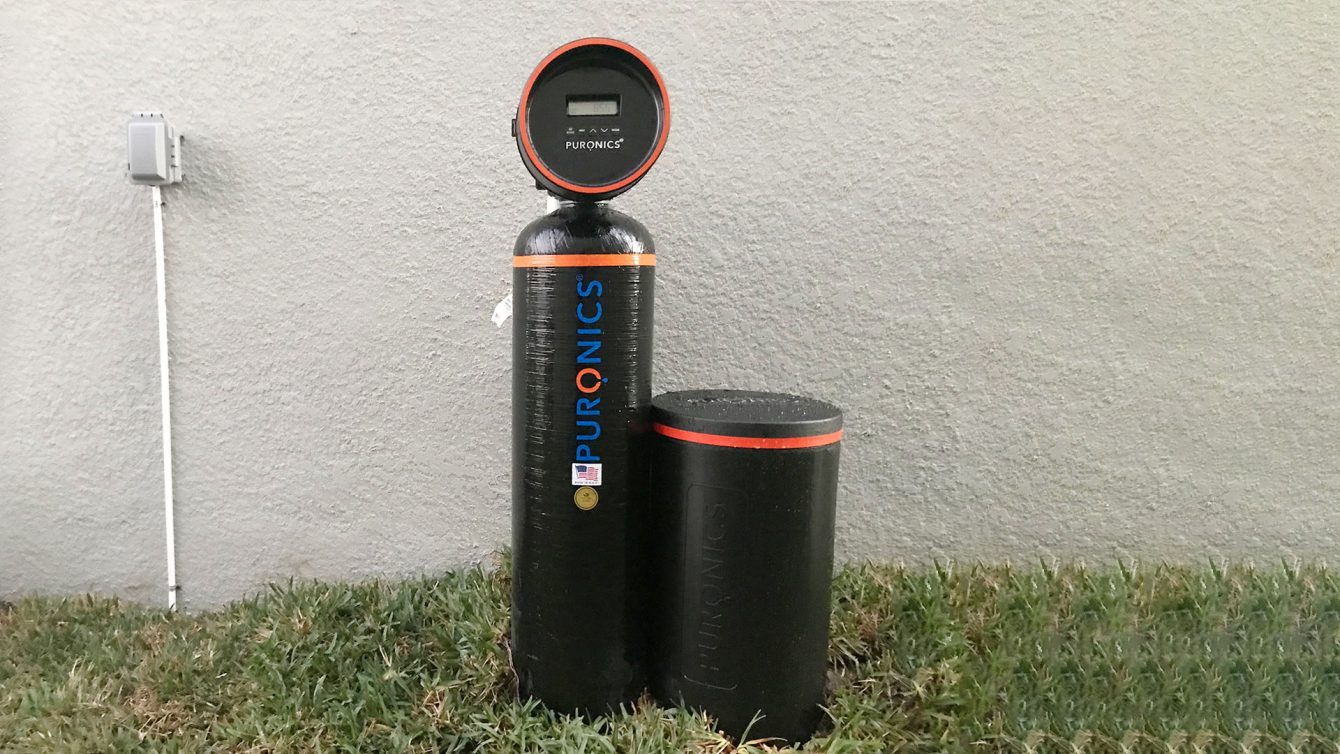
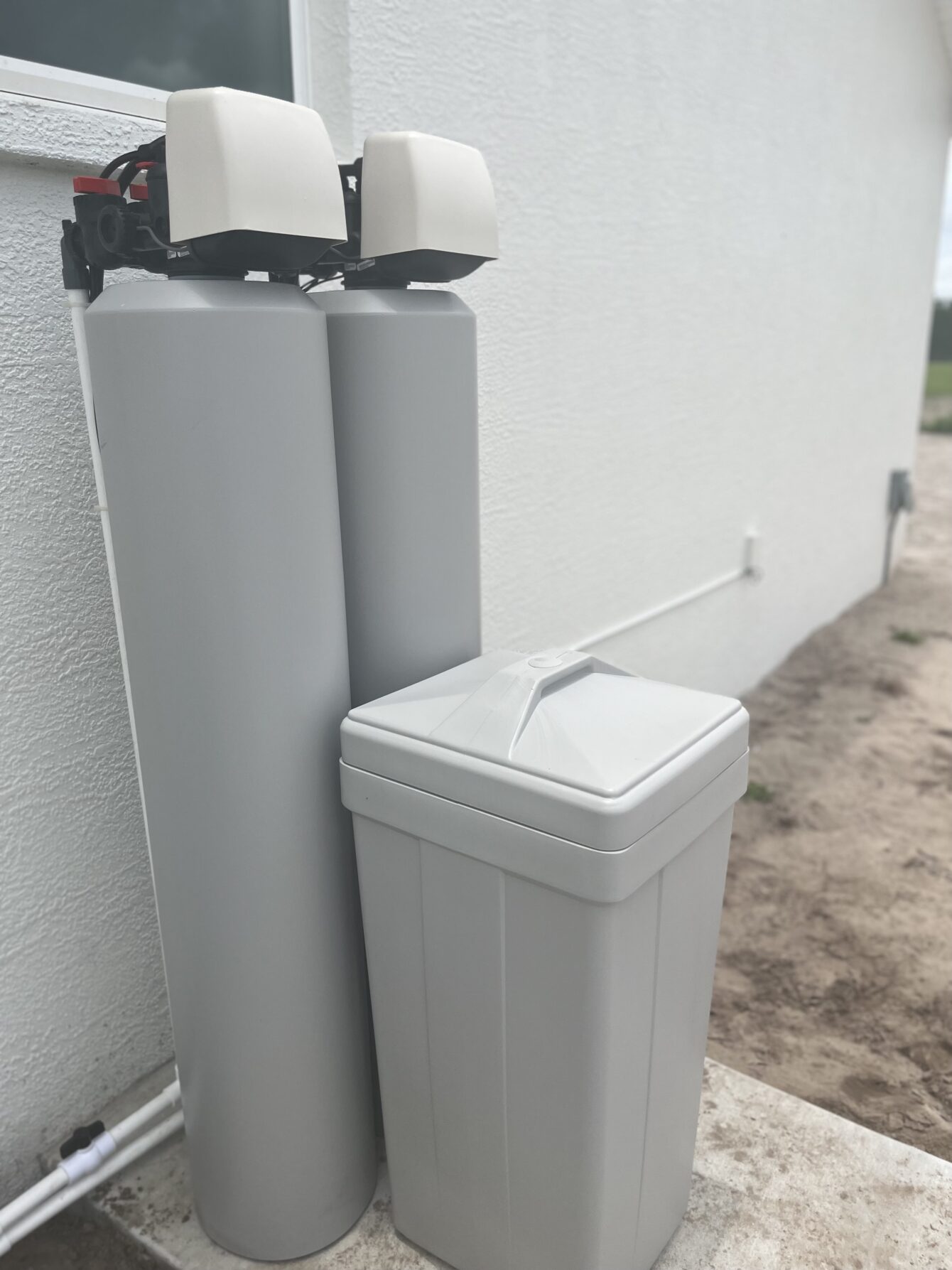
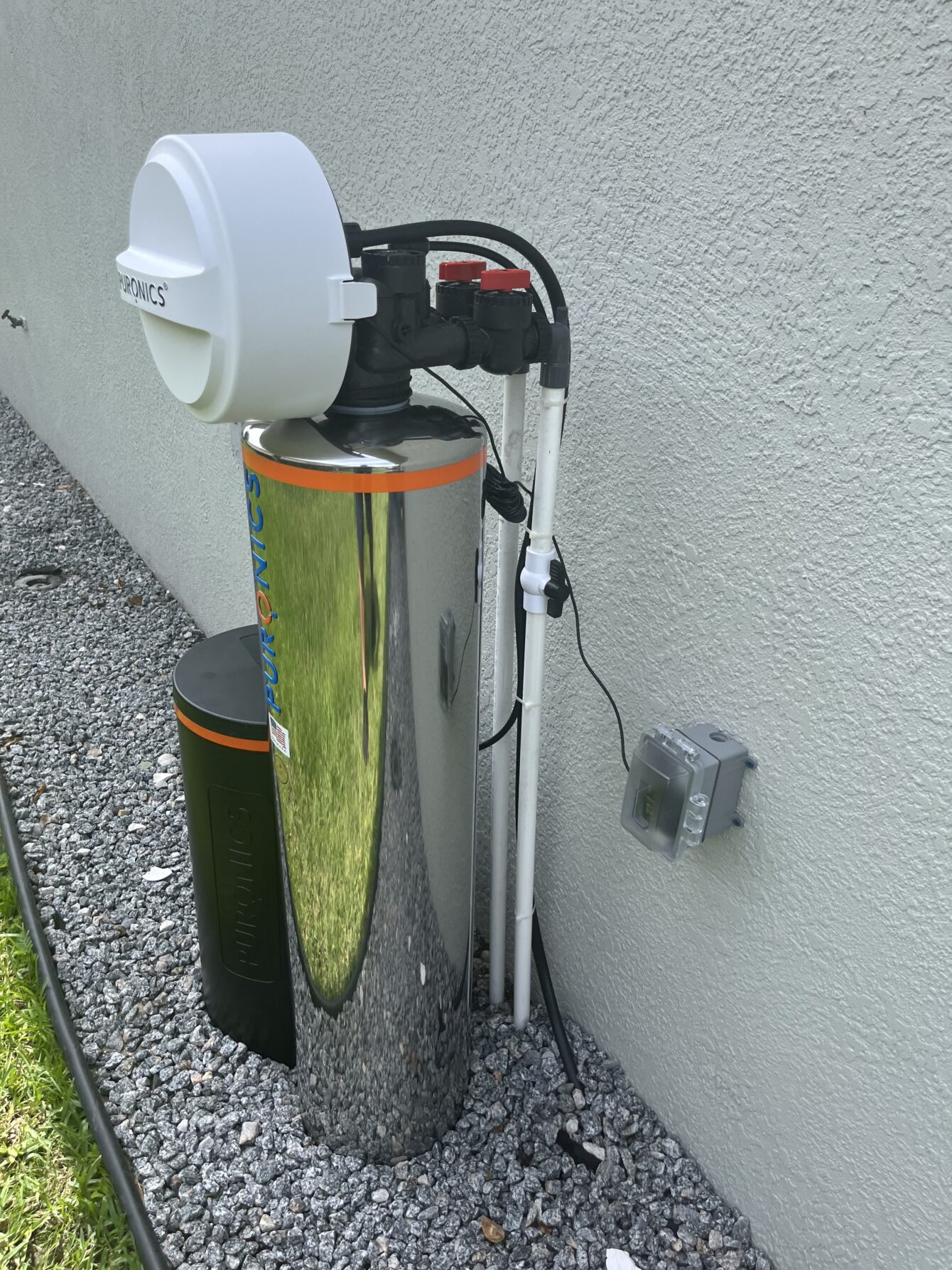
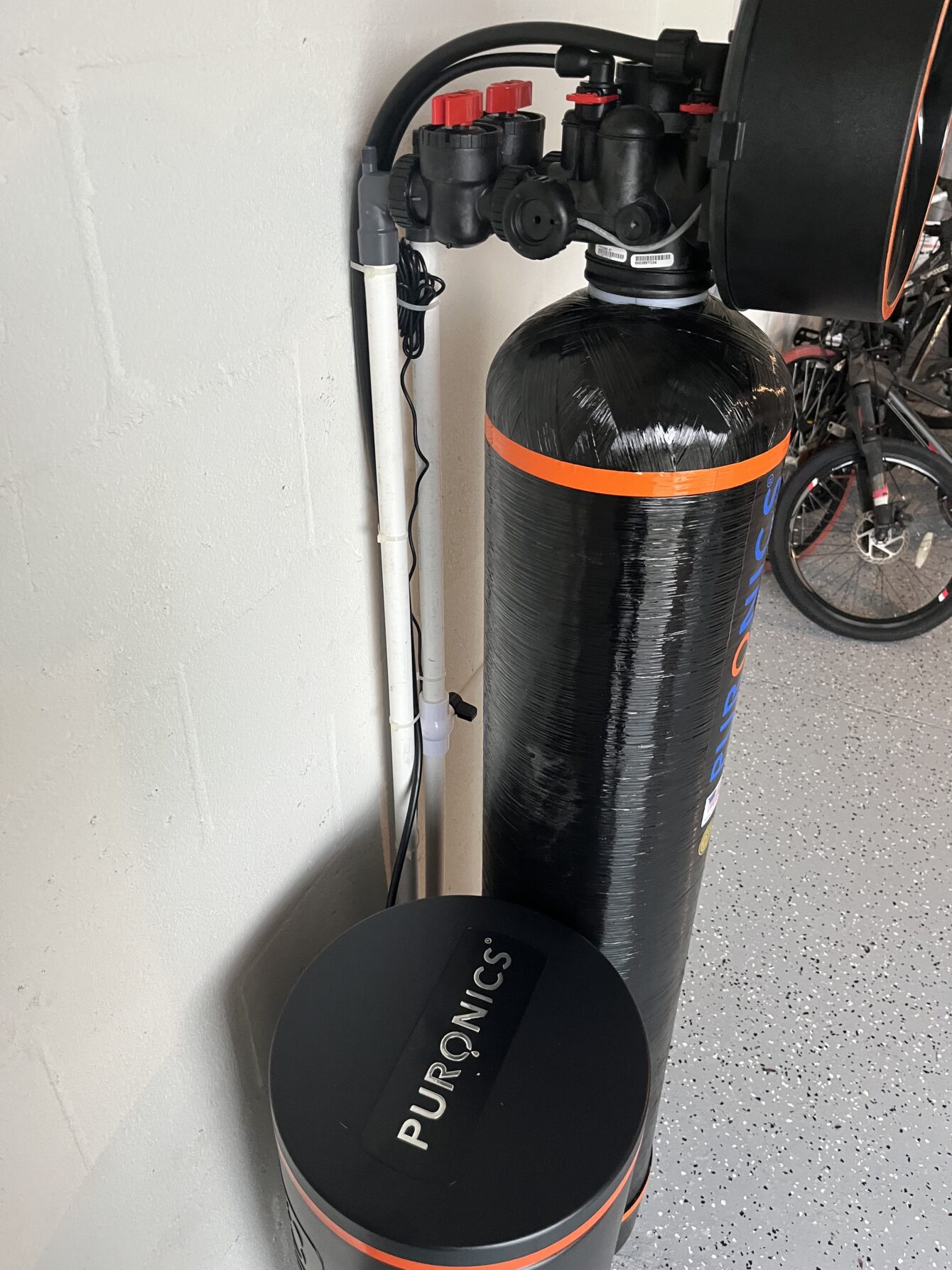
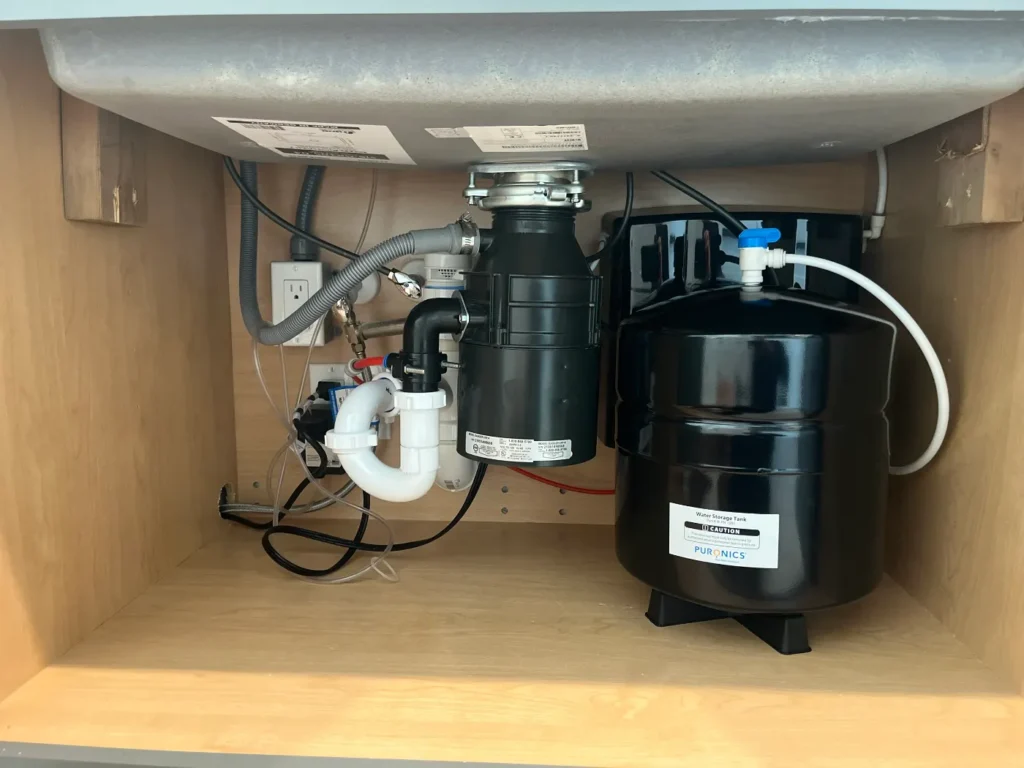
Our install · a real job, not stock
What’s actually in your Lakewood Ranch, Bradenton, Parrish, Sarasota or Tampa Bay water — every filtration type explained in plain English, and how to choose the right system. From the local team with 700+ Suncoast installs, 90+ in Lakewood Ranch.
- What’s really in Suncoast water
- What whole-house filtration actually is
- Contaminants: aesthetic vs. health
- Every type of filtration, explained
- City water vs. well water
- Your water by county
- PFAS & forever chemicals
- Health & everyday benefits
- Protecting your home & appliances
- Sizing, installation & what to expect
- Maintenance & ongoing cost
- Cost, ROI & what you’ll save
- Why certified equipment matters
- Which Hydrology system fits
- Local pro vs. national chain
- Frequently asked questions
What’s really in Suncoast water
Suncoast water meets federal drinking-water standards, but “meets EPA limits” and “great water to live with” are two different things. Depending on where you live, your water may be treated surface water from a reservoir, blended regional supply from Tampa Bay Water, or groundwater from your own private well — and each brings its own mix of hardness, disinfectant, minerals and, in some cases, contaminants worth reducing.
Related: PFAS in Suncoast water — removal & our certifications →
The two things nearly every home here shares are hard water (dissolved calcium and magnesium that leaves spots, scale and dry skin) and a disinfectant (chlorine or chloramine) that municipalities add to keep water disinfected on its way to your tap. Both are completely legal and normal — and both are exactly what a whole-house system is designed to address so your water is softer, cleaner-tasting and easier on your home.
What whole-house water filtration actually is
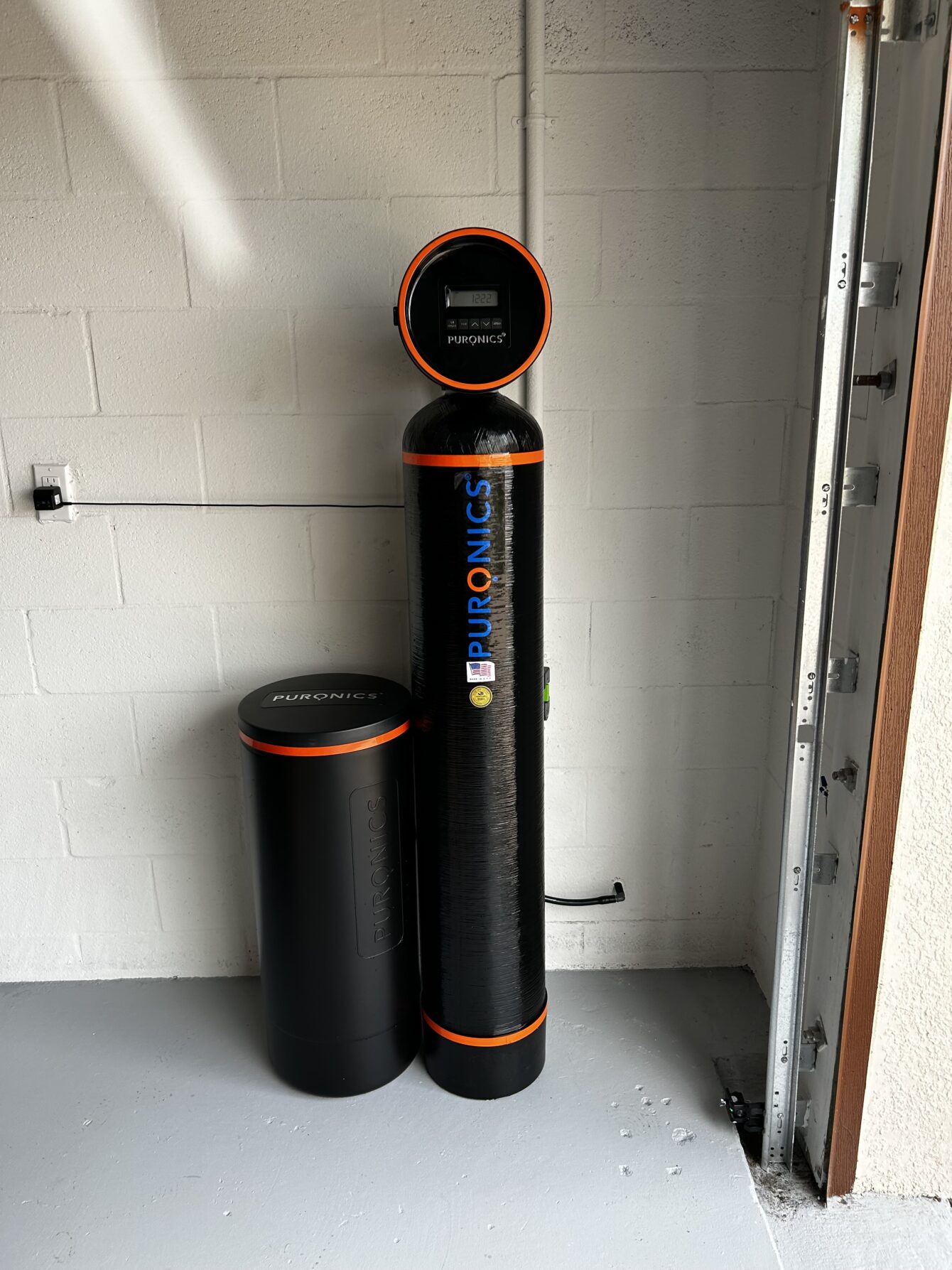
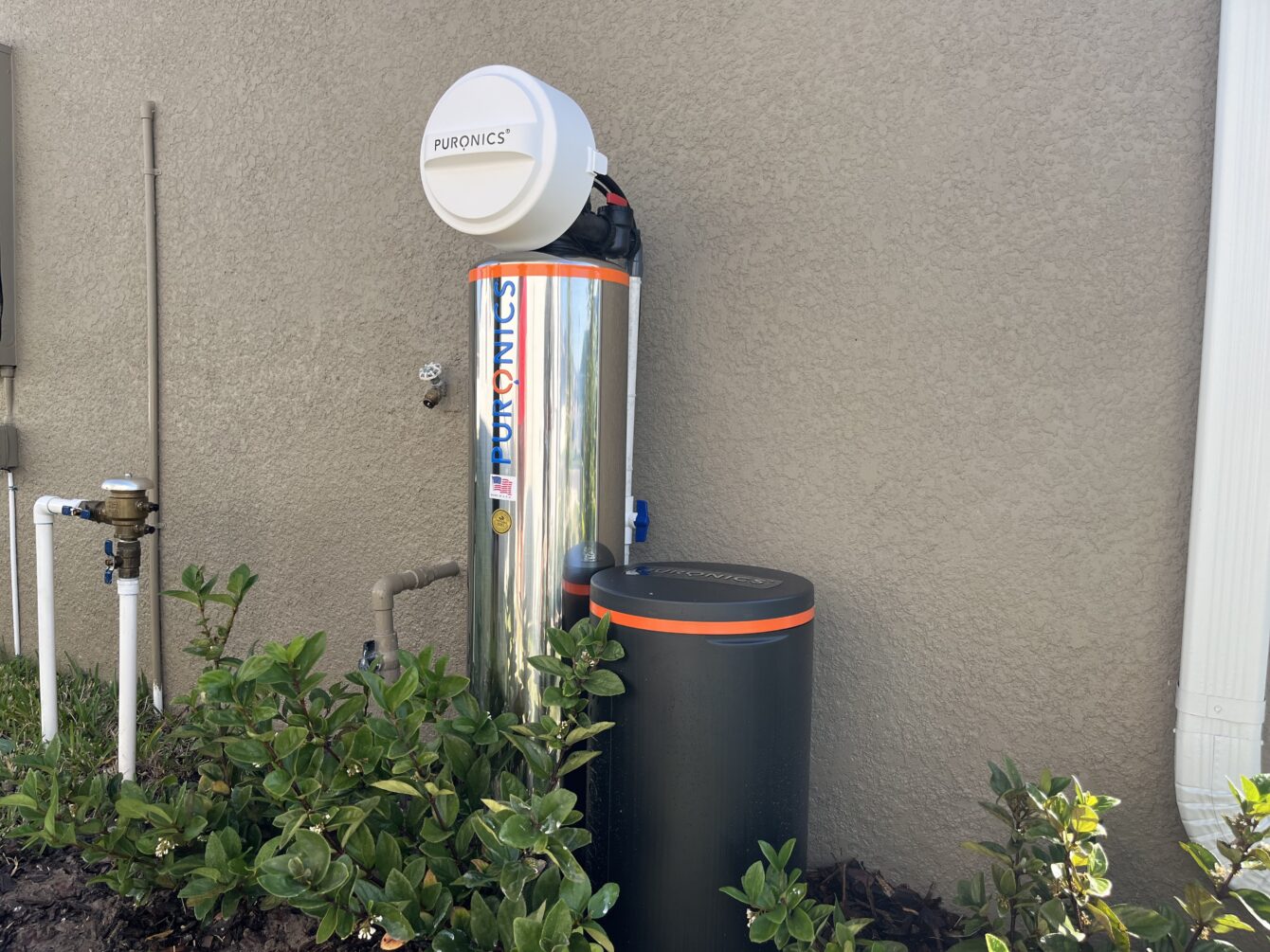
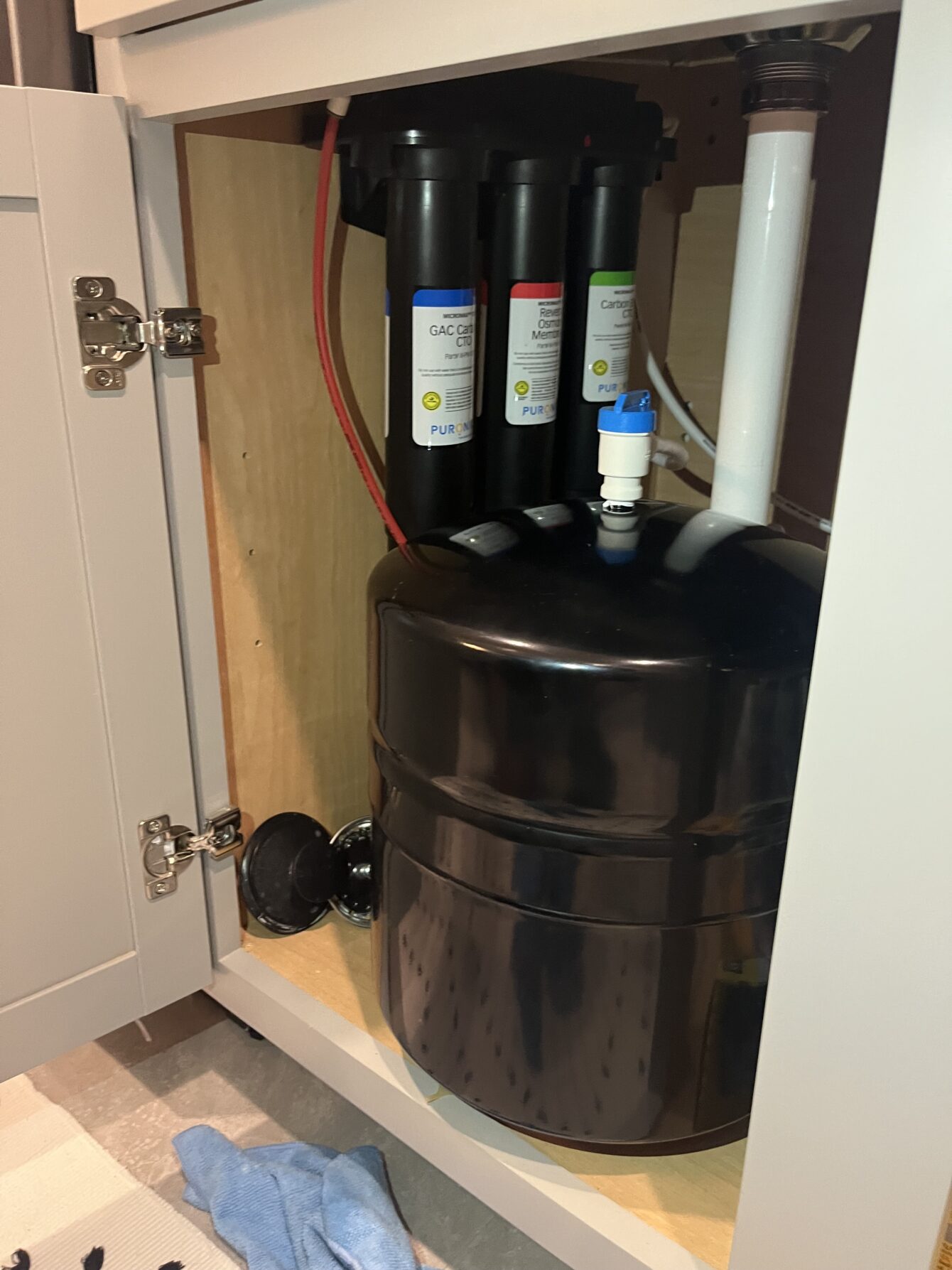
“Whole-house” (or point-of-entry) filtration treats water where it enters your home, so every tap, shower and appliance gets treated water — not just one faucet. That’s different from a point-of-use system like an under-sink reverse-osmosis unit, which polishes water at a single tap for drinking and cooking. Most Suncoast homes do best with both: whole-house treatment for softening and chlorine/chloramine removal everywhere, plus RO at the kitchen sink for drinking-grade purity.
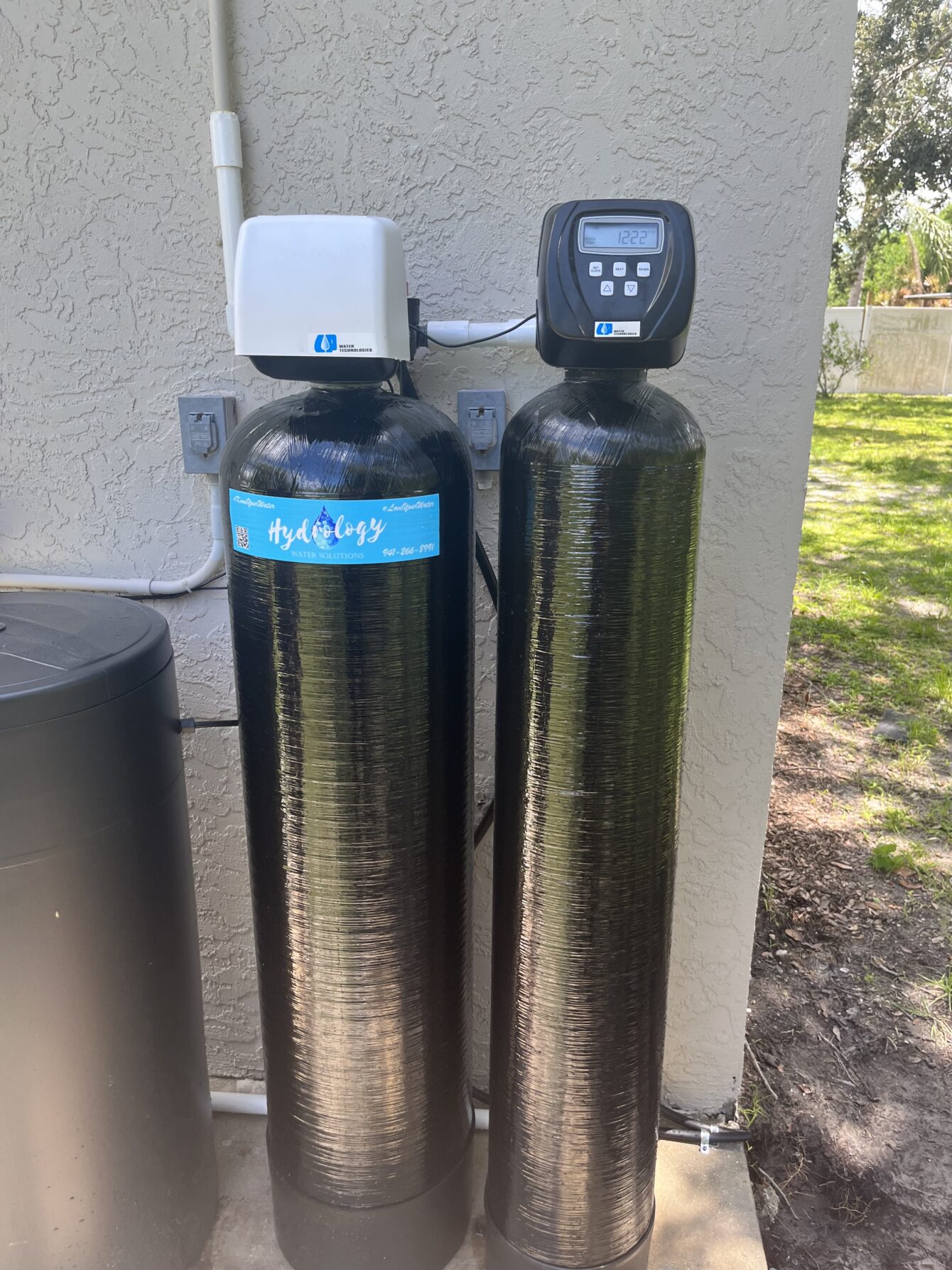
A modern whole-house system usually combines several stages in one or two tanks: sediment reduction, a softener or conditioner for hardness, and a carbon bed to remove the disinfectant and improve taste and odor. On a well, you add a stage up front to handle iron, sulfur or tannins before the water reaches the softener.
Contaminants: aesthetic vs. health
Not everything in water is a health risk, and not every health item is a “violation.” Sorting them into two buckets makes it much easier to decide what you actually need to treat.
AESTHETIC Things you can see, taste, smell or feel
| What it is | How you notice it | What reduces it |
|---|---|---|
| Hardness (calcium & magnesium) | Spots on glasses, scale on fixtures, soap that won’t lather, dry skin/hair | Ion-exchange softener (or salt-free conditioner) |
| Chlorine | “Pool” smell and taste | Activated or catalytic carbon |
| Chloramine (chlorine + ammonia) | Milder chemical taste/odor; harder to remove than chlorine | Catalytic carbon (standard carbon barely touches it) |
| Iron & manganese | Orange/red or brown/black staining on sinks, tubs, laundry | Air-injection oxidation (AIO) or specialty media |
| Hydrogen sulfide | “Rotten-egg” smell (common on wells) | Air-injection oxidation / chlorination |
| Tannins | Tea- or amber-colored water (common on wells near wetlands) | Tannin-selective resin |
| Sediment / turbidity | Cloudiness, grit, clogged aerators | Sediment pre-filter |
| Low pH (acidic water) | Blue-green staining, pinhole leaks in copper pipe (wells) | Calcite / pH neutralizer |
HEALTH GUIDELINE Things you reduce for peace of mind
These are the contaminants people most often ask us to reduce. Some appear in local reports at levels above health guidelines (like the EWG’s) while still under the legal EPA limit; others are mainly a concern on untested private wells. The right filter depends on the contaminant.
| Contaminant | Where it comes from | Best-matched treatment |
|---|---|---|
| PFAS (“forever chemicals”) | Industrial/firefighting-foam legacy; growing attention statewide | Reverse osmosis certified to NSF/ANSI 53 for PFOA/PFOS |
| Lead | Older home plumbing/fixtures, not the source water itself | Reverse osmosis (NSF 53/58); certified lead-free components |
| Nitrate / nitrite | Fertilizer & septic influence, mainly on wells | Reverse osmosis (NSF 58) |
| Arsenic, chromium-6, radium | Naturally occurring in some Florida groundwater | Reverse osmosis (NSF 58) |
| Disinfection byproducts (TTHM, HAA5) | Form when disinfectant reacts with organic matter | Catalytic carbon + reverse osmosis |
| Bacteria (wells) | Surface intrusion into an untreated private well | UV disinfection (and/or chlorination) |
The only way to know which of these apply to your home is a test. Homes on city water can start with their utility’s annual water-quality report (linked below by county); well owners should test directly, which we do as part of a free in-home evaluation.
Every type of filtration, explained
There’s no single “best” filter — each type does one job well. Good whole-house design is about combining the right stages for your water.
Ion-exchange water softener
The workhorse for Florida’s hard water. Resin beads swap hardness minerals for sodium (or potassium), then periodically rinse clean with brine.
Salt-free conditioner
Uses template-assisted crystallization to keep hardness minerals from sticking as scale, without removing them. No brine, no drain.
Activated carbon
Adsorbs chlorine, tastes and odors, and many organics as water passes through the carbon bed.
Catalytic carbon our standard
A carbon whose surface is specially treated to catalyze the breakdown of chloramine — the tougher disinfectant most of our area uses. It needs contact time, which is why our beds are sized larger.
Air-injection oxidation (AIO)
Injects an air pocket that oxidizes dissolved iron, manganese and hydrogen sulfide so they can be filtered out — no chemicals.
Tannin resin
A selective resin that removes the organic tannins that tint well water tea-brown.
pH neutralizer (calcite)
Raises the pH of acidic water by dissolving a calcite/magnesia media bed, protecting copper plumbing.
Reverse osmosis (RO)
Pushes water through a semi-permeable membrane that rejects dissolved solids — the gold standard for drinking water. Reduces PFAS, lead, nitrate, arsenic and more at the tap.
UV disinfection
Ultraviolet light inactivates bacteria and viruses without chemicals — essential insurance for private wells.
Sediment pre-filtration
A simple first-stage filter that catches sand, grit and rust so the stages behind it last longer.
City water vs. well water
On city (municipal) water
If you’re served by a county or city utility, your water is already tested and disinfected. Your priorities are usually softening (Florida is hard) and removing the chlorine or chloramine for better taste and skin — plus RO at the sink for drinking. A whole-house softener + catalytic carbon covers the first two everywhere in the house.
On a private well
Wells have no municipal treatment, so you’re the water utility. The common Suncoast well issues are iron and manganese (staining), hydrogen sulfide (rotten-egg smell), hardness, tannins (color), low pH, and the possibility of bacteria. Well treatment is staged: oxidation/filtration for iron and sulfur first, then softening, then optional UV — and RO for drinking. Because every well is different, a test is essential before choosing equipment.
Chlorine injection for wells — iron, sulfur & bacteria
When a private well runs heavy on iron, high in hydrogen sulfide (the rotten-egg smell), or shows any sign of bacteria, air injection on its own often isn’t enough. Chlorine injection — a small metered feed dosed ahead of a contact tank and filter — oxidizes dissolved iron and sulfur so they filter out cleanly, and disinfects the water as it enters the home. We match the feed rate to your water test and pair it with the right backwashing filter and, where needed, UV. Because this is staged work, our professional water-treatment installation team handles the whole sequence — oxidation, filtration, softening and drinking water — sized to your well and done right.
Your water, by county
Where you live determines your source, your hardness and your disinfectant. Here’s the local picture for the areas we serve, with each utility’s official water-quality report so you can verify the details yourself.
Manatee County — Lakewood Ranch, Bradenton, Parrish, Ellenton
Lakewood Ranch, Bradenton and most of Manatee County are on a blend of Lake Manatee reservoir water and Floridan aquifer groundwater (not well water). It runs about 8 grains per gallon — “hard” — and is disinfected with chloramine, which is why we recommend a softener plus catalytic carbon here. It’s the exact combination that handles the hardness and chloramine at every tap — and it’s why we’ve become the water team Lakewood Ranch homeowners call, with 90+ systems installed across Lakewood Ranch.
Verify: mymanatee.org → Utilities → Water Quality report. Palmetto homes on the City of Palmetto system: palmettofl.org.
Pinellas County — St. Petersburg, Clearwater
Pinellas homes are largely supplied by Tampa Bay Water, a regional blend of surface water, reservoir storage, desalinated seawater and groundwater, distributed by the county and city utilities. It’s disinfected with chloramine, with occasional temporary “free-chlorine” flushes that residents often notice as a taste or odor swing — another reason catalytic carbon is worthwhile here.
Verify: pinellas.gov drinking water · stpete.org water services.
South & Greater Hillsborough — Ruskin, Wimauma, Apollo Beach, Riverview, Sun City Center, Brandon
Served by Hillsborough County Public Utilities (also a Tampa Bay Water member). Newer and more rural pockets of southeast Hillsborough — parts of Wimauma and Ruskin especially — are on private wells, where iron, sulfur and hardness are the usual culprits. Which side of that line you’re on changes the right system entirely, so we test first.
Verify: Hillsborough County Public Utilities water-quality report.
Sarasota County — Sarasota, Venice, North Port
Sarasota County Utilities uses a mix of groundwater wells and regional surface supply, and several plants already soften or use reverse osmosis, so hardness and disinfection vary by area. Because it’s not uniform, a quick test tells you exactly what your address gets.
Verify: scgov.net water-quality report.
PFAS & “forever chemicals”: what they are, and whether your water is tested
PFAS gets a lot of attention, and it’s worth understanding plainly. PFAS (per- and polyfluoroalkyl substances) isn’t a single chemical — it’s a family of thousands of man-made “forever chemicals” used since the 1940s in nonstick coatings, water- and stain-repellents, and firefighting foam. They’re called “forever” because they break down extremely slowly and can build up in the environment and the body. PFOA and PFOS are the two most-studied, and the ones regulators address first.
Are they actually tested for?
Yes. Under the EPA’s fifth Unregulated Contaminant Monitoring Rule (UCMR5, 2023–2025), large public water systems are required to sample for 29 specific PFAS compounds. Separately, the EPA’s 2024 drinking-water rule set the first-ever enforceable federal limits, starting with PFOA and PFOS at 4 parts per trillion — that’s 4 nanograms per liter, an extraordinarily low threshold.
What about our local water?
Good news for Manatee County: the county sampled its finished drinking water for all 29 UCMR5 PFAS compounds in 2024 and detected none — every result came back below the minimum reporting level. So for Lakewood Ranch, Bradenton and Parrish homes on Manatee County water, PFAS isn’t a current detection, and you can verify that in the county’s own report.
How to reduce PFAS at home
If you’re on a private well (no municipal testing), or you simply want certainty at the tap, the reliable route is a reverse-osmosis system certified to NSF/ANSI 53 for PFOA/PFOS, like the Puronics Micromax 8500. A whole-house carbon system reduces some PFAS, but for certified drinking-water reduction, RO at the kitchen sink is the answer. We’ll test your water and, if you’re concerned, size the right system — no scare tactics, just the facts.
Health & everyday benefits
Better water for skin and hair
Removing hardness and chlorine/chloramine is the change people feel first. Soap rinses cleanly instead of leaving a film, so skin feels less dry and hair less brittle — a common comment after a softener goes in.
Cleaner-tasting water you’ll actually drink
When water tastes and smells better, people drink more of it and buy fewer plastic bottles. RO water at the kitchen tap gives you drinking-grade water for coffee, ice and cooking without the bottled-water expense or waste.
Reducing contaminants of concern
For households focused on health, the whole-house carbon stage cuts disinfection byproducts across the home while an RO system at the sink reduces PFAS, lead, nitrate and more in your drinking and cooking water — matched to what your test actually finds.
Protecting your home & appliances
Hard water is hard on everything it touches. Softening pays for itself quietly, in equipment that lasts longer and runs more efficiently.
Water heaters
Scale insulates the heating element and tank, so a hard-water heater works harder and wears out sooner. Softened water keeps it efficient and extends its life.
Dishwashers & washing machines
Scale and mineral residue shorten appliance life and leave spots and stiff laundry. Soft water means cleaner dishes, softer towels and less detergent.
Plumbing & fixtures
Scale narrows pipes and clogs aerators and shower heads over time; on acidic wells, low pH can pit copper. The right treatment protects the whole system.
Sizing, installation & what to expect
Sizing your system
A system is sized to your household — number of people, number of bathrooms, your water’s hardness and (on wells) iron and sulfur levels, and your peak flow so multiple fixtures run without a pressure drop. Undersizing causes hard-water breakthrough and pressure loss; oversizing wastes money. This is why we measure rather than guess.
The installation process
A typical whole-house install takes a few hours: we tie into your main line (usually near the water heater, garage or a well’s pressure tank), set the system, program the valve, and walk you through it. An RO unit is installed at the kitchen sink the same day. We leave the space clean and show you the two-minute basics of living with your system.
Maintenance & ongoing cost
Modern systems are largely self-maintaining. A softener regenerates automatically on a metered valve — you just keep the brine tank topped with salt (a bag every few weeks for most homes). Carbon media is periodically refreshed on a multi-year schedule. RO systems use inexpensive pre/post filters roughly annually and a membrane every several years. On wells, an AIO system periodically refreshes its air pocket automatically, and UV lamps are replaced yearly. We tell you the exact schedule for your setup so there are no surprises.
Cost, ROI & what you’ll actually save
A quality whole-house system is an investment, but it offsets real recurring costs: longer appliance and water-heater life, far less bottled water, less detergent and soap, fewer descaling and plumbing repairs, and cleaner fixtures that stay nice longer. Financing is available, and we’ll give you a straight, itemized quote after the free test — no pressure, no “today-only” gimmicks. Because we size to your actual water, you buy the system you need and not a stage you don’t.
Why certified equipment matters — and how to verify it
Two systems can look identical in the driveway and perform nothing alike. The surest way to know what you’re actually buying is whether the equipment is independently certified.
Certification (through the NSF/ANSI standards and the WQA Gold Seal program) means a third-party lab tested the system and confirmed two things: that it actually reduces the specific contaminants it claims to, and that the materials the water touches are certified lead-free — so the equipment isn’t adding anything to your water. An uncertified system is a manufacturer’s promise; a certified one is a tested, published fact you can look up. It also tells you exactly what a system is built to remove, because each standard covers specific contaminants:
| Certification | What it verifies |
|---|---|
| NSF/ANSI 42 | Aesthetic effects — chlorine, taste, odor, particulate |
| NSF/ANSI 53 | Health effects — lead, PFAS (PFOA/PFOS), VOCs, cysts |
| NSF/ANSI 58 | Reverse osmosis — arsenic, nitrate, chromium, TDS and more |
| NSF/ANSI 401 | Emerging compounds — pharmaceuticals, BPA |
| NSF/ANSI/CAN 372 | Lead-free materials (the parts the water touches) |
| WQA Gold Seal | Independent WQA certification to the standards above |
Cheaper, uncertified equipment can use lower-grade media and unverified materials — you simply don’t know what’s inside or whether it does the job. Every system we install is certified Puronics equipment, and you never have to take our word for it: look it up at wqa.org/find-products. Ask any other company to show you the same certification for exactly what they’re quoting — the ones who can’t usually can’t for a reason.
Which Hydrology system fits your home
We install and service Puronics equipment — WQA Gold Seal certified, independently tested — matched to what your water needs. You can verify any Puronics certification yourself at wqa.org/find-products; ask a competitor to show you the same.
Hydrology Essentials
Our value-built whole-house system — a metered softener that tackles Florida hardness plus chlorine/chloramine, giving you softer, better-tasting water at every tap at a friendly starting price.
Puronics Defender 30C
Our flagship whole-home system: a softener paired with a larger catalytic carbon bed for hardness and chloramine at every tap, with a metered backwash valve. WQA Gold Seal certified.
Puronics Micromax 8500
Our top reverse-osmosis system for the kitchen — certified to NSF/ANSI 53, 58 & 401, including PFOA/PFOS (PFAS), lead, arsenic and more.
Puronics Micromax 7000
Reliable everyday reverse osmosis certified to NSF/ANSI 42 & 58 — great-tasting drinking water at the sink at a friendly price.
Not sure which you need? That’s what the free test is for. Browse everything on our
, dig into the
difference, or see your area:
,
,
and the rest of our
.
Choosing a local pro vs. a national chain
Where national franchises fall short
National brands sell a catalog. They can be fine, but you often get a scripted package sized to a region rather than your address, high-pressure “today-only” pricing, and a call center instead of the person who installed your system.
Why local makes the difference
We live and work here. We know Manatee runs chloramine, that pockets of Wimauma are on wells, and that a “Bradenton” address in the 34211 ZIP is often really Lakewood Ranch. We’ve installed 700+ systems across the Suncoast, we test your actual water, and when you call, you reach us. That local knowledge is the whole reason this guide can be specific instead of generic.
Questions to ask any water-treatment provider
Is the equipment independently certified (and can you verify it at wqa.org)? Are you sizing to my tested water or selling a fixed package? Do you remove chloramine, not just chlorine? Who services it after the sale, and what’s the warranty? Is there a real, written, no-pressure quote?
Frequently asked questions
Find out what’s really in your water — free
We’ll test your water in your home, explain exactly what we find in plain English, and recommend only what you actually need. No pressure, no scare tactics. Serving Manatee, Sarasota, Pinellas, South Hillsborough and Charlotte.
Request your free water test
Call or text 941-266-8991


What your neighbors say
4.7★ from 212 Google reviews.
“I cannot say enough amazing things about this company and system! We had three companies come out and Hydrology stood out on every level.”
“We’ve had our system now a month and absolutely love it. My wife is a hair beautician with over 30 years of experience and definitely can tell the difference with the water.”
“Wow, I can definitely feel a difference in my hair, skin, and when I wash my hands. I knew getting a water softener was a priority and I’m so glad I decided to go with Hydrology.”
Every review is on our Google profile — read all of them there. We don’t cherry-pick; we just answer the phone.
Straight answers
Common questions.
What people ask before they book.
More water answers →
What hard water does to a home: the Battelle study →
Do I need a water softener in Bradenton or Lakewood Ranch?
Most likely yes. Manatee County water runs 6–16 grains per gallon — “hard” — so softening is what stops the spotting, scale and dry-skin feeling and protects your appliances. A free test confirms your exact hardness.
What’s the difference between chlorine and chloramine — and does it matter?
Chloramine is chlorine combined with ammonia. It’s a more stable disinfectant that most of our area uses, and it’s harder to remove — standard activated carbon barely touches it. That’s why we build our systems with catalytic carbon, which is designed to break chloramine down.
Will a whole-house filter remove PFAS?
A whole-house carbon system reduces many organics, but for certified PFAS (PFOA/PFOS) reduction we recommend a reverse-osmosis system certified to NSF/ANSI 53 at your drinking tap, such as the Puronics Micromax 8500. Good news locally: Manatee County sampled its finished water for 29 PFAS compounds in 2024 under the EPA’s UCMR5 program and detected none — but a certified home RO gives added peace of mind either way, especially on a private well.
Do I need whole-house filtration and reverse osmosis, or just one?
They do different jobs. Whole-house treats every tap for hardness and chlorine/chloramine; RO polishes drinking water at the kitchen sink for the highest purity. Most Suncoast homes are happiest with both.
I’m on a private well in Parrish or Wimauma — what’s different?
Wells have no municipal treatment, so we address what’s actually there — commonly iron and manganese staining, rotten-egg sulfur smell, hardness, tannins (color) or low pH — usually with an air-injection system first, then softening, and UV if bacteria is a concern. A well test is the essential first step.
Is tap water on the Suncoast safe to drink?
Municipal utilities here publish annual reports showing their results against federal standards. Filtration is about improving what’s legal-but-not-ideal: hardness, chlorine/chloramine taste, and reducing specific contaminants of concern. You can read your utility’s annual report using the county links above.
How much does a whole-house water system cost?
It depends on your water and home size, which is why we quote after a free test. We give a straight, itemized price with financing available — no high-pressure, today-only tactics. Sizing to your actual water means you don’t pay for stages you don’t need.
How often does a system need maintenance?
Very little. Softeners regenerate automatically — you just add salt every few weeks. RO filters are changed about yearly and the membrane every several years; well UV lamps yearly. We give you the exact schedule for your setup.