Water answers · Tankless heaters & hard water
Do you need a softener
with a tankless heater?
On hard water, yes, it’s worth it. Scale forms inside the tankless heat exchanger, where the passages are narrowest, and that means lukewarm water, error codes and descaling visits. Here’s why, and what the research shows.
By Brad Germain, owner of Hydrology Water Solutions · Updated September 2026
4.7★ from 212 Google reviews · WQA Gold Seal Puronics dealer · Our own techs, no subcontractors
Request your free water test
★★★★★ 4.7 — a few details and we reach out, usually same day.
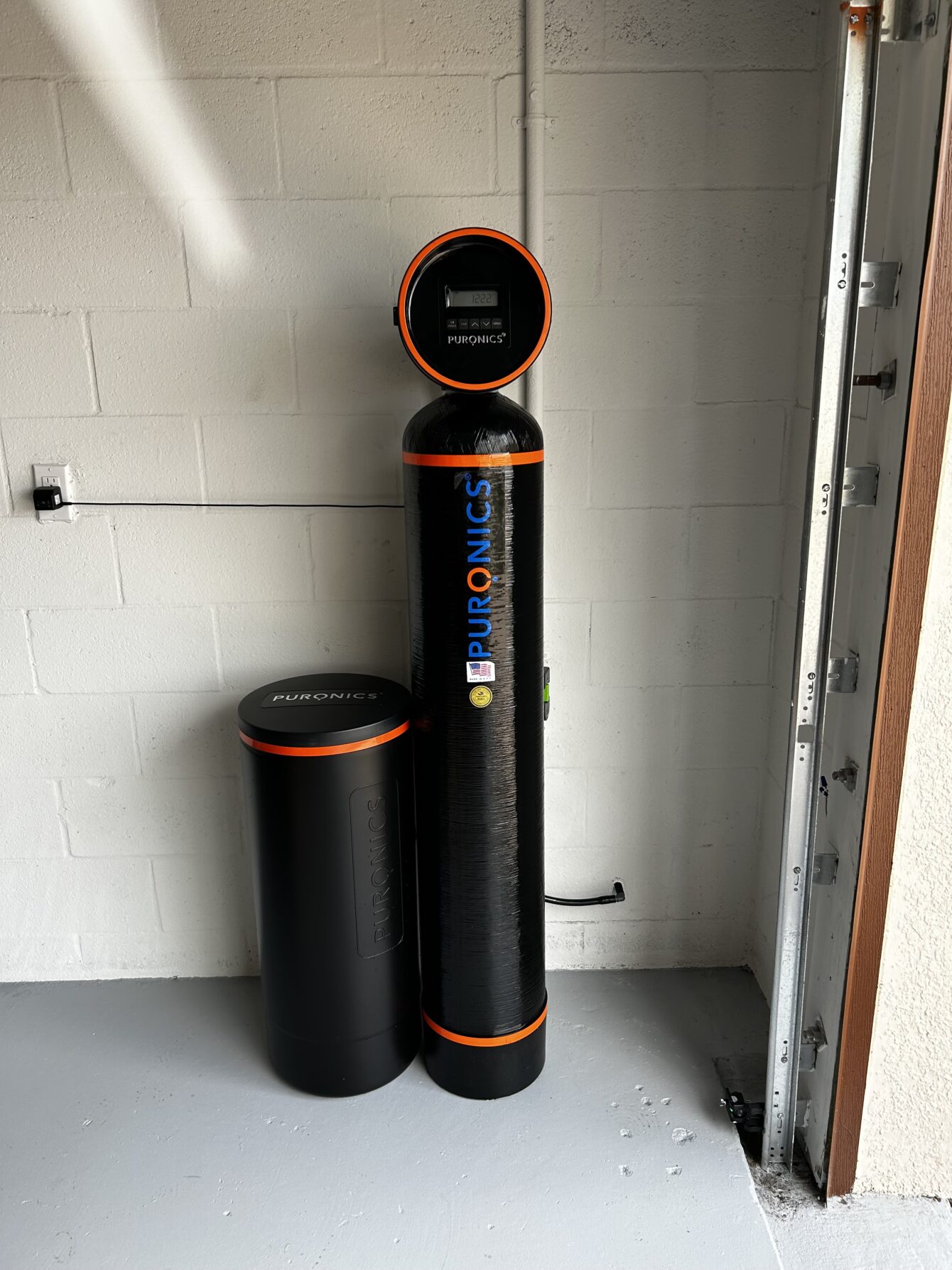
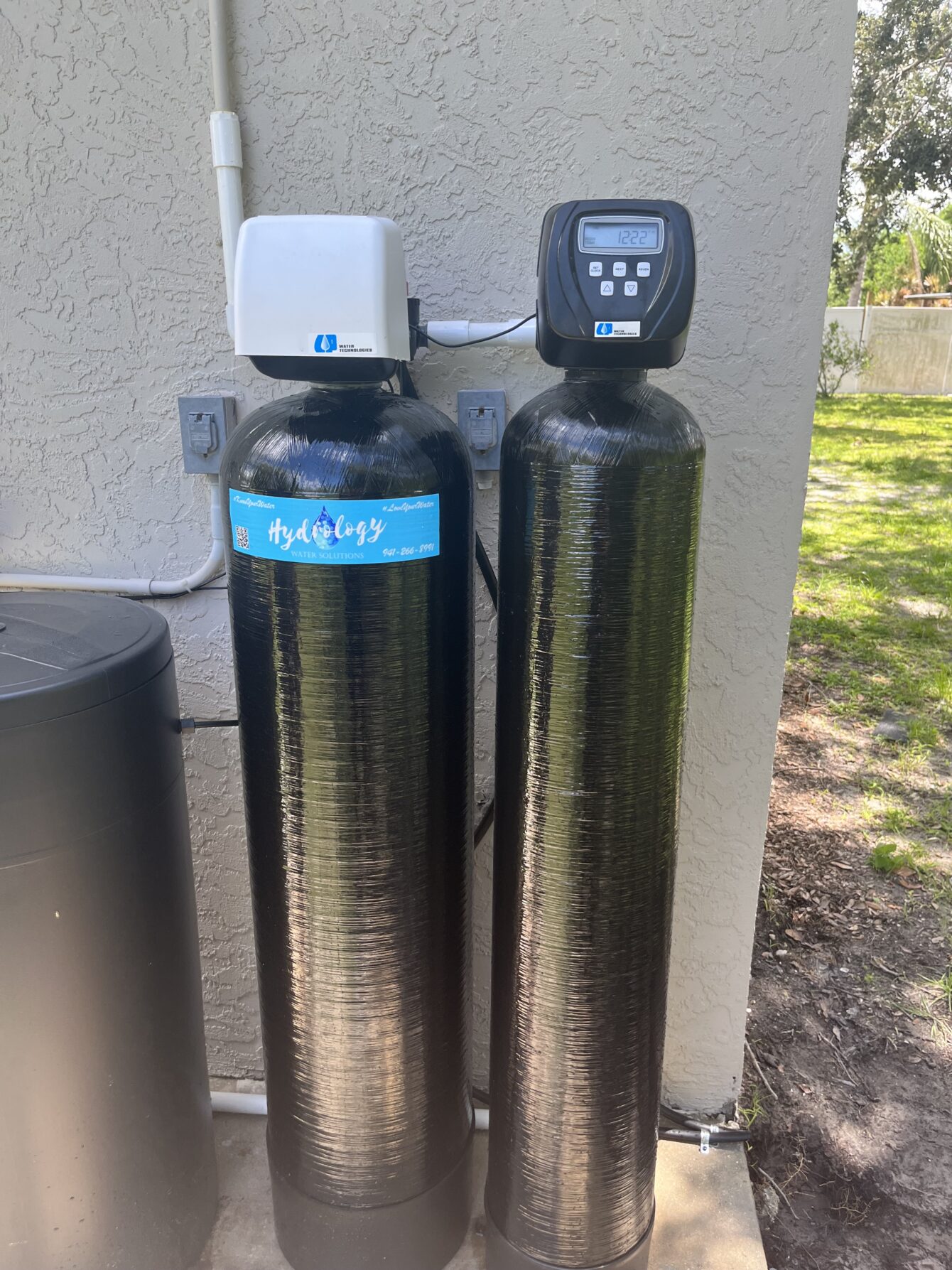
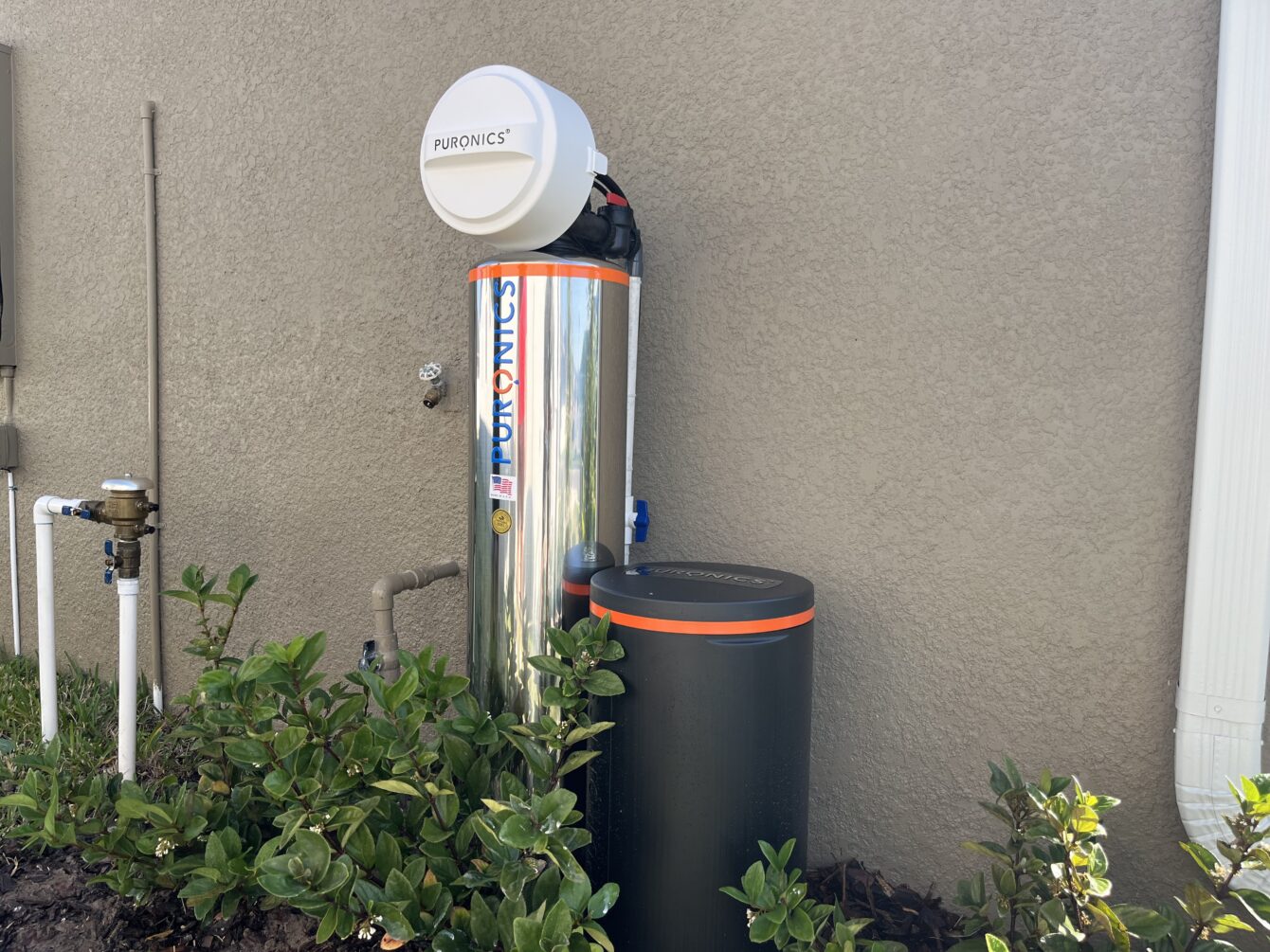
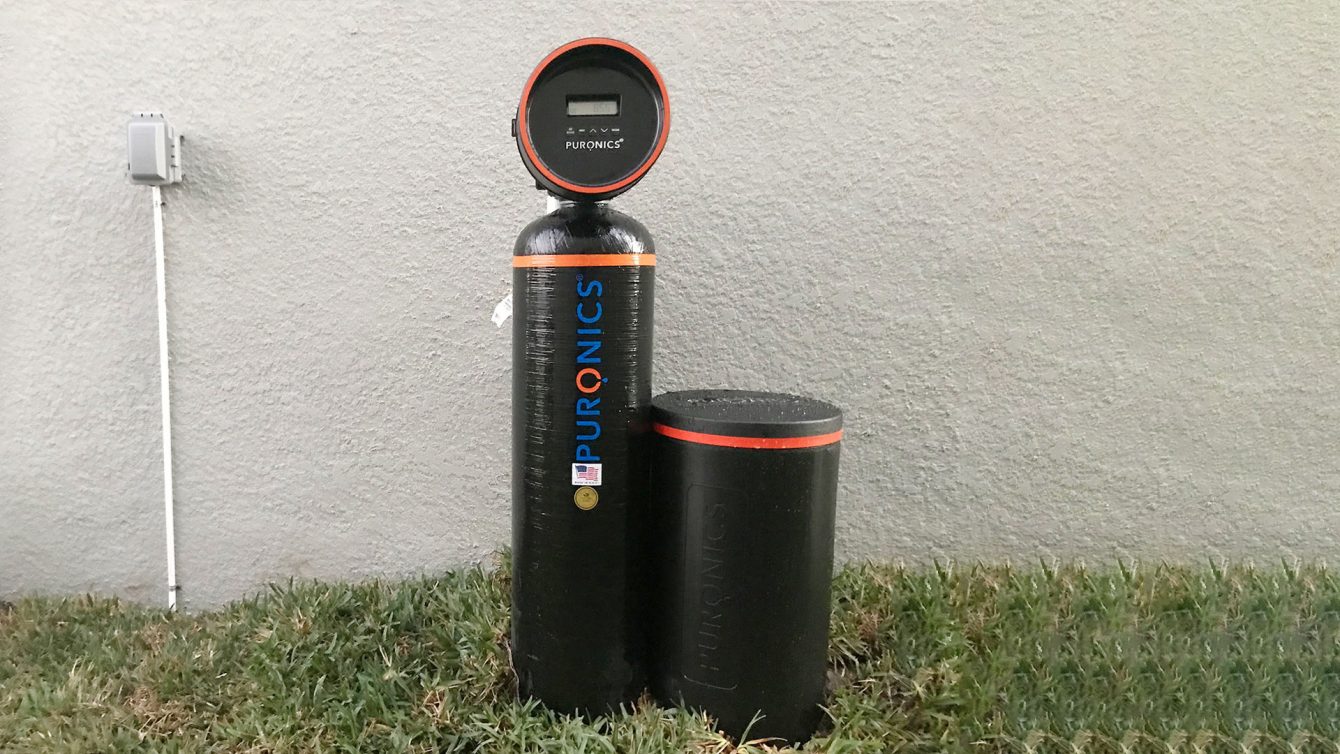
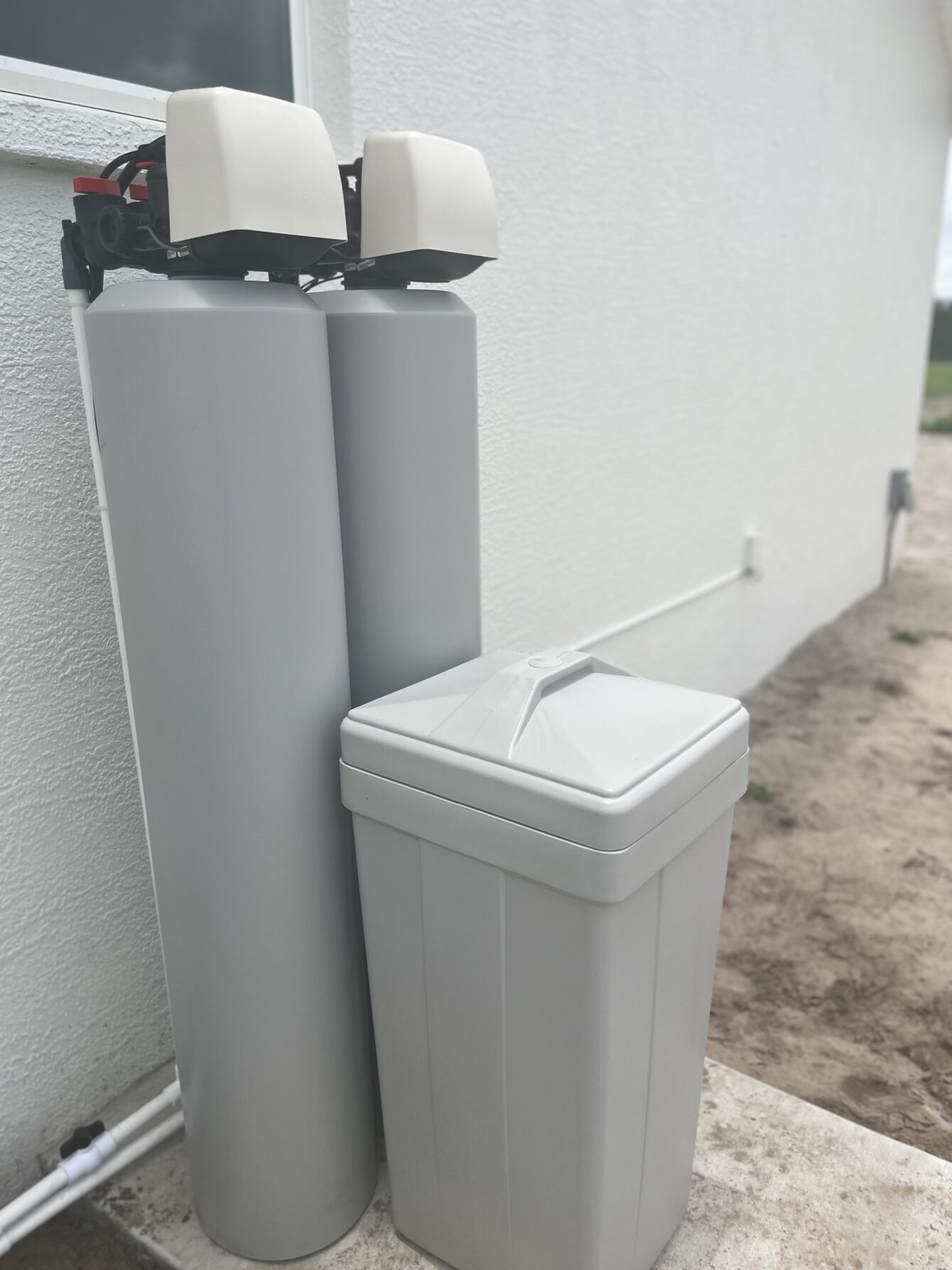
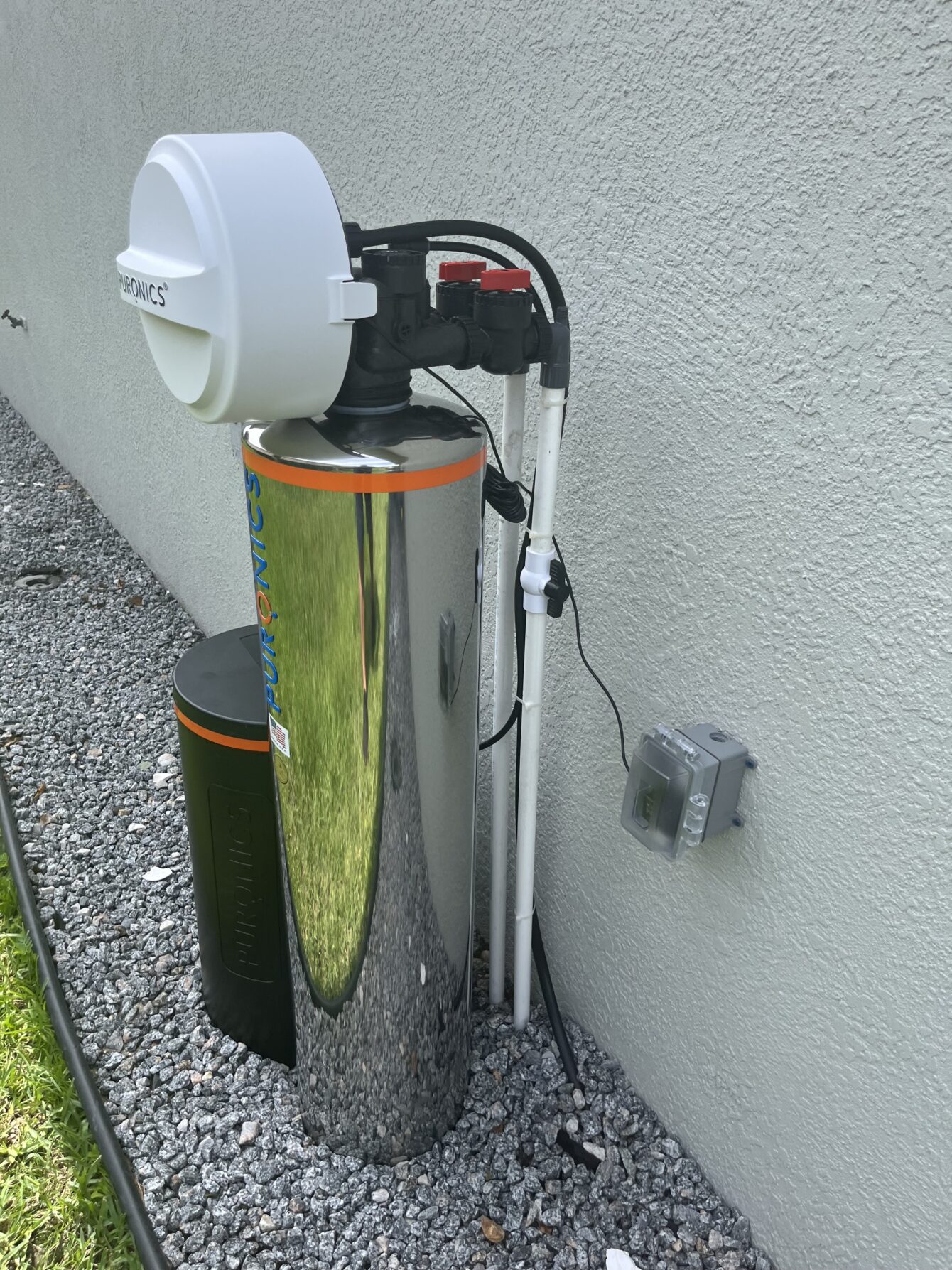
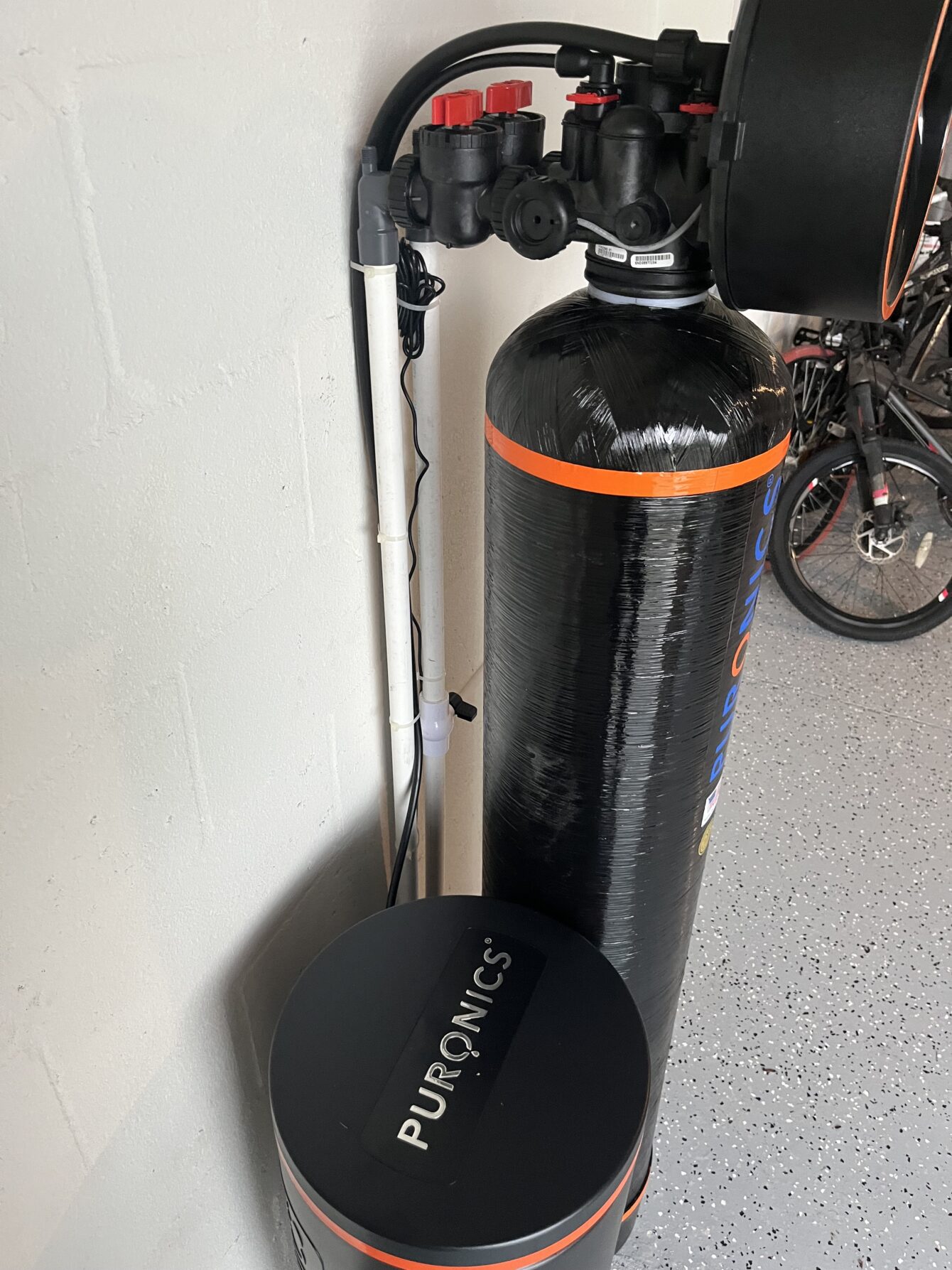
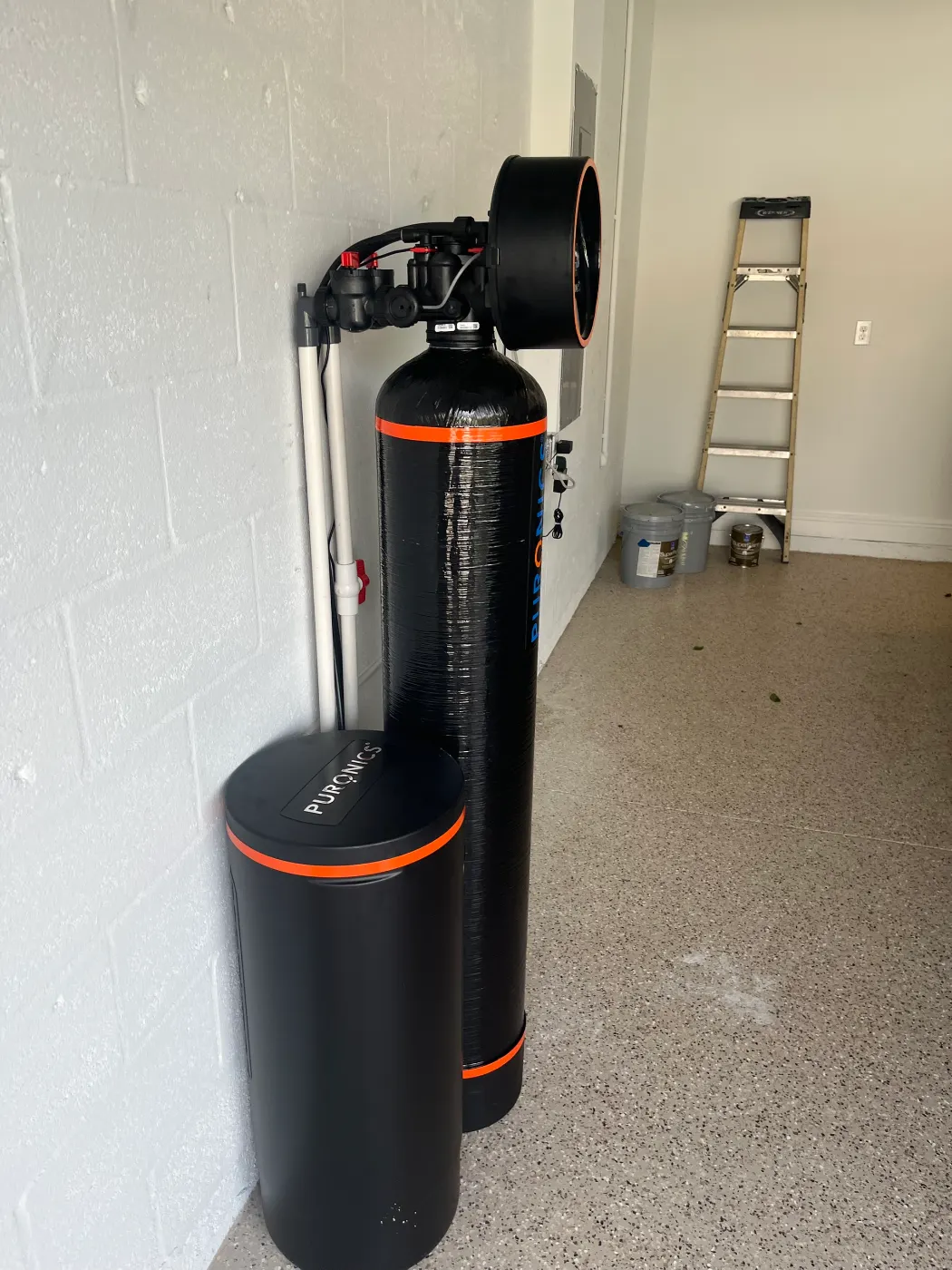
Our install · Puronics softener, new-construction garage
The short version
On hard water, yes, a softener is worth it with a tankless water heater. A tankless heater warms water as it flows through a small heat exchanger, and hardness minerals come out of the water as scale right there, where the passages are narrowest. Scale cuts heat transfer, slows hot water and brings on error codes and descaling visits. Manatee County’s own report puts its water at 6 to 16 grains of hardness, and Pinellas County, on the Tampa Bay Water regional supply, reports 11 to 14.
Why hard water is harder on a tankless heater
A tank water heater collects scale in the bottom of a 40- or 50-gallon tank. It’s wasteful, but there’s room for it. A tankless heater has no tank. Water runs through a compact heat exchanger at high temperature, and calcium and magnesium drop out of the water as it heats. The scale coats the inside of the exchanger.
What you notice as it builds:
- Hot water takes longer to arrive, or runs lukewarm at higher flow
- The heater cycles on and off during a shower
- Scale or flow error codes on the heater’s display
- Gas or electric use creeping up for the same hot water
What the manufacturer expects
Most tankless manuals call for periodic flushing, also called descaling: isolation valves are closed, and a pump circulates a descaling solution through the heat exchanger. Most also note that hard water shortens the time between flushes, and many list a water-hardness limit or a recommendation to treat hard water. Those numbers differ by brand and model, so check the manual for yours, including the warranty section. Scale damage is a common warranty exclusion.
What the research shows
In 2009 the Water Quality Research Foundation had Battelle Memorial Institute test water heaters side by side on hard water (26 grains per gallon) and on the same water softened. The tankless gas heaters on hard water had to be delimed after the equivalent of 1.6 years of use, and their average efficiency fell from 80% to 72% before deliming. The tankless units on softened water performed well through the entire test. City water here is softer than the test water, so scale builds more slowly, but it builds the same way. What the Battelle study found.
What a softener changes
A softener removes the calcium and magnesium before the water reaches the heater, so there’s nothing left to form scale in the exchanger. Flushing doesn’t disappear from the maintenance list, but on soft water there’s little to flush out. The same softener protects everything else that heats water: the dishwasher, the washing machine, the coffee maker and the showerheads.
On county water here, the softener should have carbon in front of it. Manatee, Sarasota and Hillsborough counties all use chloramine, and chlorine in any form wears softener resin down over time. Softener vs whole-house filter, explained.
What about salt-free conditioners?
A salt-free conditioner doesn’t remove hardness. It changes how the minerals behave so less of them stick as scale. Results vary with water chemistry and temperature, and a hardness test reads about the same before and after. If protecting a tankless heater is the main goal, a softener is the option that takes the minerals out. Salt-free vs salt-based, compared.
How much hardness do you have?
- Manatee County Utilities (Lakewood Ranch, Parrish, Palmetto, Ellenton and most of Manatee outside Bradenton city limits): 106–279 mg/L in the county’s 2025 report, about 6 to 16 grains per gallon.
- City of Bradenton: the city doesn’t publish a hardness number. Bradenton city water, explained.
- Sarasota County Utilities: softened by the county to around 120–125 mg/L, about 7 grains.
- Hillsborough County (Ruskin, Apollo Beach, Riverview, Sun City Center, Wimauma): hardness isn’t published; Pinellas County, on the same Tampa Bay Water regional supply, reports 189–244 mg/L, about 11 to 14 grains.
- Private wells: often much harder, and usually with iron or sulfur too. Well water guide.
A hardness test strip at the kitchen tap gives you a quick number. Our free in-home test measures hardness, chlorine or chloramine, pH and TDS, and we show you each reading.
New homes with tankless heaters
Many newer homes here were built with a “water loop,” a pair of stubbed-out pipes in the garage where a softener can be connected. If your home has one, adding a softener ahead of a tankless heater is usually a straightforward install. The builder water loop, explained.
Questions about your own setup are welcome. We enjoy curious clients, because we enjoy educating and answering questions.
Common questions
Tankless heaters
and hard water.
The questions we hear most from homeowners with a tankless heater.
More water answers →
What hard water does to a home: the Battelle study →
Do I need a water softener with a tankless water heater?
On hard water, it’s strongly worth it. Hardness minerals form scale inside the tankless heat exchanger, which slows hot water, triggers error codes and means more frequent descaling. A softener removes those minerals before they reach the heater.
How does hard water affect a tankless water heater?
As water heats inside the heat exchanger, calcium and magnesium come out as scale and coat the passages. That reduces heat transfer and flow, which shows up as lukewarm water, cycling and scale or flow error codes.
Does a water softener replace flushing a tankless heater?
No. Keep following the manufacturer’s maintenance schedule. On soft water there’s much less scale to remove when it’s flushed.
Does a salt-free conditioner protect a tankless water heater?
A salt-free conditioner doesn’t remove hardness; it changes how the minerals behave. Results vary with water chemistry and temperature. A softener is the option that removes the minerals.
How hard is the water in Manatee County?
Manatee County Utilities reports 106 to 279 mg/L of hardness in its 2025 water quality report, about 6 to 16 grains per gallon.
Will soft water hurt a tankless water heater?
The water quality concern in tankless manuals is hardness and the scale it leaves. Check the water quality section of your model’s manual for anything specific to it.
Have a tankless heater and hard water?
Our free water test measures hardness, chlorine or chloramine, pH and TDS at your tap, and we size a softener to the result. Book online or call 941-266-8991.
Related answers
Sources: Water Quality Research Foundation, Softened Water Benefits Study (Battelle Memorial Institute, 2009); Manatee County Utilities 2025 Water Quality Report; Sarasota County Public Utilities 2025 Consumer Confidence Report; Hillsborough County South-Central 2025 Water Quality Report; Hydrology in-home test results.