Water answers · Hillsborough County water
What’s in
Hillsborough County water?
Ruskin, Apollo Beach, Riverview, Sun City Center and Wimauma get county water from the Tampa Bay Water regional supply. Here’s what the county’s own report says, what it leaves out, and what’s actually worth treating.
By Brad Germain, owner of Hydrology Water Solutions · Updated September 2026
4.7★ from 212 Google reviews · WQA Gold Seal Puronics dealer · Our own techs, no subcontractors
Request your free water test
★★★★★ 4.7 — a few details and we reach out, usually same day.
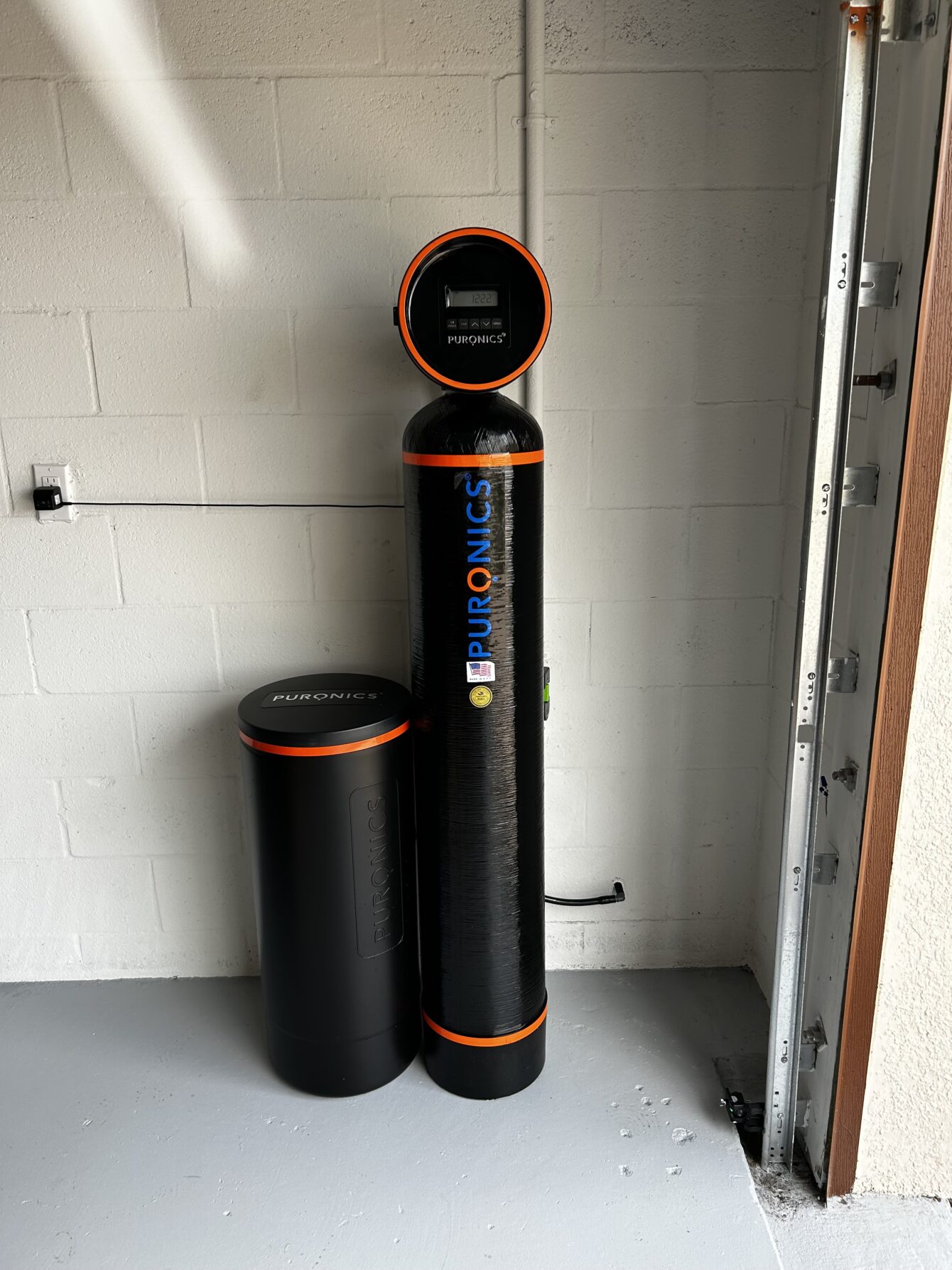
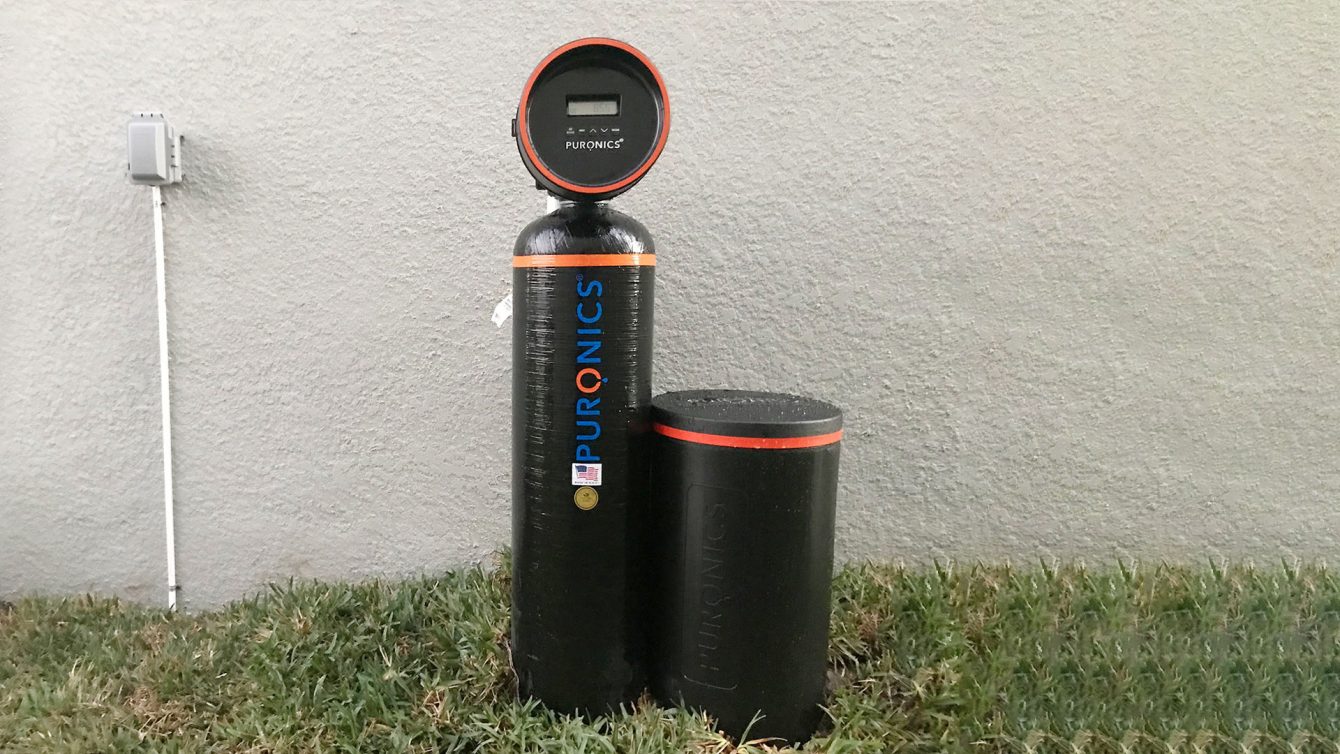
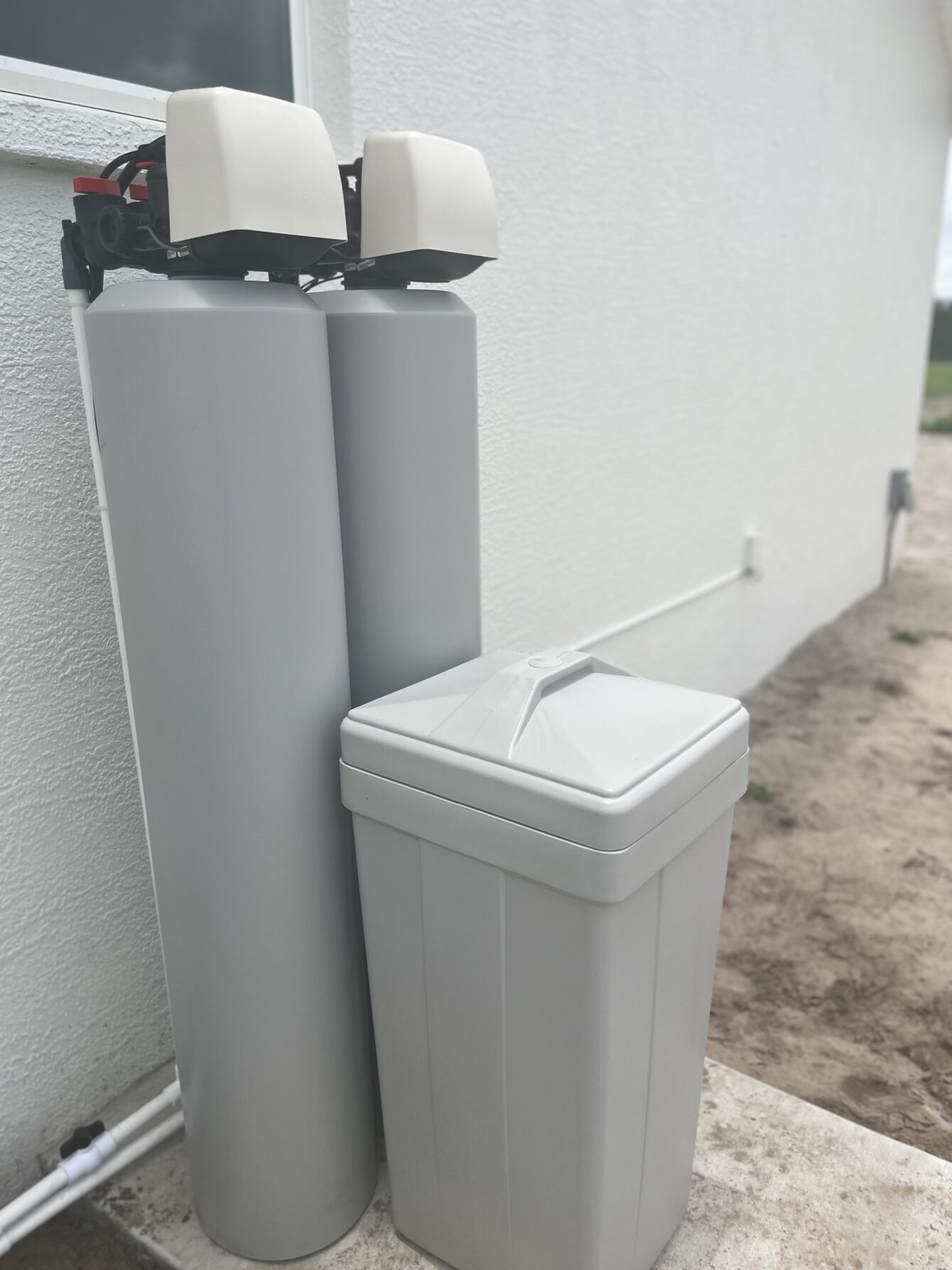
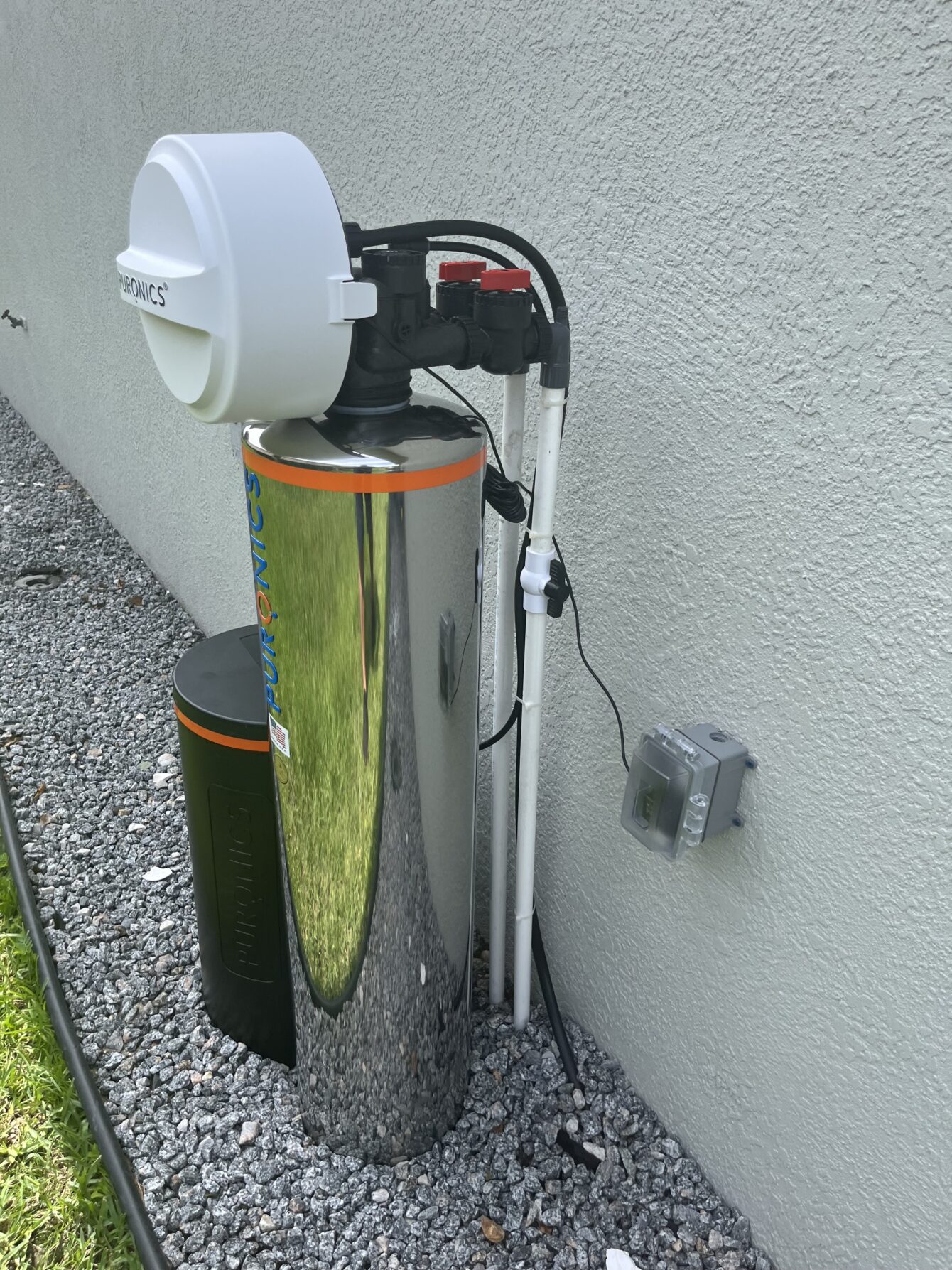
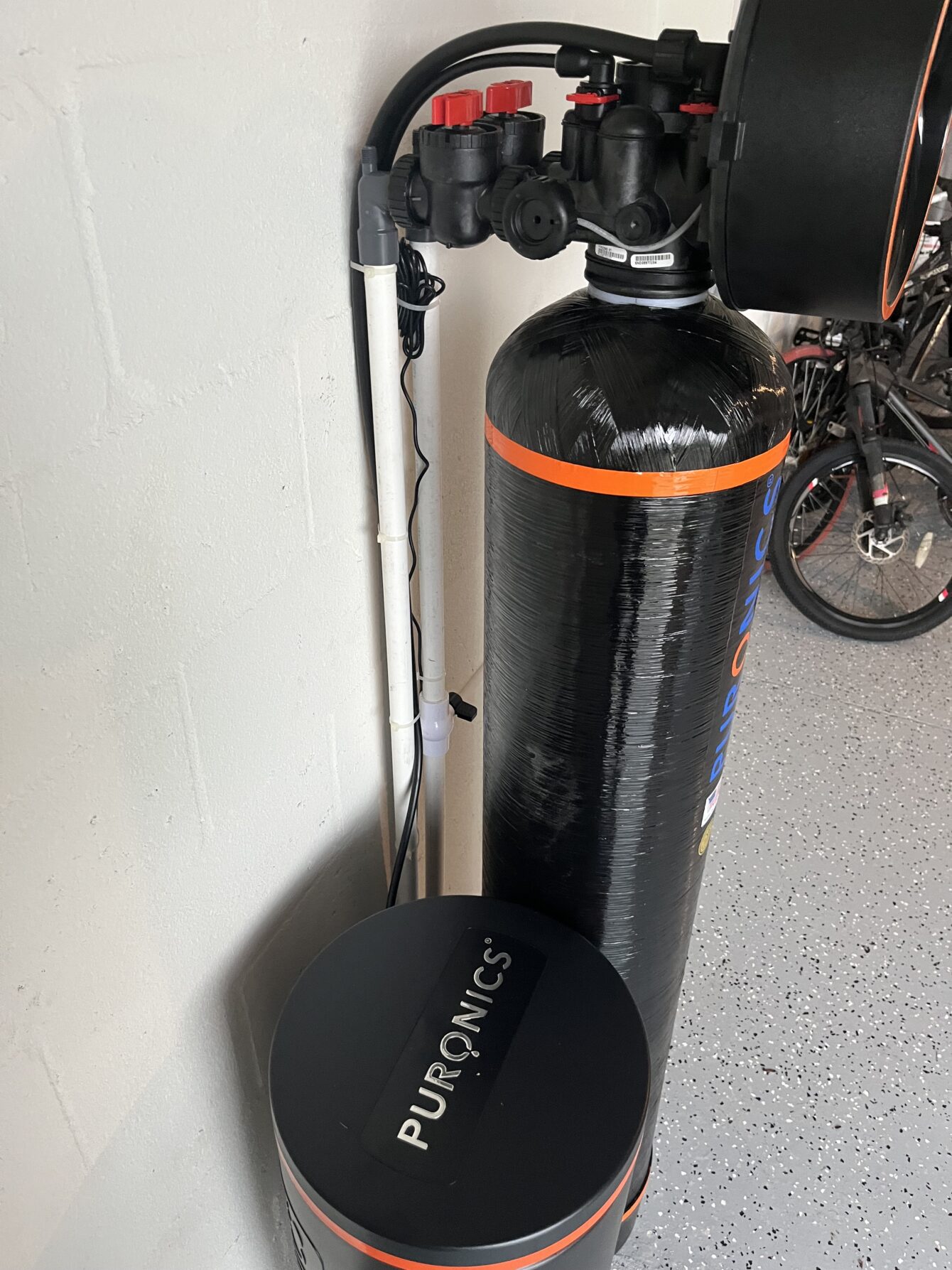
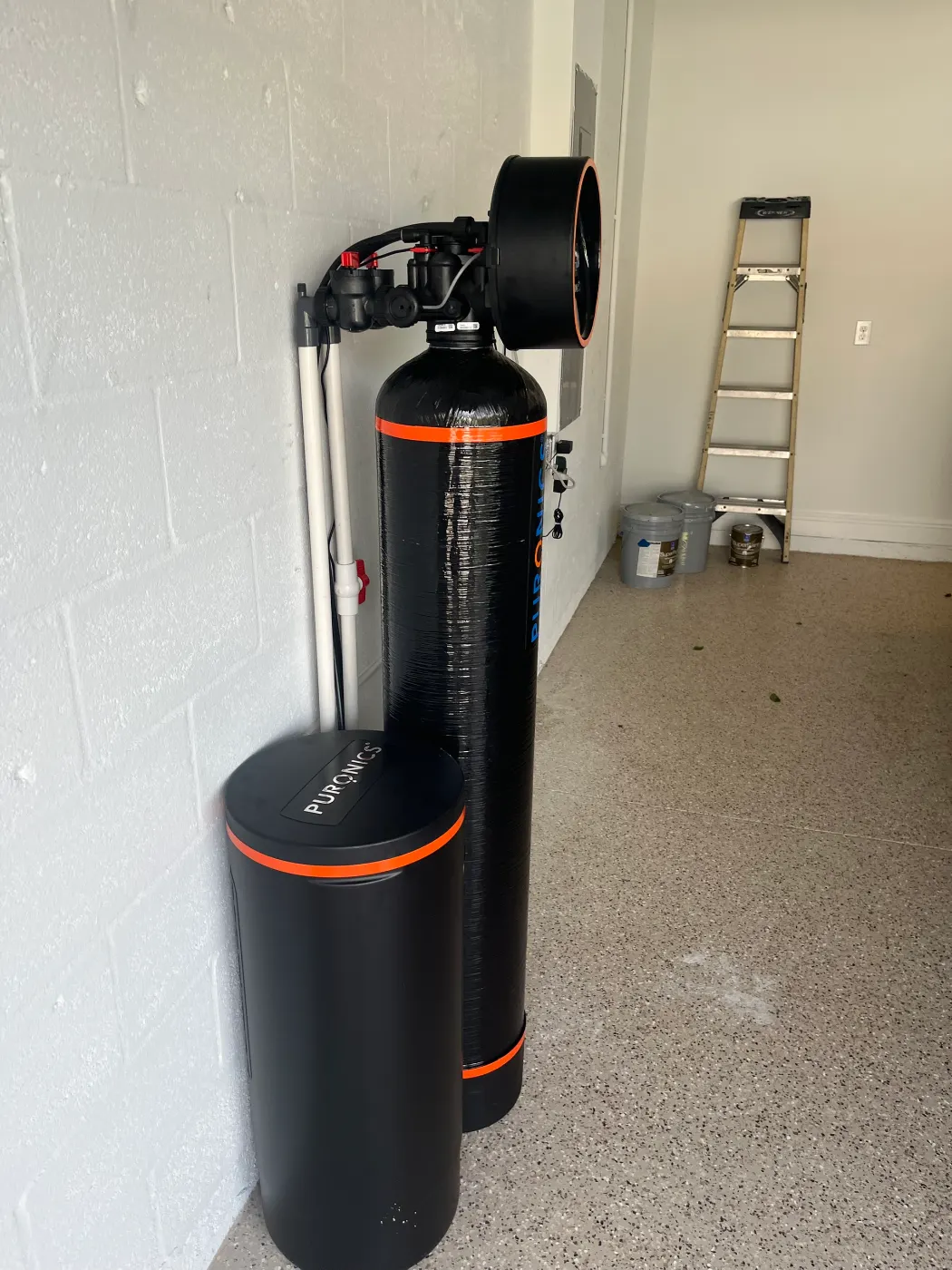
Our install · Puronics softener, new-construction garage
The short version
Hillsborough County’s South-Central water is a blend of groundwater, surface water and desalinated seawater from Tampa Bay Water. It’s disinfected with chloramine, 3.8 ppm on average, which is what you taste and smell. The county doesn’t publish a hardness number; Pinellas County, on the same regional supply, reports about 11 to 14 grains, which is hard to very hard. Disinfection byproducts are low here, so we don’t sell on them.
Where the water comes from
Hillsborough County Public Utilities serves the South-Central area (including Ruskin, Apollo Beach, Riverview, Sun City Center and Wimauma) with water bought from Tampa Bay Water, the regional wholesaler. That supply is a blend of Floridan aquifer groundwater, river and reservoir surface water, and desalinated seawater.
Because it’s a blend, the water at your tap isn’t identical to your neighbor’s across town or to what you had last season. That’s one reason we test at your tap before we size anything.
Some homes on the edges of Ruskin and Wimauma are on private wells instead. Well water is a different job (iron, sulfur and hardness come first), and our well water guide covers it.
How hard is Hillsborough County water?
The county doesn’t publish a hardness number for South-Central water, and neither does Tampa Bay Water. The closest published figure is Pinellas County’s, on the same regional supply: 189–244 mg/L, about 11 to 14 grains per gallon. On the U.S. Geological Survey scale, anything over 7 grains is hard and over 10.5 is very hard.
At that hardness, independent Battelle testing for the Water Quality Research Foundation scales out to a tankless water heater needing descaling about every 3 to 4 years without a softener, and low-flow showerheads losing most of their flow in a few years. On softened water, the heaters in that test held their efficiency. What the Battelle study found →
Your own number is one reading at one tap. The free in-home test gives it to you.
Chlorine or chloramine?
Chloramine. The county’s 2025 report lists a 3.8 ppm average (range 0.03–6.8 ppm) against a legal limit of 4.0 ppm as an annual average. Chloramine is chlorine combined with ammonia. It lasts longer in the pipes, which is why utilities use it, and it’s the chemical taste and smell most people notice.
Two things follow from that:
- A softener doesn’t remove it. Carbon does, and chloramine needs more contact time than free chlorine, which is why we use media built for chloramine. Catalytic vs activated carbon →
- It wears out softener resin if nothing is in front of it. We put carbon ahead of the softener on city water so the resin reaches the age you paid for.
Disinfection byproducts: the good news
Chlorine-based disinfectants react with natural material in water to form byproducts, measured as total trihalomethanes (TTHM) and haloacetic acids (HAA5). South-Central’s report shows TTHM at 17.2 ppb and HAA5 at 12.1 ppb, against federal limits of 80 and 60. Those were the lowest of the six utility reports we reviewed for our service area.
So we won’t try to sell you a system on byproducts here. The honest reasons to treat this water are hardness and the chloramine taste.
What we usually recommend here
- Hardness plus chloramine taste: a whole-home softener with carbon in front of it, such as the Puronics Hydronex or Defender iGen C (WQA certified to NSF/ANSI 42, 44 and 372), or the value-built Hydrology Essentials.
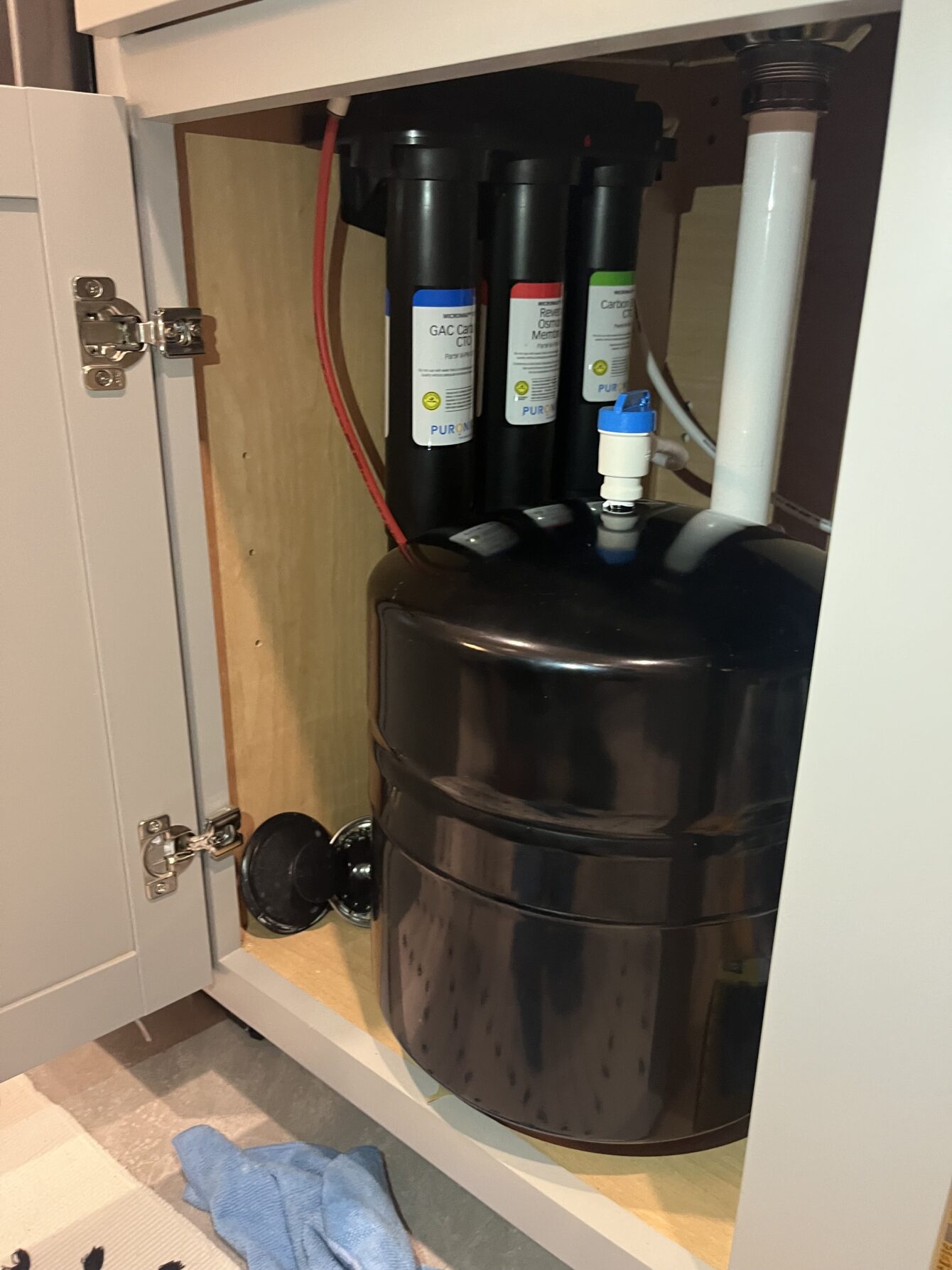
- Drinking and cooking water: reverse osmosis at the kitchen sink, with its own faucet. The Micromax 8500 is the one we install that’s certified for PFAS (NSF/ANSI 53). The county’s report doesn’t include PFAS results, and outside databases disagree, so we don’t quote a number.
- Wells: iron and sulfur treatment first, then hardness. Sequence matters more than equipment.
Every one of these is sized from your test, not a standard size.
Common questions
Hillsborough County
water, answered.
What people in Ruskin, Apollo Beach, Riverview and Sun City Center ask us most.
More water answers →
What hard water does to a home: the Battelle study →
Is Hillsborough County water hard?
The county doesn’t publish a hardness number. Pinellas County, on the same Tampa Bay Water supply, reports 189–244 mg/L, about 11 to 14 grains per gallon, which is hard to very hard on the USGS scale. Your own tap can differ, so we test it.
Does Hillsborough County use chlorine or chloramine?
Chloramine. The county’s 2025 report lists a 3.8 ppm average (range 0.03–6.8 ppm). Chloramine needs carbon built for it, with enough contact time; a softener alone doesn’t remove it.
Where does Ruskin and Apollo Beach water come from?
From Tampa Bay Water, the regional wholesaler, through Hillsborough County Public Utilities. It’s a blend of groundwater, surface water and desalinated seawater. Some homes on the edges of Ruskin and Wimauma are on private wells instead.
Do I need a water softener in Riverview or Sun City Center?
If your water tests hard (over 7 grains) and you’re seeing spots, scale or a tankless heater that needs descaling, a softener is what fixes it. We test first and tell you if you don’t need one.
Does a water softener remove chloramine?
No. A softener removes hardness minerals. Chloramine is removed by carbon, and chloramine needs more contact time than free chlorine. We put the carbon in front of the softener so it also protects the resin.
How do I find my exact hardness?
A free in-home water test measures hardness, chlorine or chloramine, pH and TDS at your tap. Test strips give a rough number; a titration or meter reading is more precise.
Want your exact numbers?
We’ll test hardness, chloramine, pH and TDS at your tap and tell you straight what’s worth treating, including when the answer is nothing. Book online or call 941-266-8991.
Related answers
Sources: Hillsborough County Public Utilities, South-Central water quality report (2025); Pinellas County Utilities water quality report (hardness); Battelle Memorial Institute for the Water Quality Research Foundation (2009); U.S. Geological Survey hardness scale; U.S. EPA drinking water standards.