Does Reverse Osmosis Remove PFAS?
Aug 14, 2026Reverse osmosis can reduce PFAS — if it’s certified for it. Look for a system certified to NSF/ANSI 53 for PFOA and PFOS and to NSF/ANSI 58 as a reverse osmosis system. Not every RO has that claim. Of the two Puronics RO systems we install, the Puronics Micromax 8500 does; the Micromax 7000 does not. One more thing EPA points out: current certifications don’t yet show reduction all the way down to the new federal limits. And on Manatee County water, the county’s quarterly 2024 samples found 29 PFAS, plus lithium, all below reporting levels.
What PFAS are
PFAS — per- and polyfluoroalkyl substances — are a large family of man-made chemicals used in nonstick cookware, water-resistant fabric, food packaging and firefighting foam. They’re called “forever chemicals” because they break down very slowly. The two most studied are PFOA and PFOS, and those are the two that home filter certifications are written around.
How reverse osmosis reduces PFAS
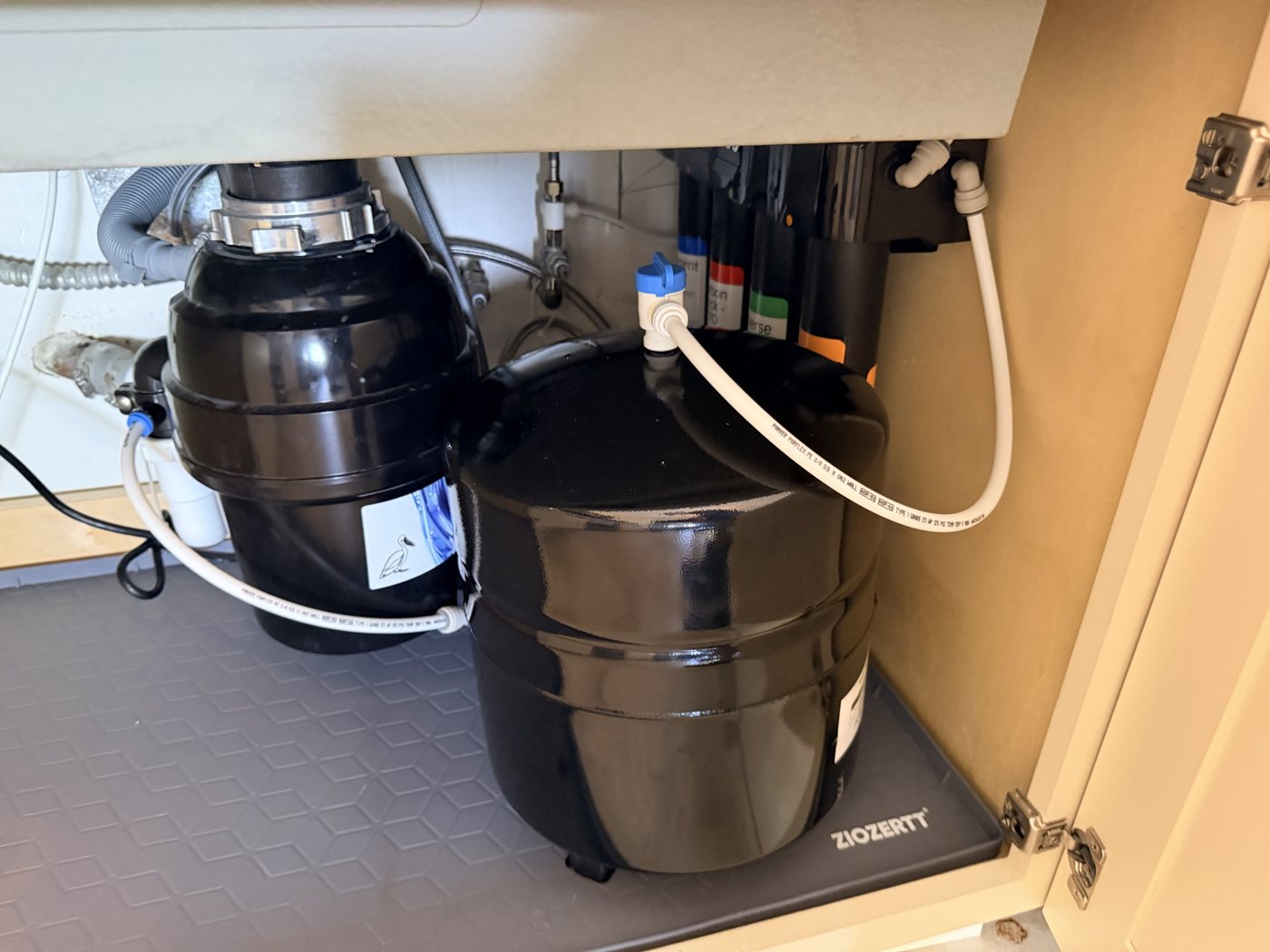
A reverse osmosis system pushes water through a semipermeable membrane with openings small enough to hold back most dissolved contaminants. What passes through goes to a small storage tank and a dedicated faucet; what’s held back is rinsed to the drain. Carbon stages before and after the membrane handle chlorine taste and odor. Because the membrane lowers dissolved solids in general, RO also lowers TDS, which nothing else in a typical home system does.
That’s the mechanism. Whether a particular unit reduces PFAS is a question for its certification, not its brochure.
The certification is the whole point
Here’s what each standard covers, and which of our two Puronics under-sink systems carries it.
| Standard | What it covers | Micromax 8500 | Micromax 7000 |
|---|---|---|---|
| NSF/ANSI 42 | Aesthetic effects, such as chlorine taste and odor | Yes | Yes |
| NSF/ANSI 53 | Specific reduction claims for contaminants with health-based standards. On the 8500, this covers PFOA/PFOS. | Yes | No |
| NSF/ANSI 58 | Reverse osmosis systems | Yes | Yes |
| NSF/ANSI 401 | Emerging compounds such as some pharmaceuticals, herbicides and pesticides. Not PFAS. | Yes | No |
| NSF/ANSI 372 | Lead-free materials in the system itself. Not lead removal. | Yes | Yes |
So if PFAS is the reason you want reverse osmosis, pick the Micromax 8500. The Micromax 7000 is a good RO system for taste and TDS, but it is not certified for PFAS, and we won’t sell it to you as if it were. Both carry the WQA Gold Seal, and you can look up either model on the Water Quality Association’s certified product listings yourself.
What the new federal limits mean
In 2024, EPA set enforceable drinking water limits of 4.0 parts per trillion each for PFOA and PFOS. Utilities have until 2029 to comply. On May 18, 2026, EPA proposed letting systems request two more years, to 2031, and proposed rescinding the limits it had set for four other PFAS (PFHxS, PFNA, GenX and a combined mixture measure). Both are proposals, not final rules.
The caveat, in EPA’s own framing: home filter certifications don’t yet indicate that a filter will remove PFAS down to the levels EPA has now set. A certified system has been tested to reduce PFOA and PFOS; it has not been shown to reach 4 parts per trillion. We’d rather you hear that from us than find it later.
EPA also stresses maintenance: filters only work if they’re replaced on the manufacturer’s schedule.
What the local reports show
- Manatee County Utilities (including nearly all of Lakewood Ranch): in quarterly samples taken in 2024 and published in the county’s 2025 reports, 29 PFAS and lithium were all below reporting levels.
- City of Bradenton: the city’s 2025 water quality report doesn’t include PFAS results, so we don’t quote a number for it. If PFAS is your concern on city water, ask the city for its sampling results. What the report does show is TDS of 550 mg/L, above EPA’s 500 secondary guideline — which RO does lower. More on the Bradenton city water page.
- Private wells: nobody tests a private well but the owner. A PFAS result takes a certified laboratory; our free in-home test covers hardness, chlorine, pH and TDS, not PFAS.
Do you need it?
If PFAS is your only reason and you’re on Manatee County water, the county’s 2024 results are worth reading before you buy anything. Some people read them and decide they don’t need reverse osmosis. That’s a reasonable answer.
People also add RO for other reasons: taste, lower TDS, or taking back out the sodium a softener adds. If PFAS is part of the reason, the 8500 is the one. If it isn’t, the 7000 may be all you need. And if a certified pitcher or faucet filter fits your life better, some carbon filters carry an NSF/ANSI 53 PFOA/PFOS claim too — check the listing, and change the cartridge on time.
We enjoy curious clients, because we enjoy educating and answering questions. Bring us the report and we’ll go through it with you.
Why at the kitchen sink, not the whole house
Reverse osmosis sends water to the drain. EPA says a typical under-sink unit sends five gallons or more to the drain for every gallon it makes; WaterSense-labeled units are held to 2.3 gallons or less. That’s fine for the few gallons a day you drink and cook with. Across a whole house it adds up fast, which is why whole-house RO only makes sense for brackish or salty wells.
On city water the economical setup is a softener for the house and RO at the kitchen sink. From us, whole-home softening plus reverse osmosis runs $3,500–$5,500 depending on sizing and model; a Puronics RO system on its own is call-for-pricing, because the manufacturer’s advertised-price policy is a condition of carrying the line.
Common questions
Does reverse osmosis remove PFAS?
Reverse osmosis can reduce PFAS, but look for a system certified to NSF/ANSI 53 for PFOA and PFOS reduction and to NSF/ANSI 58 as a reverse osmosis system. EPA notes that current certifications do not yet show reduction all the way down to the new federal limits.
Is the Puronics Micromax 7000 certified for PFAS?
No. The Micromax 7000 is certified to NSF/ANSI 42, 58 and 372, and none of those is a PFAS claim. If PFAS is the reason you want reverse osmosis, pick the Micromax 8500, which is certified to NSF/ANSI 42, 53, 58, 401 and 372.
Does NSF/ANSI 401 cover PFAS?
No. NSF/ANSI 401 covers emerging compounds such as some pharmaceuticals, herbicides and pesticides. PFOA and PFOS reduction is certified under NSF/ANSI 53.
Does Manatee County water have PFAS?
In the county’s quarterly 2024 samples, published in its 2025 reports, all 29 PFAS tested, plus lithium, were below reporting levels.
What is the federal limit for PFAS in drinking water?
EPA set enforceable limits of 4.0 parts per trillion each for PFOA and PFOS, with utilities due to comply by 2029. In May 2026, EPA proposed letting systems request two more years, to 2031.
Does a reverse osmosis system waste water?
It sends water to the drain. EPA says a typical under-sink unit sends five gallons or more to the drain for every gallon it makes, and WaterSense-labeled units are held to 2.3 gallons or less.
Why doesn’t your free water test include PFAS?
A PFAS result has to come from a certified lab, and labs charge for each compound they test. There are dozens of PFAS compounds, so it isn’t something we can include in a free test. Your utility tests for PFAS and publishes the results, and we’ll go through them with you. If you want a number for your own tap, a certified lab can run it.
Want to talk it through? Our free water test checks hardness, chlorine, pH and TDS at your tap, and we’ll go over your utility’s PFAS results with you before recommending anything. Book online or call 941-266-8991.
Related: Puronics Micromax 8500 · Puronics Micromax 7000 · Does a water softener lower TDS? · What a water softener costs in Florida · Chlorine vs chloramine · Salt-free vs salt-based softeners
Sources: U.S. EPA, “Per- and Polyfluoroalkyl Substances (PFAS)” drinking water regulation page and May 18, 2026 proposed rules; U.S. EPA, “Reducing PFAS in Your Drinking Water with a Home Filter”; U.S. EPA WaterSense, “Point-of-Use Reverse Osmosis Systems”; NSF, “NSF/ANSI 42, 53 and 401: Filtration Systems Standards”; Manatee County Utilities 2025 Water Quality Report and UCMR 5 information; City of Bradenton 2025 Water Quality Report; Puronics product specification sheets.
